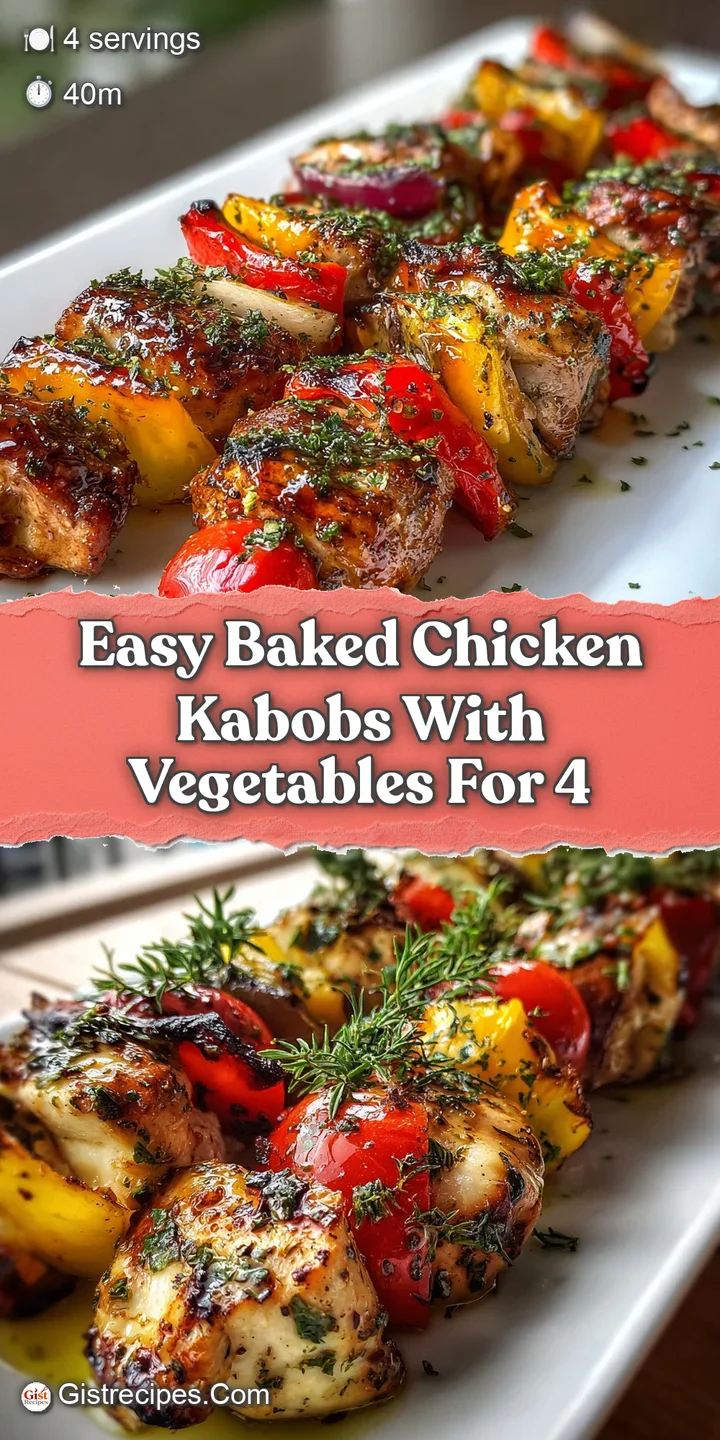
Baked Chicken Kabobs: Smoky & Tangy
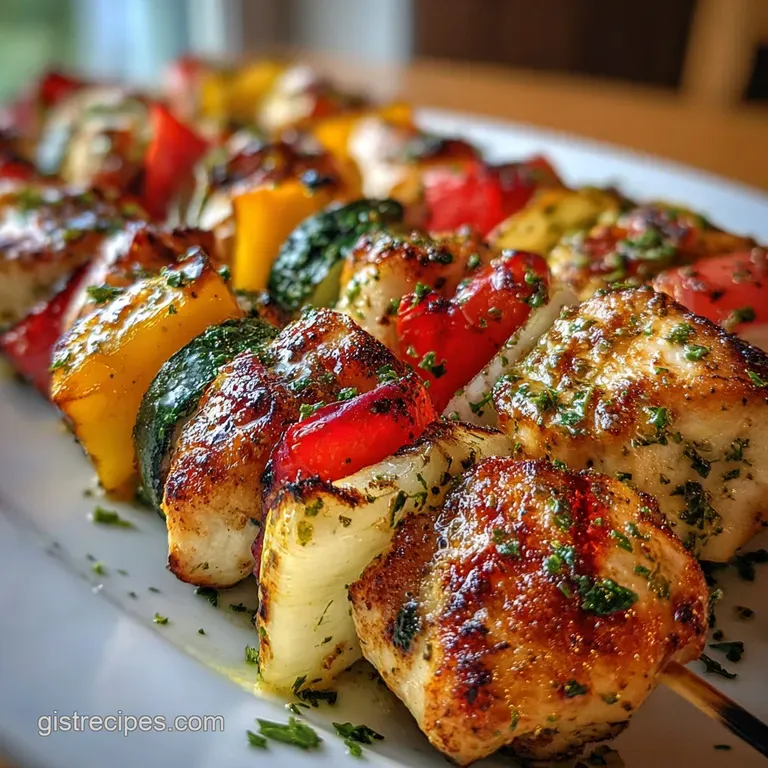
- Time: Active 20 minutes, Passive 20 minutes, Total 40 minutes
- Flavor/Texture Hook: Charred, smoky, and vibrantly tangy
- Perfect for: High protein meal prep or a fuss free weeknight dinner
- Smoldering Aromas and Charred Perfection: Why I Love Baked Chicken Kabobs
- over High heat Roasting and the Thermodynamics of Juicy Skewers
- Deconstructing the Components of This Savory Skewer Dish
- Sourcing the Elements for Savory Oven Chicken Kabobs
- Essential Tools for a Professional Roast and Char
- Executing the Sizzle: Step-by-Step Oven Roasting Guide
- Solving the Sogginess and Avoiding Overcooked Poultry
- Creative Twists to Customize Your Savory Skewer Profile
- Managing Leftovers and Maximizing Ingredient Utility
- Finishing Touches for a Restaurant Quality Platter Presentation
- Recipe FAQs
- 📝 Recipe Card
Smoldering Aromas and Charred Perfection: Why I Love Baked Chicken Kabobs
The first time I attempted oven skewers, I expected a soggy, gray mess. Instead, as the timer ticked down, a sharp, pungent aroma of toasted garlic and smoked paprika began to waft from the oven, filling the kitchen with a scent that screamed "summertime grill." I pulled the tray out and heard that unmistakable sizzle of chicken fat hitting a scorching hot pan, the edges of the red onions already starting to turn translucent and sweet.
Honestly, I used to think you needed a charcoal pit to get that authentic savory crust. I was wrong. By cranking the heat and strategically layering ingredients like pineapple and bell peppers, you create a micro environment of steam and dry heat that keeps the meat succulent while the exterior gets that beautiful, rustic char.
It's a total game for those of us who want BBQ flavors on a Tuesday night without scrubbing the grill grates.
This specific method for Baked Chicken Kabobs relies on a punchy marinade that doesn't just sit on the surface; it breaks down the muscle fibers for a velvety texture. We aren't just "baking" here; we are roasting at high intensity to ensure every bite has a concentrated, smoky hit.
Let's get into how we make this happen in a standard home kitchen.
over High heat Roasting and the Thermodynamics of Juicy Skewers
The Maillard Reaction: over High heat roasting at 200°C (400°F) triggers a chemical reaction between amino acids and reducing sugars, creating that savory brown crust and complex aroma.
Enzymatic Tenderization: The bromelain in fresh pineapple acts as a natural meat tenderizer, breaking down tough proteins on the chicken's surface during the short roasting window.
| Meat Thickness | Internal Temp | Rest Time | Visual Cue |
|---|---|---|---|
| 2.5 cm (1 inch) | 74°C (165°F) | 5 minutes | Juices run clear, no pink |
| 1.5 cm (0.5 inch) | 74°C (165°F) | 3 minutes | Firm to touch, opaque center |
| 3.5 cm (1.5 inch) | 74°C (165°F) | 7 minutes | Slight resistance, golden exterior |
The secret to preventing that "boiled" texture often found in oven baked meats is ensuring the oven is fully preheated before the tray enters. Cold starts lead to moisture loss before the crust can form, resulting in dry, rubbery meat.
Deconstructing the Components of This Savory Skewer Dish
Every element in this recipe serves a structural or chemical purpose. We aren't just adding vegetables for color; we are using them as moisture heat shields for the poultry.
| Component | Science Role | Pro Secret |
|---|---|---|
| Lemon Juice | Denatures proteins | Don't marinate over 24 hours or meat turns mushy |
| Smoked Paprika | Adds fat soluble phenols | Bloom it in the oil first to unlock deep color |
| Red Onion | Provides aromatic sulfur | Cut into thick wedges to prevent premature burning |
| Extra Virgin Olive Oil | Heat conductor | Use a high-quality oil for better smoke point stability |
Understanding these roles helps you troubleshoot on the fly. For instance, if you find your chicken is consistently dry, you might need to increase the oil ratio in your marinade to create a better protective barrier against the dry oven air. Similar to how we prep the protein in our OvenBaked Crispy Chicken Wings recipe, moisture management is everything.
Sourcing the Elements for Savory Oven Chicken Kabobs
To get the best results, stick to the quantities listed below. This balance ensures the marinade isn't too acidic and the vegetables don't overwhelm the meat.
- 680 g (1.5 lbs) Chicken Breasts: Cut into 2.5 cm chunks. Why this? Lean protein that absorbs marinades quickly.
- Substitute: Chicken thighs for more fat and forgiveness against overcooking.
- 60 ml (1/4 cup) Extra Virgin Olive Oil: The base for our flavor delivery.
- Substitute: Avocado oil for an even higher smoke point.
- 30 ml (2 tbsp) Fresh Lemon Juice: Provides the essential "bright" note.
- Substitute: Apple cider vinegar if lemons are unavailable.
- 3 Cloves Garlic: Minced finely.
- Substitute: 1 tsp garlic powder, though fresh gives a better aromatic punch.
- 5 g (1 tsp) Dried Oregano: Adds an earthy, Mediterranean backbone.
- Substitute: Dried thyme or marjoram.
- 5 g (1 tsp) Smoked Paprika: This provides the "fake" grill flavor.
- Substitute: Regular paprika plus a drop of liquid smoke.
- 2 Large Bell Peppers: Cut into squares.
- Substitute: Zucchini rounds for a lower carb option.
- 1 Large Red Onion: Cut into wedges.
- Substitute: Yellow onion or shallots.
- 250 g (1.5 cups) Fresh Pineapple: Adds sweetness and acidity.
- Substitute: Mango chunks or extra bell peppers.
- 1 tsp Salt & 0.5 tsp Black Pepper: Essential for seasoning.
Chef's Tip: Freeze your lemon for 10 minutes before juicing. It breaks down the internal membranes, allowing you to squeeze out every single drop of juice with minimal effort.
Essential Tools for a Professional Roast and Char
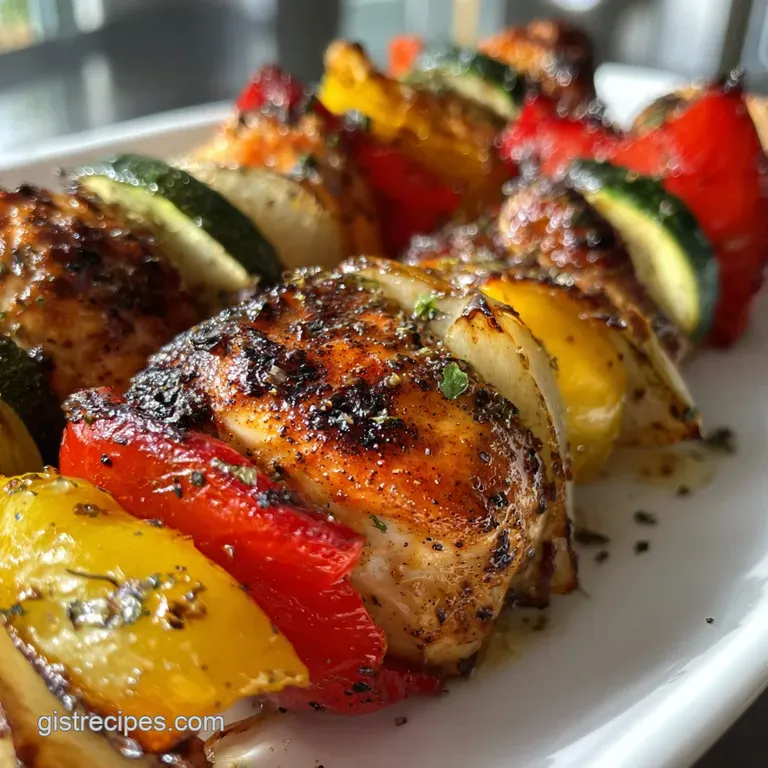
You don't need a high end rotisserie for this. A standard rimmed baking sheet is actually superior because it allows for maximum airflow around the skewers. If you use a deep baking dish, the sides trap steam, and you'll end up poaching the chicken rather than roasting it.
If you are using wooden skewers, the biggest mistake is a quick 5 minute soak. They will still catch fire. You want a deep soak in warm water for at least 30 minutes. Better yet, invest in a set of flat metal skewers. The flat shape prevents the chicken from spinning when you try to flip them, ensuring an even sear on all sides. Much like the setup for our Garlic Butter Chicken recipe, having the right pan surface determines the final texture of the meat.
Executing the Sizzle: step-by-step Oven Roasting Guide
Prepping the Protein and Produce
- Pat the 680 g of chicken chunks completely dry with paper towels. Note: Surface moisture creates steam, which prevents browning.
- Whisk the olive oil, lemon juice, minced garlic, oregano, smoked paprika, salt, and pepper in a large glass bowl.
- Toss the chicken chunks in the marinade, ensuring every piece is coated. Cover and chill for at least 30 minutes.
Threading the Skewers
- Preheat your oven to 200°C (400°F) and line a large baking sheet with parchment paper or foil.
- Thread the chicken, bell peppers, red onion, and 250 g of pineapple onto the skewers. Avoid overcrowding the pieces so heat can circulate.
- Place the skewers on the prepared tray, leaving space between each one.
Roasting at 400 Degrees
- Bake for 10 minutes. You should hear a faint sizzle as the pineapple juices begin to caramelize on the pan.
- Flip the skewers carefully using tongs.
- Bake for another 8 to 10 minutes until the chicken edges are charred and the peppers have slightly softened.
- Remove from the oven and let the meat rest for 5 minutes. This allows the internal juices to redistribute, ensuring a velvety bite.
Solving the Sogginess and Avoiding Overcooked Poultry
Why Your Vegetables Are Mushy
The most common culprit is cutting the vegetables too small. While you want the chicken in 2.5 cm chunks, the onions and peppers should be slightly larger. Vegetables cook faster than meat; by keeping them chunky, they retain a "snap" while the chicken reaches its safe internal temperature.
| Problem | Root Cause | Solution |
|---|---|---|
| Rubbery Chicken | Overcooked past 74°C | Use a meat thermometer and pull at 72°C (carryover will finish it) |
| Soggy Bottoms | Trapped steam | Use a wire rack set over the baking sheet for 360 degree airflow |
| Bland Flavor | Lack of salt in marinade | Ensure you use at least 1 tsp of salt; it’s the primary flavor carrier |
Common Mistakes Checklist
- ✓ Never use canned pineapple; the syrup prevents the chicken from browning and the texture is too soft.
- ✓ Don't skip the resting period; cutting into the chicken immediately lets the savory juices escape.
- ✓ Avoid crowding the baking sheet; if the skewers are touching, they will steam instead of roast.
- ✓ Always preheat the oven for at least 15 minutes to ensure the initial blast of heat is sufficient.
- ✓ Pat the vegetables dry if you washed them right before cutting to remove excess surface water.
Creative Twists to Customize Your Savory Skewer Profile
If you want to move away from the Mediterranean vibe, you can easily pivot the flavor profile. For an Asian inspired glaze, swap the oregano and paprika for 15 ml of soy sauce and 5 g of grated ginger. The sugar in the soy sauce will caramelize even faster, so keep a close eye on the oven to prevent burning.
If you're looking for something with a bit more "kick," try adding a teaspoon of chili flakes or a tablespoon of sriracha to the oil base. This pairs exceptionally well with the sweetness of the pineapple. For a different poultry experience, you might enjoy the flavor profile of our Cowboy Butter Chicken recipe, which uses a rich, herb infused butter that could easily be brushed onto these skewers during the last 2 minutes of baking.
Serving Size Adjustments
| Servings | Ingredient Adjustments | Pan Size | Cook Time |
|---|---|---|---|
| 2 People | 340 g chicken, 1 pepper | 1/2 sheet pan | 15-18 mins |
| 4 People | 680 g chicken, 2 peppers | Full sheet pan | 20 mins |
| 8 People | 1.36 kg chicken, 4 peppers | 2 Full sheet pans | 25 mins (rotate racks) |
Managing Leftovers and Maximizing Ingredient Utility
Baked chicken kabobs are a meal prepper's dream because they hold their structure well. Store any leftovers in an airtight container in the fridge for up to 3 days. When reheating, avoid the microwave if possible, as it tends to turn chicken into "rubber." Instead, slide the pieces off the skewers and warm them in a hot skillet with a splash of water or chicken broth for 3 minutes to revive the moisture.
For zero waste cooking, don't throw away the onion scraps or pepper cores. Toss them into a freezer bag. Once you have enough, they make an excellent base for a homemade vegetable or chicken stock.
If you have leftover cooked pineapple, chop it up and mix it into a quick salsa with cilantro and lime for a bright side dish the next day. You can even freeze the marinated (uncooked) chicken for up to 2 months; just thaw it in the fridge overnight before skewering.
Finishing Touches for a Restaurant Quality Platter Presentation
Presentation is the difference between "dinner" and an "event." When plating these, I like to slide the ingredients off the skewers onto a bed of fluffy jasmine rice or quinoa. The juices from the roasted pineapple and peppers will naturally season the grains.
Garnish with a handful of fresh parsley or mint to add a pop of green against the charred oranges and reds of the peppers. A final squeeze of fresh lemon juice right before serving cuts through the savory fat and wakes up the spices. If you want to go the extra mile, serve them with a side of cool tzatziki or a spicy garlic yogurt sauce. This provides a velvety contrast to the "shatter" of the charred chicken edges, making every bite feel balanced and professional. For more quick chicken ideas, our 30 minute Chicken Fried Rice recipe is another great way to use similar ingredients in a completely different format.
Recipe FAQs
How long do you cook chicken kebabs in the oven?
20 to 25 minutes is the standard time. This estimate assumes your oven is preheated to 400°F (200°C) and your chicken pieces are about one inch thick. Always use a thermometer; you are done when the internal temperature hits 165°F (74°C).
Is it better to bake chicken at 350 or 400 in the oven?
400°F (200°C) is significantly better for kebabs. Baking at a lower temperature like 350°F allows moisture to escape before a proper crust forms, often leading to dry meat. High heat quickly sets the exterior and creates that essential charred flavor you want.
What temperature should chicken kabobs be cooked at?
The optimal cooking temperature is 400°F (200°C). This high heat simulates the direct searing of a grill, which is crucial for achieving the Maillard reaction on the chicken and vegetables. If you are using a convection setting, reduce this slightly to 375°F.
How long to cook kabobs in the oven at 350 degrees?
Expect to cook them for 25 to 30 minutes at 350°F. While this temperature works, it requires a longer cook time, which increases the risk of moisture loss and dryness in the chicken.
If you master the technique of dry surfaces and quick searing here, you'll see why higher temperatures yield better results.
Can I cook frozen chicken on skewers?
No, you absolutely should not cook frozen chicken on skewers. Raw frozen meat will steam heavily as it thaws, preventing any browning or charring from developing on the surface. You must thaw the chicken completely and pat it dry before marinating and skewering.
How do I prevent my chicken from spinning on the skewers?
Use flat metal skewers instead of round wooden ones. Flat skewers grip the meat pieces and prevent them from rotating when you attempt to turn them during the roasting process. This ensures all sides get equal exposure to the radiant heat.
Should I soak wooden skewers before baking?
Yes, you must soak wooden skewers for at least 30 minutes. Soaking prevents the exposed wood ends from igniting under the high heat. For better results and easier turning, consider using flat metal skewers, a technique also helpful for achieving even heat distribution like in our Slow Cooker Garlic Steak Bites recipe.
Baked Chicken Kabobs Recipe
Ingredients:
Instructions:
Nutrition Facts:
| Calories | 468 kcal |
|---|---|
| Protein | 54 g |
| Fat | 19.5 g |
| Carbs | 17.2 g |
| Fiber | 2.8 g |
| Sugar | 9.4 g |
| Sodium | 645 mg |
