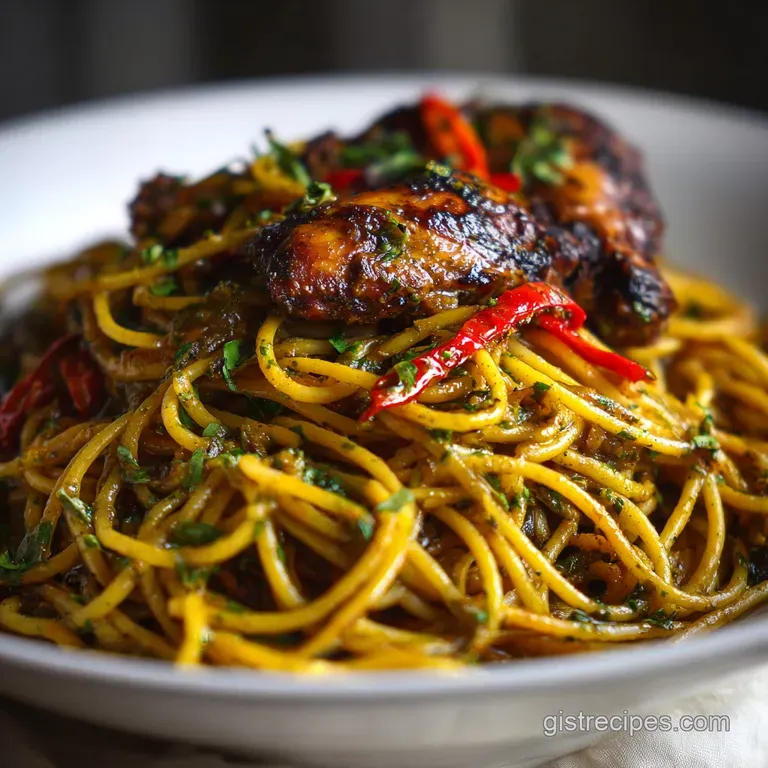
Creamy Rasta Pasta Recipe with Jerk Chicken
- Time: Active 20 mins, Passive 20 mins, Total 40 mins
- Flavor/Texture Hook: Spicy, velvety, and vibrant peppers
- Perfect for: High energy weeknight dinners or viral worthy meal prep
- Create This Creamy Rasta Pasta Recipe with Jerk
- Why the Jerk Sauce Works
- Essential Dish Statistics and Specs
- Selecting Your Bold Recipe Components
- Required Kitchen Gear and Tools
- Cooking the Vibrant Pasta Dish
- Resolving Sauce and Flavor Issues
- Tasty Customizations and Ingredient Swaps
- The Maillard Jerk Effect
- Proper Storage and Waste Reduction
- Best Serving and Garnish Ideas
- Very High in Sodium
- Recipe FAQs
- 📝 Recipe Card
Create This Creamy Rasta Pasta Recipe with Jerk
The moment that wet jerk seasoning hits the smoking hot oil in your skillet, your kitchen transforms. There is this sharp, peppery sizzle that immediately clears your sinuses in the best way possible.
I remember the first time I tried making this; I was obsessed with a version I saw on social media, but my first attempt was a watery mess. I realized then that Rasta Pasta isn't just about dumping cream into a pan; it is about the balance of Jamaican heat and tropical silkiness.
This recipe is the result of countless trials to get that signature "glow" that bright orange yellow sauce that looks like a sunset in a bowl. We are talking about tender strips of chicken that have been charred to pick up those smoky notes, tossed with peppers that still have a slight snap.
It is a loud, bold, and unapologetic meal.
You can expect a dish that hits every part of your palate. You get the heat from the Scotch bonnet peppers in the jerk rub, the sweetness from the trio of bell peppers, and that cooling, fatty finish from the heavy cream and coconut milk.
Trust me, once you smell the fresh thyme mingling with the garlic, there is no going back to plain Alfredo.
Why the Jerk Sauce Works
Starch Emulsification: Adding reserved pasta water allows the starches to bind the fat in the cream to the liquid, creating a thick, glossy coating.
Fat Saturation: The combination of heavy cream and full fat coconut milk provides a complex fat profile that carries the capsaicin from the jerk seasoning across your tongue more smoothly.
Aromatic Layering: Sautéing the julienned onions and garlic in the leftover chicken fat (fond) captures the fat soluble flavor compounds from the jerk rub.
Acid Balance: The final splash of lime juice acts as a chemical brightener, cutting through the heavy fats to highlight the citrus notes in the jerk seasoning.
| Chicken Thickness | Internal Temperature | Rest Time | Visual Cue |
|---|---|---|---|
| 0.5 inch strips | 165°F | 3 mins | Opaque and juices run clear |
| 1 inch chunks | 165°F | 5 mins | Golden brown charred edges |
| Thin medallions | 165°F | 2 mins | Firm to the touch |
The key to keeping the chicken juicy while achieving that "viral" char is all about the pan temperature. If the pan isn't screaming hot, the chicken will steam in its own juices rather than developing that punchy, spiced crust we are after. This is similar to the over high heat technique I use in my Rasta Pasta Recipe which focuses on getting those veggies just right.
Essential Dish Statistics and Specs
| Component | Science Role | Pro Secret |
|---|---|---|
| Heavy Cream | Emulsion Base | Use room temp cream to prevent curdling when hitting the hot pan |
| Jerk Seasoning | Flavor Catalyst | Use a wet rub for better adhesion and deeper Maillard browning |
| Bell Peppers | Texture Contrast | Slice them exactly the same width as the pasta for the best "mouthfeel" |
| Coconut Milk | Flavor Depth | Only use full fat canned milk for that signature tropical silkiness |
Using the right ingredients makes a massive difference in the final texture. For instance, the coconut milk isn't just for flavor; the medium chain triglycerides help create a more stable sauce that won't "break" as easily as one made with dairy alone.
Selecting Your Bold Recipe Components
To make this Creamy Rasta Pasta Recipe with Jerk truly stand out, you need high-quality components. Don't settle for the dried out jerk powder if you can find a jarred wet rub the moisture in the rub helps create a better sear.
- 1.5 lbs chicken breast: Sliced into thin strips Why this? Increases surface area for spice coverage and ensures rapid, even cooking.
- 3 tbsp Jamaican jerk seasoning (wet rub): Look for brands like Grace or Walkerswood Why this? Provides the authentic Scotch bonnet heat and pimento aroma.
- 1 tbsp neutral oil: Grapeseed or avocado oil works best Why this? High smoke point allows for a hard sear without burning.
- 0.5 lime, juiced: Freshly squeezed only Why this? The citric acid balances the richness of the coconut milk.
- 1 lb penne pasta: high-quality durum wheat Why this? The ridges (rigate) are designed to hold onto the heavy sauce.
- 3 Bell Peppers (Red, Green, Yellow): One of each, thinly sliced Why this? Represents the Rasta colors and adds essential sweetness.
- 1 medium yellow onion: Julienned Why this? Melts into the sauce to provide a savory backbone.
- 4 cloves garlic: Minced Why this? Adds a punchy, sharp aromatic layer.
- 2 tsp fresh thyme leaves: Stripped from the stem Why this? A traditional Caribbean aromatic that bridges the spice and cream.
- 1 cup heavy cream: Full fat Why this? Provides the velvety structure needed for a thick sauce.
- 0.5 cup full fat canned coconut milk: Shake the can before measuring Why this? Adds a nutty, tropical undertone and smooths the heat.
- 0.5 cup freshly grated Parmesan cheese: Do not use the green shaker bottle Why this? Adds saltiness and acts as a thickening agent.
- 1 tbsp extra jerk seasoning: Reserved for the sauce Why this? Ensures the flavor doesn't get "washed out" by the cream.
- 0.5 cup reserved pasta water: Starchy liquid gold Why this? The ultimate glue for binding the sauce to the pasta.
- 3 green onions: Sliced on a bias Why this? Adds a fresh, peppery crunch for garnish.
Chef's Tip: Freeze your Parmesan block for 10 minutes before grating. This prevents the cheese from clumping and gives you those tiny, airy wisps that melt instantly into the sauce.
Required Kitchen Gear and Tools
You don't need a professional kitchen, but a large heavy bottomed skillet is non negotiable. I prefer cast iron or a heavy stainless steel pan to get that perfect sizzle on the Jerk Chicken and Bell Peppers.
- Large Skillet (12 inch): A deep skillet prevents the sauce from splashing and allows room for tossing.
- Pasta Pot: Big enough to let the penne dance in the boiling water.
- Tongs: Essential for flipping chicken strips and tossing the pasta effectively.
- Microplane: For grating that fresh Parmesan into a snowy texture.
Cooking the Vibrant Pasta Dish
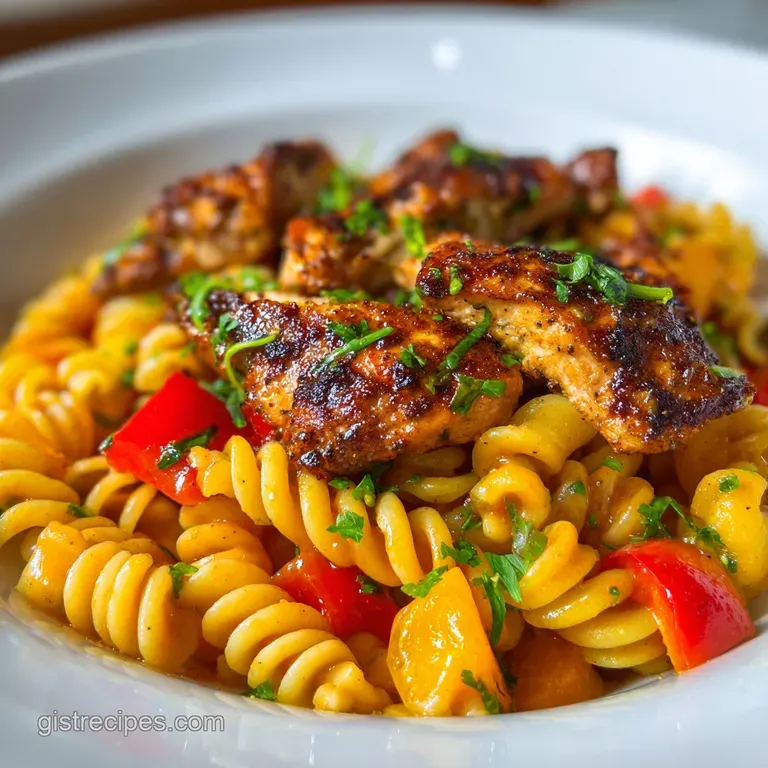
Phase 1: The Jerk Sear
- Season the chicken. Toss the 1.5 lbs of sliced chicken breast with 3 tbsp of wet jerk seasoning and the lime juice in a bowl. Note: Letting it sit for even 10 minutes makes a huge difference in flavor penetration.
- Sear the meat. Heat 1 tbsp of neutral oil in your skillet over medium high heat. Add the chicken in a single layer. Cook for 3-4 minutes until the edges are charred and the aroma is sharp and spicy.
- Rest and clear. Remove the chicken from the pan and set it aside on a plate. Note: Don't wipe the pan; those brown bits (fond) are flavor gold.
Phase 2: The Veggie Sauté
- Boil the pasta. Start your 1 lb of penne in salted boiling water. Cook it 1 minute less than the box instructions until it has a firm, al dente bite.
- Sauté the aromatics. In the same skillet, add the julienned yellow onion and sliced bell peppers. Cook for 5 minutes until the onions are translucent and the peppers are slightly softened but still vibrant.
- Add the garlic and thyme. Stir in the 4 minced garlic cloves and 2 tsp of fresh thyme. Sauté for 1 minute until the kitchen smells like a tropical garden.
Phase 3: Building the Emulsion
- Deglaze and reduce. Pour in 1 cup of heavy cream and 0.5 cup of coconut milk. Stir in the extra 1 tbsp of jerk seasoning. Simmer for 5 minutes until the sauce thickens enough to coat the back of a spoon.
- Incorporate the cheese. Lower the heat and whisk in the 0.5 cup of Parmesan cheese. Stir until the sauce is velvety and smooth.
Phase 4: The Final Toss
- Combine everything. Add the cooked penne, the seared chicken (and any juices), and the 0.5 cup of reserved pasta water to the skillet. Toss vigorously for 2 minutes until the sauce clings to every piece of pasta.
- Garnish and serve. Top with the sliced green onions. Serve immediately while the sauce is at its creamiest.
Resolving Sauce and Flavor Issues
Why the Sauce Is Separating
If your sauce looks oily or grainy, the heat was likely too high when you added the dairy. High heat causes the proteins in the cream to clump together and push out the fat. To fix this, remove the pan from the heat immediately and whisk in a tablespoon of room temperature pasta water or an extra splash of heavy cream.
This helps re emulsify the mixture.
Why the Chicken Feels Tough
Chicken breast can go from juicy to rubbery in seconds. This usually happens if you overcook it during the initial sear. Remember, the chicken will go back into the hot sauce at the end, which will finish the cooking process. Aim for just done in the first phase.
| Problem | Root Cause | Solution |
|---|---|---|
| Bland Sauce | Too much cream, not enough salt | Add an extra tsp of jerk seasoning and a pinch of salt at the end |
| Watery Sauce | Not enough reduction time | Simmer for 2 more minutes or add extra Parmesan to thicken |
| Muted Colors | Overcooked bell peppers | Add peppers later in the process or use higher heat for a shorter time |
Common Mistakes Checklist
- ✓ Using low-fat or "lite" coconut milk (it won't emulsify and stays watery).
- ✓ Forgetting to save the pasta water before draining.
- ✓ Adding the garlic too early (burnt garlic tastes bitter and ruins the spices).
- ✓ Overcrowding the pan when searing chicken (it will steam instead of char).
- ✓ Using pre shredded cheese (the cellulose coating prevents it from melting smoothly).
Tasty Customizations and Ingredient Swaps
If you want to switch things up, this recipe is incredibly flexible. While the Jerk Chicken and Bell Peppers are the stars, you can easily adapt this to your pantry.
| Original Ingredient | Substitute | Why It Works |
|---|---|---|
| Chicken Breast | Large Shrimp | Cooks faster and pairs beautifully with coconut. Note: Sauté only 2 mins per side. |
| Heavy Cream | Cashew Cream | Provides a similar thickness for a dairy-free version. |
| Penne Pasta | Fusilli | The spirals are excellent at trapping the thick jerk sauce. |
Decision Shortcut
- If you want it extra spicy: Add a finely chopped Scotch bonnet pepper with the garlic.
- If you want it kid friendly: Reduce the jerk seasoning by half and add a tsp of brown sugar to the sauce.
- If you want it smoky: Add a half teaspoon of smoked paprika to the cream reduction.
Scaling this dish is straightforward. If you are doubling the recipe for a party, work in two batches for the chicken sear. If you crowd the pan with 3 lbs of chicken, you won't get that "internet famous" char.
For the sauce, you only need to increase the liquids by 1.8x rather than a full 2x to maintain the right consistency.
| Preparation | Fresh Ingredients | Shortcut Version | Flavor Impact |
|---|---|---|---|
| Jerk Base | Homemade wet rub | store-bought jar | Fresh is brighter; jarred is saltier |
| Creaminess | Heavy cream blend | All coconut milk | Coconut only is much lighter |
| Pasta | Hand cut veggies | Frozen pepper mix | Frozen is softer; fresh has better snap |
This comparison is vital because sometimes you need a quick hit of flavor without the prep. If you use a shortcut, just be sure to sear the frozen peppers at a higher heat to evaporate the extra moisture.
The Maillard Jerk Effect
The Maillard reaction is a chemical reaction between amino acids and reducing sugars that gives browned food its distinctive flavor. When we sear the jerk rubbed chicken, the sugars in the marinade caramelize while the spices toast, creating hundreds of new flavor compounds that simply don't exist in un seared meat.
This is why that first step of searing until you see those dark, charred bits is the most important part of the entire process.
Proper Storage and Waste Reduction
Leftover Rasta Pasta is almost better the next day because the spices have more time to mingle. However, the pasta will soak up the sauce as it sits. When reheating, always add a splash of milk or water to bring that velvety texture back to life. This isn't quite the same as my Crockpot Crack Beef recipe which stays moist naturally, so you have to be intentional with the moisture.
- Storage: Store in an airtight container in the fridge for up to 3 days.
- Freezing: Not recommended. The cream and coconut milk can separate and become grainy when thawed.
- Zero Waste: Don't toss those pepper scraps! Save the tops and bottoms of the bell peppers, dice them up, and freeze them for a morning omelet or a quick stir fry.
Best Serving and Garnish Ideas
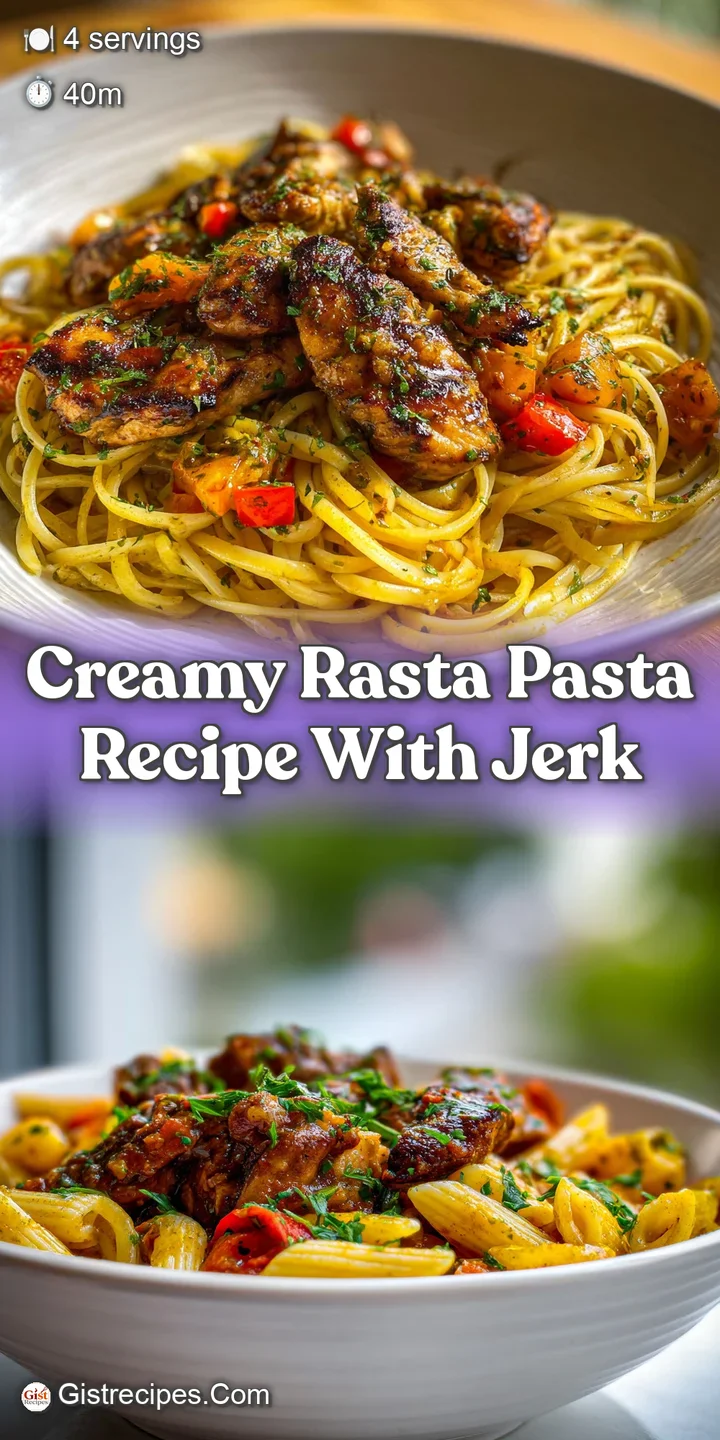
Presentation is everything with a dish this colorful. I like to serve this in wide, shallow bowls to show off the yellow, red, and green contrast. A final dusting of freshly grated Parmesan and a heavy hand with the green onions makes it look restaurant quality.
If you are looking for a drink to cut through the heat, I highly suggest my Caramel Iced Coffee Recipe — the sweetness and cold dairy are the perfect foil for the Scotch bonnet spice. For a more traditional pairing, a cold Jamaican ginger beer or a limeade works wonders.
To garnish like a pro, slice your green onions on a very sharp diagonal (bias cut). This creates long, elegant shards that add height to the dish. If you have extra limes, serve a wedge on the side so people can add an extra hit of acidity right before they eat.
It wakes up the heavy cream and makes the whole Pasta Recipe with Jerk Chicken and Bell Peppers pop.
Very High in Sodium
1745 mg mg of sodium per serving (76% of daily value)
The American Heart Association recommends limiting sodium intake to about 2,300mg per day for most adults.
Tips to Reduce Sodium in Your Jerk Chicken Pasta:
-
Lower Sodium Jerk Seasoning-30%
The wet jerk seasoning is a significant source of sodium. Try using a homemade or low-sodium jerk seasoning blend, reducing the sodium content substantially. Or reduce the 3 tbsp currently used.
-
Reduce Parmesan Cheese-15%
Parmesan cheese is high in sodium. Reduce the amount of parmesan by half, from 0.5 cup to 0.25 cup, or substitute with a lower sodium cheese option.
-
Unsalted Pasta Water-10%
Ensure that you are not adding any salt when cooking the pasta. This will reduce the overall sodium content of the dish.
-
Fresh Ingredients-10%
Using fresh ingredients like bell peppers, onions, garlic, and thyme is great! Continue to avoid any pre-made sauces or processed ingredients as they tend to be high in sodium.
-
Unsweetened Coconut Milk-5%
Ensure that the canned coconut milk is unsweetened and has no added sodium. Compare brands to find the lowest sodium option.
-
Spice It Up!
Enhance the flavor with sodium free herbs and spices like black pepper, allspice, nutmeg, cinnamon, ginger, and cloves. Experiment with different combinations to find your favorite flavor profile.
Recipe FAQs
Can I substitute chicken thighs for the chicken breast in this recipe?
Yes, absolutely. Thighs are more forgiving because of their higher fat content, meaning they are less likely to dry out during the searing process.
How do I prevent the creamy sauce from separating or looking oily?
Remove the pan from the heat first. Add room temperature dairy slowly while whisking constantly to help the sauce re-emulsify; high heat breaks the emulsion.
What is the purpose of reserving pasta water when making this dish?
It is crucial for binding the sauce. The starch in the water acts as a natural emulsifier, helping the fat from the cream cling tightly to the penne ridges.
Is it necessary to use both heavy cream and coconut milk?
No, but it is highly recommended for the best texture. Coconut milk adds a tropical depth and helps stabilize the fat, similar to how we balance flavors in the OvenBaked Crispy Chicken Wings recipe, but you can use all heavy cream if preferred.
How can I ensure my jerk chicken develops the signature charred crust?
Get your skillet smoking hot before adding the marinated chicken. The high initial heat causes the exterior sugars to caramelize rapidly, creating the sear without overcooking the interior.
Can I make this Rasta Pasta vegetarian by omitting the chicken?
Yes, easily swap the protein. Sauté large shrimp or firm tofu cubes in the same manner as the chicken to capture that essential smoky, spiced flavor.
How long can I safely store leftovers of this creamy pasta?
Store in the refrigerator for up to three days. When reheating, always stir in a splash of fresh milk or water, as the sauce tends to absorb moisture from the pasta as it chills.
Creamy Rasta Pasta Jerk
Ingredients:
Instructions:
Nutrition Facts:
| Calories | 1058 kcal |
|---|---|
| Protein | 73.2 g |
| Fat | 40.2 g |
| Carbs | 97.4 g |
| Fiber | 6.1 g |
| Sugar | 8.3 g |
| Sodium | 1745 mg |
