Smoky Bbq Beans Recipe with Thick Glaze
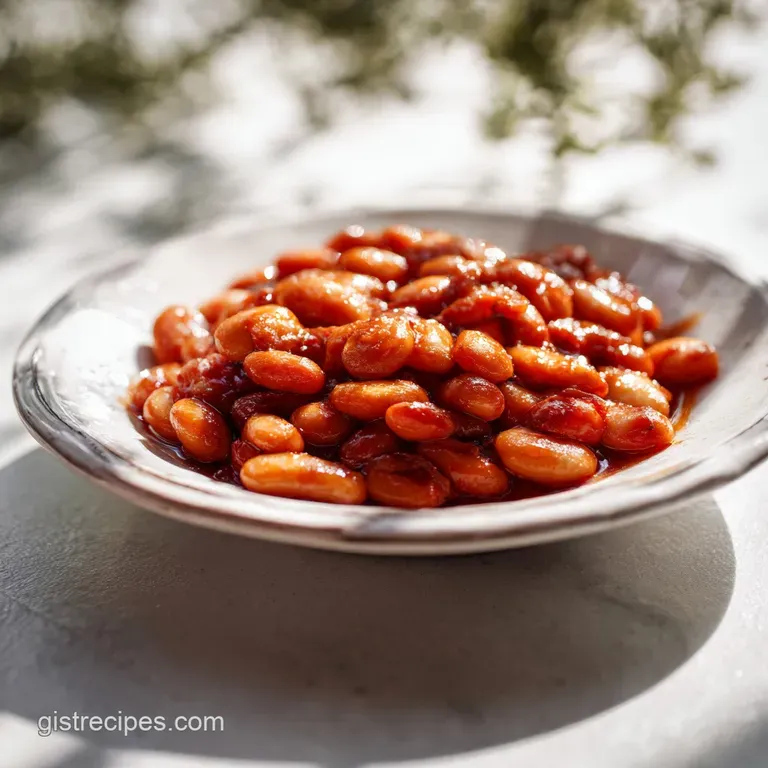
- Time: Active 10 minutes, Passive 35 minutes, Total 45 minutes
- Flavor/Texture Hook: Smoky, velvety beans with a thick, savory sweet glaze
- Perfect for: Backyard cookouts, holiday potlucks, and pairing with grilled meats
- Mastering the Ultimate BBQ Beans Recipe
- The Science of Savory Depth
- Component Analysis for Peak Flavor
- Fresh Ingredients and Smart Subs
- The Right Kitchen Tools
- Steps for the Perfect Texture
- Solving Common Cooking Problems
- Proper Storage and Waste Tips
- Creative Flavor Variation Ideas
- Perfect Pairings for the Grill
- Recipe Myths Debunked
- Serving and Presentation
- Recipe FAQs
- 📝 Recipe Card
Mastering the Ultimate BBQ Beans Recipe
The sizzle of thick cut bacon hitting a cold cast iron skillet is the first sign of a good day. I remember standing in my backyard last July, the air thick with the smell of charcoal and wood smoke, realizing that the most expensive brisket on the grill was being upstaged by a simple side dish.
It wasn't just any side; it was this specific bbq beans recipe, glistening with a dark, molasses heavy glaze that looked like liquid mahogany.
We’ve all had those watery, bland beans from a tin that sit sadly on the edge of a paper plate. This isn't that. We are building layers of flavor here starting with the salt and fat of rendered bacon, then moving into the sharp bite of green peppers and onions, and finishing with a sauce that balances the deep earthiness of molasses against the bright tang of apple cider vinegar.
It’s about the contrast between the velvety bean interior and the sticky, concentrated sauce on the outside.
Trust me, once you see how the sugars in the brown sugar and BBQ sauce caramelize against the sides of the pot, you’ll never go back to the basic version. We're going for an authentic, grill master style result that feels like it’s been simmering on a pit for eight hours, but we’re doing it in under an hour.
Let’s get the aromatics prepped and that bacon rendering.
The Science of Savory Depth
Understanding why certain ingredients work together transforms you from someone following a script to a real cook. In this bbq beans recipe, we are managing moisture and sugar concentration to get that specific "stuck to your ribs" texture. It's similar to the way we balance the glaze in a high-quality BBQ Meatball Recipe to ensure it's tacky but not runny.
- Maillard Reaction: Rendering the 6 slices of thick cut bacon at the start creates a base of savory compounds that coat the beans.
- Hygroscopy: The 1/3 cup of dark brown sugar and 1/4 cup of molasses pull moisture from the sauce, helping it thicken into a syrup rather than a soup.
- Acid Balance: The 2 tbsp of apple cider vinegar cuts through the heavy fat of the bacon and the sweetness of the sugar, brightening the entire flavor profile.
- Starch Suspension: As the beans simmer in the 1/2 cup of beef stock, a tiny amount of starch escapes, naturally thickening the liquid into a velvety coating.
| Method | Time | Texture | Best For |
|---|---|---|---|
| Stovetop | 35 minutes | Saucy and bright | Quick weeknight dinners |
| Oven Baked | 1 hour | Thick and crusty | Potlucks and gatherings |
| Slow Cooker | 4 hours | Deeply infused | Hands off meal prep |
Cooking these beans on the stovetop allows for better control over the reduction of the sauce, while the oven method creates those sought after charred bits on the surface. If you have the time, starting on the stove and finishing in a 350°F (180°C) oven for twenty minutes is a pro move for maximum flavor concentration.
Component Analysis for Peak Flavor
| Ingredient | Science Role | Pro Secret |
|---|---|---|
| Navy Beans | Structure | Rinse thoroughly to remove metallic "can" taste and excess salt. |
| Dark Molasses | Viscosity | Adds a bitter sweet complexity that prevents the dish from tasting one dimensional. |
| Apple Cider Vinegar | pH Balancer | Adds "vibrancy" to the sauce, making the smoky flavors pop. |
| Smoked Paprika | Aroma | Provides that "outdoor grill" scent even if you're cooking indoors. |
The choice of Navy beans is intentional. They are small and dense enough to hold their shape during the 35 minutes of simmering without turning into mush, which is a common failure in many bean dishes.
Fresh Ingredients and Smart Subs
- 6 slices thick cut bacon, diced: Provides the essential fat base. Why this? Thick cut holds its texture better after simmering.
- Substitute: Smoked pancetta or 2 tbsp of bacon grease.
- 1 medium yellow onion, finely diced: The aromatic foundation. Why this? Yellow onions have a higher sugar content for better caramelization.
- Substitute: White onion or shallots for a milder bite.
- 1 green bell pepper, diced: Adds a necessary vegetal bitterness. Why this? Traditional in Southern style BBQ profiles.
- Substitute: Poblano pepper for a very subtle heat.
- 3 cloves garlic, minced: Essential for savory depth.
- Substitute: 1 tsp garlic powder (add with the dry spices).
- 3 cans (15 oz each) Navy beans, rinsed and drained: The main body.
- Substitute: Great Northern beans or Cannelini beans.
- 1 cup St Louis style BBQ sauce: The primary flavor driver.
- Substitute: Any thick, tomato based BBQ sauce you prefer.
- 1/4 cup dark molasses: Adds color and earthy notes.
- Substitute: Honey or maple syrup (will be sweeter, less earthy).
- 1/3 cup packed dark brown sugar: For sweetness and caramel notes.
- Substitute: Light brown sugar or coconut sugar.
- 2 tbsp apple cider vinegar: For acidity and brightness.
- Substitute: White wine vinegar or lemon juice.
- 1 tbsp yellow mustard: Adds tang and acts as an emulsifier for the sauce.
- Substitute: 1 tsp dry mustard powder.
- 1 tsp smoked paprika: For that essential wood smoke flavor.
- 1/2 tsp black pepper: For a mild back of-the throat heat.
- 1/2 cup beef stock: The liquid medium for simmering.
- Substitute: Chicken stock or water (stock adds more umami).
The Right Kitchen Tools
You don't need a professional kitchen, but a heavy bottomed pot is non negotiable here. A cast iron skillet or a Dutch oven is the gold standard because they distribute heat evenly, preventing the high sugar content in the sauce from scorching on the bottom.
You'll also want a sturdy wooden spoon for scraping up the "fond" those brown bits of bacon and onion stuck to the bottom. That's where the concentrated flavor lives. A colander is necessary for rinsing the beans; don't skip the rinse, or the excess canning liquid will make your sauce murky and overly salty.
Steps for the Perfect Texture
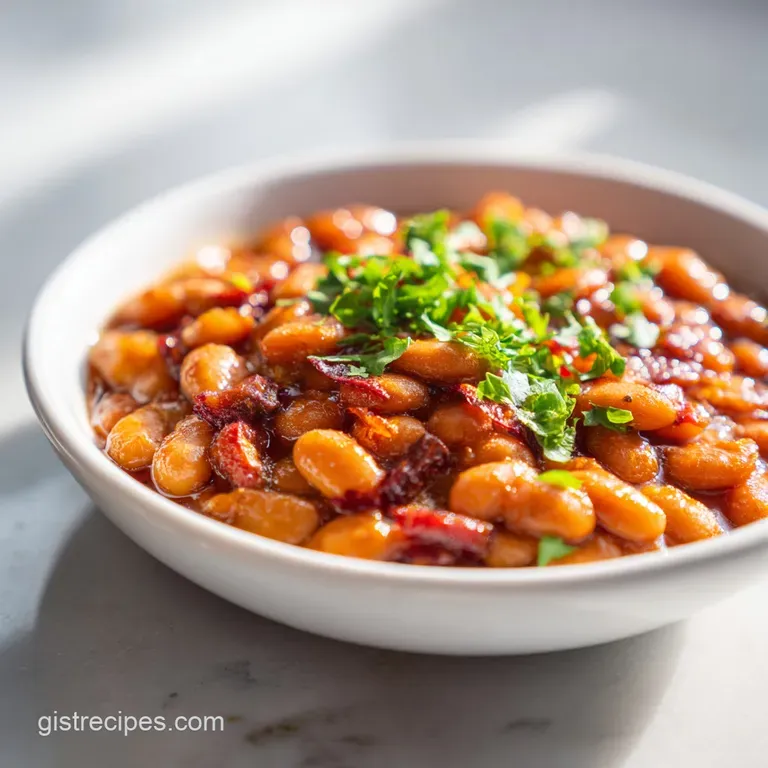
Phase 1: Rendering Liquid Gold
Place the 6 slices of diced bacon in a cold Dutch oven or deep skillet. Turn the heat to medium and cook 8 minutes until the fat has rendered and the bacon is crispy. Starting with a cold pan ensures the fat melts out before the meat burns.
Phase 2: Building Aromatics
Add the diced yellow onion and green bell pepper directly into the bacon fat. Sauté for 5 minutes until the onions are translucent and the peppers have softened.
Add the 3 cloves of minced garlic and cook for 1 minute more until the aroma hits you, being careful not to brown the garlic.
Phase 3: The Marriage of Flavors
Stir in the 1 cup of BBQ sauce, 1/4 cup molasses, 1/3 cup brown sugar, 2 tbsp apple cider vinegar, 1 tbsp yellow mustard, 1 tsp smoked paprika, and 1/2 tsp black pepper. Whisk gently until the sugar has completely dissolved into the liquid.
Phase 4: The Low Simmer Reduction
Fold in the 3 cans of rinsed Navy beans and the 1/2 cup of beef stock. Bring the mixture to a gentle bubble, then reduce the heat to low. Simmer, uncovered, for 35 minutes until the sauce has thickened into a dark, syrupy glaze.
Note: Simmering uncovered is key for evaporation and flavor concentration.
Phase 5: The Final Rest
Remove the pot from the heat and let it sit for 5 minutes before serving. This allows the starches to settle and the sauce to fully adhere to the beans, ensuring a velvety mouthfeel.
Solving Common Cooking Problems
Fixing Thin Sauces
If your beans look more like a soup than a side dish, it’s usually because the heat was too low or you didn't simmer long enough. The sauce needs to reduce by about a third to reach that iconic syrupy consistency.
Balancing Overly Sweet Beans
Sometimes a specific brand of BBQ sauce can tip the scales toward cloying. If the dish feels too sugary, don't add more salt; instead, add another teaspoon of apple cider vinegar or a splash of yellow mustard. The acidity will balance the sugar.
| Problem | Root Cause | Solution |
|---|---|---|
| Mushy beans | Overcooking or high heat | Simmer on low; use Navy beans which hold structure better. |
| Burnt bottom | High sugar + thin pot | Use cast iron; stir every 10 minutes to prevent sticking. |
| Bland flavor | Lack of acidity | Add a capful of ACV or a squeeze of lime at the very end. |
Common Mistakes Checklist
- ✓ Always rinse canned beans to remove the metallic tasting liquid and excess sodium.
- ✓ Don't drain the bacon fat; it is the primary source of authentic smoky flavor.
- ✓ Avoid using "light" molasses; the dark or blackstrap variety provides the necessary depth.
- ✓ Sauté the aromatics fully before adding the sauce; crunchy onions ruin the velvety texture.
- ✓ Simmer uncovered; if you trap the steam, the sauce will never thicken properly.
Proper Storage and Waste Tips
These beans actually taste better the next day because the flavors have more time to meld and the starches stabilize. Store them in an airtight container in the fridge for up to 4 days. When reheating, the sauce will have thickened significantly, so add a tablespoon of water or beef stock to loosen it back up.
For zero waste, save your bacon grease in a jar for future sautés, and if you have leftover diced peppers or onions, freeze them in a small bag for your next soup or omelet. This bbq beans recipe also freezes surprisingly well for up to 3 months.
Just thaw it in the fridge overnight before reheating on the stovetop.
Creative Flavor Variation Ideas
Adding a Spicy Kick
For a "Texas style" variation, add a finely diced jalapeño (seeds included if you're brave) along with the onions and peppers. You can also swap the smoked paprika for chipotle powder to add a deeper, spicy smokiness that lingers.
Slow Cooker Adaptation
If you want to set it and forget it, sauté the bacon and aromatics first, then dump everything into a slow cooker. Set it on low for 4 hours. You might need to leave the lid cracked for the last 30 minutes to help the sauce thicken, as slow cookers trap a lot of moisture.
| Serving Size | Ingredient Adjustments | Pan Size | Cook Time |
|---|---|---|---|
| 4 people | Halve all ingredients; use 1/4 cup stock | 10 inch skillet | 25 minutes |
| 8 people | Use official recipe quantities | 5 quart Dutch oven | 35 minutes |
| 16 people | Double ingredients; 1 cup stock | 7 quart Dutch oven | 50 minutes |
Perfect Pairings for the Grill
When I serve this bbq beans recipe, I always think about the plate as a whole. You need something to cut through the richness. A sharp, vinegar based slaw or a tray of my Tennessee Onions Recipe works perfectly because the caramelized onions echo the sweetness of the beans while providing a different textural contrast.
Chef's Tip: If you want a "burnt ends" vibe without the 12 hour smoke, take 1/2 cup of the finished beans and mash them with a fork, then stir them back in. This creates an incredibly thick, rustic texture that feels like it came from a legendary BBQ shack.
Recipe Myths Debunked
One common myth is that you must soak beans for this recipe. Since we are using high-quality canned Navy beans, soaking is completely unnecessary and would actually make these specific beans too soft. The canning process already "pre cooks" them to the perfect starting point for a 35 minute simmer.
Another misconception is that more sugar equals more flavor. In reality, the 1/3 cup of dark brown sugar is there to provide structure to the sauce, but the real flavor comes from the 1 tsp of smoked paprika and the rendered bacon fat. Adding too much sugar just masks the complexity of the aromatics.
Finally, people often think you need a smoker to get "real" BBQ beans. While a smoker is great, the combination of thick cut bacon, smoked paprika, and a St Louis style sauce provides all the authentic smoky notes you need for a restaurant quality result right on your stove.
| Thickness | Internal Temp | Rest Time | Visual Cue |
|---|---|---|---|
| Thin/Runny | 190°F (88°C) | 0 mins | Liquid moves freely when stirred. |
| Syrupy | 210°F (99°C) | 5 mins | Sauce coats the back of a spoon. |
| Glazed | 215°F (102°C) | 10 mins | Beans stay piled up when scooped. |
Serving and Presentation
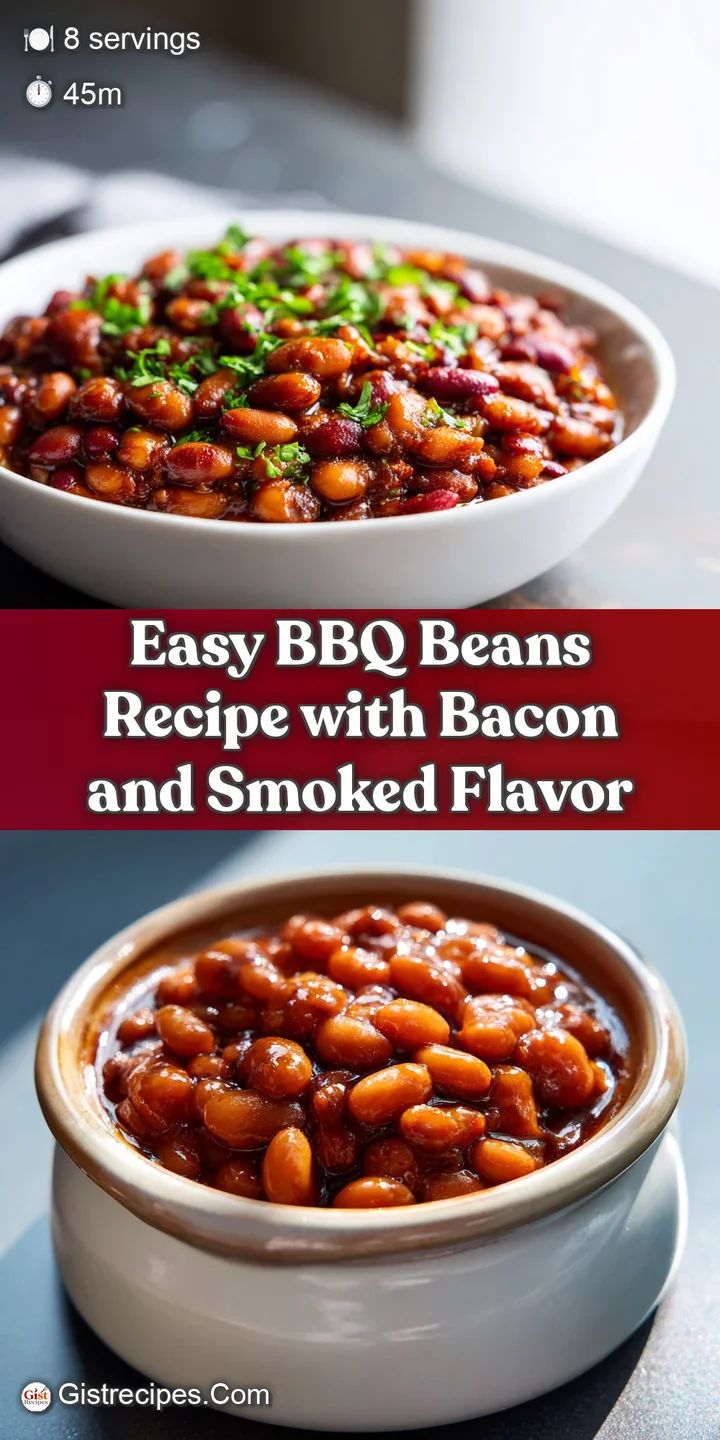
When you're ready to serve, don't just dump them into a bowl. Use a shallow serving dish to show off the glossy glaze and the bits of crispy bacon. A tiny sprinkle of fresh parsley or some thinly sliced green onions can add a pop of color that breaks up the deep browns and reds.
It makes the dish look as bright and exciting as it tastes.
Right then, you've got the science, the steps, and the secrets. Whether you're making this for a Tuesday night dinner or a big weekend cookout, these beans are going to be the thing everyone asks for the recipe for. Just remember: low and slow is the way to go for that perfect reduction. Happy cooking!
Recipe FAQs
How do you make barbecue beans?
Render bacon fat, sauté aromatics (onion/pepper), then simmer beans in BBQ sauce, molasses, and vinegar. This creates a rich, smoky base by first building flavor in the rendered fat before incorporating the sugars and beans for thickening.
Ensure you simmer uncovered for 35 minutes for proper glaze reduction.
How do you make Texan BBQ beans?
Increase the savory/spicy components and use beef stock instead of water. Texan style often leans less sweet and incorporates more heat and robust meat flavors, like adding smoked paprika or a dash of hot sauce during the simmer. If you enjoy deeply savory sides, you should also check out our Black Eyed Pea recipe for another hearty, flavorful side.
What kind of beans are in barbecue beans?
Navy beans are the traditional choice, but Great Northern or Cannelini work well. Navy beans are preferred because they are small, dense, and hold their shape during the long simmer without turning overly mushy. They absorb the thick sauce nicely without disintegrating into the glaze.
What's the difference between BBQ beans and baked beans?
BBQ beans are richer, smokier, and typically use a thick, molasses heavy glaze, while classic baked beans are sweeter and thinner. Traditional baked beans often rely more on molasses and mustard for sweetness, whereas BBQ beans heavily integrate smoked paprika and tomato based BBQ sauce for that signature savory smoke profile. Mastering the sauce viscosity is key, similar to achieving the perfect glaze in our Grilled Chicken Veggie recipe to ensure coating.
Why are my BBQ beans too watery?
Your sauce did not reduce enough, likely due to a lid being placed on the pot during simmering. To fix this, remove the lid entirely and continue simmering on low heat until the sauce coats the back of a spoon. Evaporation is crucial for thickening the sugars and starches into a proper glaze.
Can I skip rendering the bacon?
No, skipping the bacon rendering removes the essential smoky fat base for the entire dish. The rendered bacon fat is used to sauté the onions and peppers, infusing the aromatics with the savory, salty foundation that defines true BBQ beans. This flavor infusion technique is vital for deep umami.
Is it true that I must use dark molasses instead of light?
Yes, use dark molasses for complexity and color; light molasses is too sweet. Dark molasses provides an earthy, slightly bitter note that balances the brown sugar and cuts through the richness of the bacon fat, which is critical for a sophisticated flavor profile. If you rely on similar balancing techniques in savory dishes, you'll appreciate the control required for our Mississippi Meatballs recipe.
Easy Bbq Beans Recipe
Ingredients:
Instructions:
Nutrition Facts:
| Calories | 312 calories |
|---|---|
| Protein | 10.6 g |
| Fat | 6.8 g |
| Carbs | 54.2 g |
| Fiber | 7.1 g |
| Sugar | 31.4 g |
| Sodium | 685 mg |
