French Onion Meatloaf: Tender and Savory
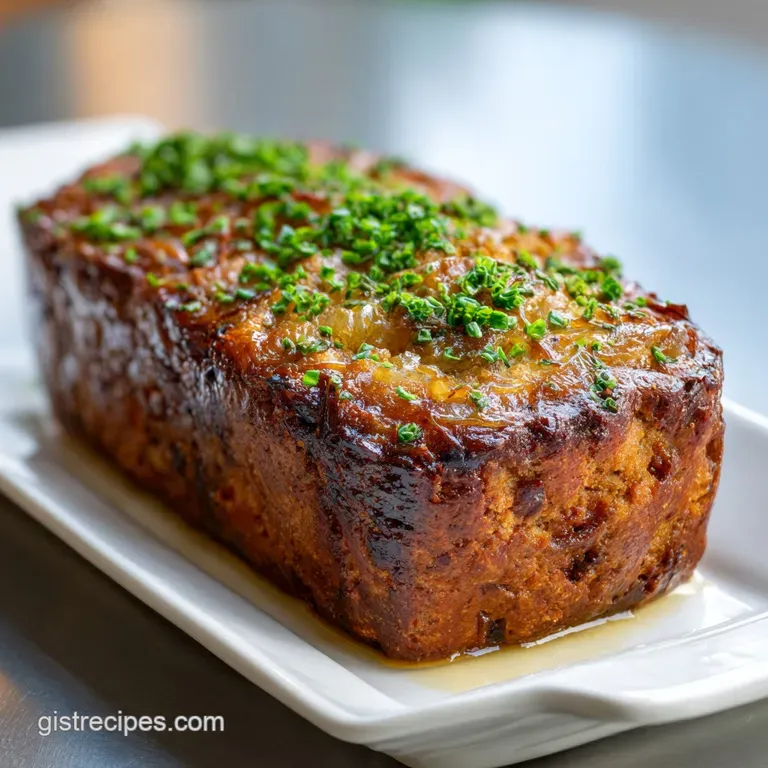
- Time: Active 15 minutes, Passive 60 mins, Total 75 mins
- Flavor/Texture Hook: Savory caramelized sweetness meets molten Gruyère
- Perfect for: Cozy family dinners and impressive weekend meal prep
- Creating a Savory French Onion Meatloaf
- The Science of Savory Layers
- Essential Cooking Time Specs
- Essential Ingredients and Best Swaps
- Kitchen Tools for This Dish
- Step-by-Step Cooking Instructions
- Solving Common Texture Problems
- Adjusting Portions for Larger Crowds
- Customizing the Flavor Profile
- Storing and Reusing Your Leftovers
- Perfect Pairings and Serving Tips
- High in Sodium
- Recipe FAQs
- 📝 Recipe Card
Creating a Savory French Onion Meatloaf
Have you ever stood over a skillet, just watching onions turn from sharp and white to that gorgeous, jammy gold? It's one of those kitchen moments where the aroma alone feels like a warm hug. Last Tuesday, I was craving French onion soup, but my family was definitely in the mood for something more substantial.
I decided to see if I could marry the two, and honestly, the result was a total house favorite that vanished before I could even grab seconds.
The secret isn't just throwing onions into the meat; it’s the patience of the caramelization process. When those onions hit the butter and sugar, they release this deep, earthy sweetness that balances the saltiness of the beef.
It’s the kind of meal that makes the whole house smell like a high end bistro, even if you’re just wearing your favorite old apron and listening to a podcast while you cook.
We aren't making a dry, crumbly loaf here. We’re building something velvety and rich. By the time that Gruyère cheese starts bubbling and browning on top, you'll know exactly why this dish is special. It’s traditional comfort food with a little bit of flair, and I can't wait for you to try it.
The Science of Savory Layers
The Maillard Magic: Slow cooking the onions with sugar triggers a chemical reaction between amino acids and reducing sugars, creating hundreds of complex flavor compounds that raw onions lack.
Structural Integrity Panade: Mixing panko with whole milk creates a gel like starch paste that coats the meat fibers, preventing them from tightening into a tough, rubbery block during the bake.
Fat Emulsification: The inclusion of beaten eggs and Parmesan cheese acts as a binder that holds the fat from the 80/20 beef in place, ensuring the juices stay inside the loaf rather than leaking onto the tray.
Enzymatic Tenderization: The balsamic glaze and Worcestershire sauce provide acidity that slightly breaks down surface proteins, allowing the savory flavors to penetrate deeper into the meat.
| Thickness | Internal Temp | Rest Time | Visual Cue |
|---|---|---|---|
| 10 cm Loaf | 71°C (160°F) | 10 minutes | Juices run clear when pierced |
| 12 cm Loaf | 71°C (160°F) | 15 minutes | Top is deeply browned and firm |
| Mini Loaves | 71°C (160°F) | 5 minutes | Cheese is fully melted and golden |
This table helps you decide exactly when to pull your meal from the oven based on how you shaped it. While a standard loaf is classic, smaller individual portions can shave off nearly 20 minutes of cook time if you're in a bit of a rush.
Just keep that meat thermometer handy because hitting 71°C is the golden rule for safety and texture.
Essential Cooking Time Specs
| Component | Science Role | Pro Secret |
|---|---|---|
| Yellow Onions | Flavor Foundation | Slice them paper thin for maximum surface area and faster caramelization |
| Gruyère Cheese | Fat and Salt | Grate it yourself from a block for a smoother melt than pre shredded bags |
| Whole Milk | Hydration | Use full fat milk to add a velvety richness to the breadcrumb panade |
| Balsamic Glaze | Acid Balance | Brush it on in the last 10 minutes to create a tacky, sweet tart finish |
The interaction between the dairy and the beef is vital for that "melt in-your mouth" feel we’re after. If you've ever had a meatloaf that felt like a brick, it was likely missing the milk soaked breadcrumbs that we use here. This French Onion Meatloaf pairs perfectly with my Tennessee Onions Recipe if you really want to lean into that onion forward flavor profile for a side dish.
Essential Ingredients and Best Swaps
- 2 large yellow onions: Sliced thin. Why this? They have the highest sugar content for perfect, jammy caramelization.
- 2 lbs 80/20 ground beef: The base protein. Why this? The 20% fat content is necessary to keep the loaf moist.
- 1 cup panko breadcrumbs: The binder. Why this? Panko stays airy and prevents the meatloaf from becoming too dense.
- 1.5 cups shredded Gruyère: The topping. Why this? It provides that classic, nutty French onion soup finish.
- 2 tbsp Worcestershire sauce: The umami boost. Why this? It adds fermented depth that mimics a long simmered beef broth.
- 1 tbsp French onion soup mix: The seasoning. Why this? It reinforces the onion flavor throughout every bite of meat.
- 0.33 cup whole milk: For moisture. Why this? It hydrates the panko to create a tender, soft crumb.
- 2 large eggs: For structure. Why this? They bind the ingredients so the loaf doesn't fall apart when sliced.
- 1 tbsp balsamic glaze: For the finish. Why this? It cuts through the richness with a hit of bright acidity.
| Original Ingredient | Substitute | Why It Works |
|---|---|---|
| Gruyère Cheese | Sharp Swiss | Similar melting point and nutty profile. Note: Slightly less creamy |
| Panko Breadcrumbs | Crushed Saltines | Provides a salty, buttery binder that holds moisture well |
| 80/20 Ground Beef | Ground Turkey (9% fat) | Leaner option. Note: Result will be significantly drier; add 1 tbsp olive oil |
When you’re swapping ingredients, keep in mind that fat is flavor. If you go for a leaner meat, you'll need to compensate with a bit more moisture or fat elsewhere, perhaps an extra splash of milk. If you love these savory, handheld meat bites, you'll also enjoy my BBQ Meatball Recipe.
Kitchen Tools for This Dish
You won't need anything fancy here, just your standard kitchen staples. A large heavy bottomed skillet is your best friend for the onions cast iron or stainless steel works wonders for getting that even brown color.
For the loaf itself, a standard 9x5 inch loaf pan is great, but I actually prefer using a rimmed baking sheet.
Baking it on a flat sheet allows the heat to circulate around the entire loaf, creating a better crust on all sides rather than just the top. You'll also want a meat thermometer to ensure you aren't guessing at the doneness.
There’s nothing worse than cutting into a loaf only to find it's either raw in the middle or bone dry from overcooking.
step-by-step Cooking Instructions
1. The Onion Foundation
Melt 2 tbsp unsalted butter in a large skillet over medium low heat. Add the 2 large yellow onions, 1 tsp sugar, and 0.5 tsp salt. Cook for about 20-25 minutes, stirring occasionally, until they are deep mahogany and jam like.
2. The Panade
In a small bowl, combine 1 cup panko breadcrumbs and 0.33 cup whole milk. Let this sit for 5 minutes until the liquid is fully absorbed into a paste. Note: This prevents the breadcrumbs from robbing moisture from the meat.
3. Savory Seasoning
In a large mixing bowl, whisk together the 2 beaten eggs, 2 tbsp Worcestershire sauce, 1 tbsp French onion soup mix, and 0.5 cup freshly grated Parmesan cheese. Stir in the 0.25 cup beef stock and the cooled caramelized onions.
4. Gentle Assembly
Add the 2 lbs ground beef to the bowl. Use your hands to gently fold everything together until just combined. Note: Over mixing will make the meatloaf tough like a hockey puck.
5. Shaping the Loaf
Place the mixture onto a parchment lined baking sheet and shape it into a loaf roughly 10 cm wide and 25 cm long. Smooth the top with a spatula to ensure it brows evenly.
6. The First Roast
Preheat your oven to 180°C. Bake the meatloaf for 45 minutes until the surface is browned and the center feels firm.
7. The Cheesy Crown
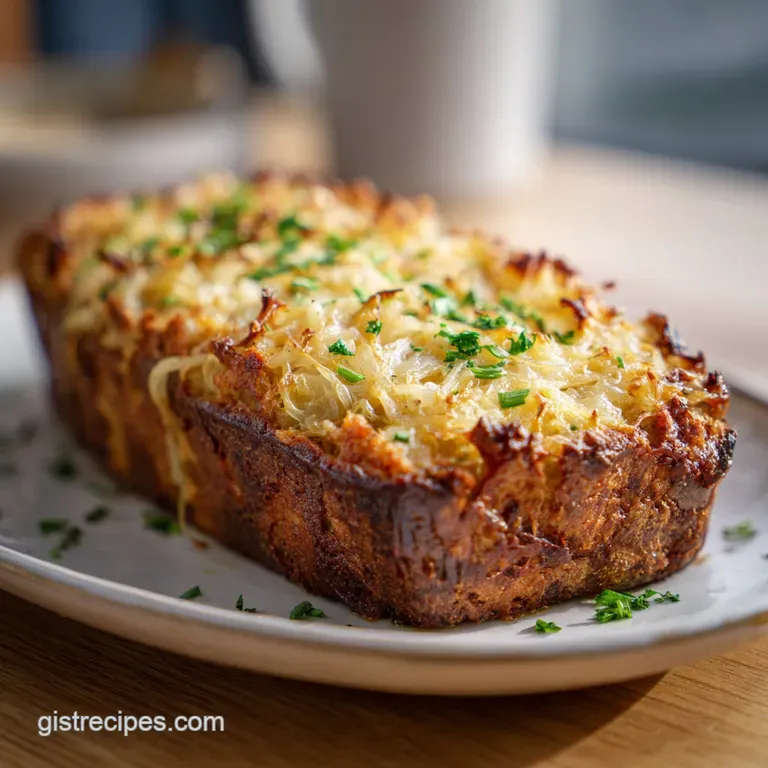
Remove the loaf and brush the top with 1 tbsp balsamic glaze. Pile the 1.5 cups of shredded Gruyère cheese on top, pressing down slightly so it stays put.
8. The Grand Finale
Return to the oven for another 10-15 minutes until the cheese is bubbling and starting to brown in spots.
9. The Critical Rest
Remove the meatloaf from the oven and let it sit for at least 10 minutes before slicing. Note: This allows the juices to redistribute so they don't pour out when you cut it.
10. Garnish and Serve
Sprinkle with fresh thyme and slice into thick slabs. The center should be juicy and the cheese should stretch with every piece.
Chef's Tip: If you want a deeper flavor, add a teaspoon of espresso powder to the beef mixture. It won't taste like coffee, but it will make the beef taste "beefier" and more intense.
Solving Common Texture Problems
Fixing a Greasy Loaf
Sometimes the fat from the beef pools around the bottom of the meatloaf, making the base a bit soggy. This usually happens when the beef is extra fatty or the loaf is cooked in a tight pan.
To fix this, always bake your loaf on a wire rack set over a baking sheet, or simply use a spoon to drain the excess fat halfway through the cooking time.
Preventing a Crumbly Texture
A crumbly meatloaf is usually a sign that it didn't have enough binder or the panade was too dry. If you find the mixture feels loose while you're shaping it, add one more tablespoon of milk or an extra egg yolk. The egg acts as the "glue" that keeps the protein structures together once they heat up and set.
| Problem | Root Cause | Solution |
|---|---|---|
| Meat is dry | Overcooked or lean meat | Pull at 71°C and ensure 80/20 fat ratio |
| Loaf falls apart | Not enough binder/eggs | Increase panko or add one extra egg yolk |
| Onions are crunchy | Under caramelized | Cook onions for at least 20 mins before adding to meat |
- ✓ Pat the meat cold and keep it chilled until you're ready to mix.
- ✓ Sauté the onions until they are completely soft crunchy onions ruin the texture.
- ✓ Use a light touch when mixing; pretend you're folding egg whites.
- ✓ Never skip the resting period, or all that moisture will end up on the cutting board.
- ✓ Use a rimmed baking sheet to let the fat drain away from the meat.
Adjusting Portions for Larger Crowds
If you're looking to feed a large group, doubling this recipe is fairly straightforward. However, don't just double everything blindly. For the spices and salt, start with 1.5x the amount and taste a tiny bit of the mixture (sauté a small patty to check) before adding the rest.
For the liquids, reduce the total by about 10% to ensure the loaf isn't too wet to hold its shape.
When baking two loaves at once, make sure there is at least 5 cm of space between them on the baking sheet to allow for proper air circulation. You might need to add about 10-15 minutes to the total bake time since the oven has more mass to heat through.
If you're cutting the recipe in half, use a smaller loaf pan and start checking the internal temperature around the 35 minute mark.
| Fresh Onions | Shortcut Mix | Flavor Impact | Savings |
|---|---|---|---|
| Hand sliced & Sautéed | Dried Onion Flakes | Deep, jammy sweetness | Best texture, higher effort |
| 20 min slow cook | Instant rehydration | Sharp, salty kick | Consistent, 15 min faster |
Customizing the Flavor Profile
- For an Easy French Onion Meatloaf Twist: Use a store-bought jar of caramelized onion jam if you're in a total rush. Just reduce the sugar in the recipe so it isn't overly sweet.
- For a Traditional Old Fashioned French Onion Meatloaf: Swap the Gruyère for sharp cheddar and use crushed crackers instead of panko for that nostalgic "grandma's kitchen" flavor.
- For Restaurant Quality Flavor: Deglaze your onion skillet with a splash of dry sherry or brandy before adding the onions to the meat mixture. This adds a sophisticated depth that mimics the best bistro soups.
Choosing the right cheese can completely change the vibe of the dish. While Gruyère is the standard, a mix of Mozzarella and Provolone gives you an incredible cheese pull that kids absolutely love.
If you want something sharper, a bit of Fontina mixed in adds a wonderful funkiness that stands up well to the beef.
Storing and Reusing Your Leftovers
This meatloaf keeps beautifully in the fridge for up to 4 days. In fact, some people argue it tastes even better the next day once the flavors have had more time to mingle. Store it in an airtight container to keep it from drying out.
For reheating, I recommend a low oven (150°C) covered with foil to keep the moisture in, or simply fry thick slices in a pan with a little butter for a "meatloaf steak" experience.
For freezing, you can freeze the loaf either raw or cooked. If raw, wrap it tightly in plastic wrap and then foil, and it will stay fresh for 3 months. Thaw it completely in the fridge before baking as usual.
If you have leftovers you won't eat, crumble the meatloaf into a tomato sauce for a "French Onion Bolognese" the caramelized onions and Gruyère add a crazy amount of flavor to a standard pasta night.
Perfect Pairings and Serving Tips
To truly lean into that bistro feel, serve this meatloaf with a side of creamy mashed potatoes or a crisp green salad tossed in a simple vinaigrette. The richness of the beef and cheese needs a bit of acidity or starch to balance things out.
A side of roasted green beans with a squeeze of lemon is also a fantastic way to keep the meal feeling fresh and not too heavy.
If you’re hosting a dinner party, consider making individual mini meatloaves in a muffin tin. They look adorable, cook faster, and everyone gets their own "crusty" edges and cheese topping. Just adjust the cooking time to about 25-30 minutes and keep an eye on them.
Whatever you do, make sure to serve it while the cheese is still warm and stretchy that first bite is pure magic.

High in Sodium
842 mg mg of sodium per serving (37% % of daily value)
The American Heart Association recommends limiting sodium intake to about 2,300mg per day for optimal health.
Tips to Reduce Sodium in This Recipe
-
Low-Sodium Broth-30%
Replace the regular beef stock with a low-sodium or no-sodium beef broth. This can significantly reduce the sodium content without sacrificing flavor.
-
Reduce Cheese-15%
Use less Parmesan and Gruyère cheese, or substitute with a lower sodium cheese option like Swiss. Cheese is a significant source of sodium.
-
Cut Back Salt-25%
Reduce the amount of added salt by half, or eliminate it entirely. Taste the dish as you cook and adjust accordingly; you might not miss it!
-
Homemade Soup Mix-15%
Omit the French onion soup mix entirely. It contributes a high amount of sodium. You can add more caramelized onions for flavor.
-
Low-Sodium Sauce-10%
Use a low-sodium Worcestershire sauce, or reduce the amount used. This common condiment can add a surprising amount of sodium.
-
Enhance with Herbs
Use fresh thyme and other herbs like rosemary or parsley to boost flavor naturally. Fresh herbs enhance the dish without adding any sodium.
Recipe FAQs
What is the one ingredient upgrade for better meatloaf?
Soak the breadcrumbs in milk first. This creates a "panade" which injects moisture directly into the meat mixture, ensuring the loaf is velvety and not dense.
What not to put in meatloaf?
Do not overwork the meat mixture once combined. Aggressive mixing develops the proteins, leading to a tough, rubbery texture similar to an over kneaded bread dough.
Can you use French fried onions instead of breadcrumbs in meatloaf?
No, use panko or fresh breadcrumbs for binding. French fried onions are for topping or flavor inclusion, but they lack the starch structure needed to properly absorb the liquids and bind the meat.
What are common meatloaf mistakes?
Baking without resting the meatloaf after cooking. Slicing immediately causes all the internal juices to run out onto the board, leaving the interior dry.
How to ensure the caramelized onions are flavorful enough for the loaf?
Cook the onions low and slow for at least 20 minutes until deep mahogany. The patience during this caramelization step is crucial because it builds the savory depth that defines the French onion flavor profile.
Why is my meatloaf still dry after baking?
You likely used ground meat that was too lean. For best results, use 80/20 ground beef, as the 20% fat content is necessary to keep the loaf moist during the long bake time.
What internal temperature guarantees a moist but safe meatloaf?
Pull the meatloaf from the oven when the center registers 71°C (160°F). Use a thermometer in the thickest part, and remember that the temperature will rise a few degrees while it rests, safely finishing the cooking process.
French Onion Meatloaf Recipe

Ingredients:
Instructions:
Nutrition Facts:
| Calories | 528 kcal |
|---|---|
| Protein | 36.8 g |
| Fat | 34.2 g |
| Carbs | 18.5 g |
| Fiber | 1.4 g |
| Sugar | 5.1 g |
| Sodium | 842 mg |
