Hearty Short Rib Stew for Dinner
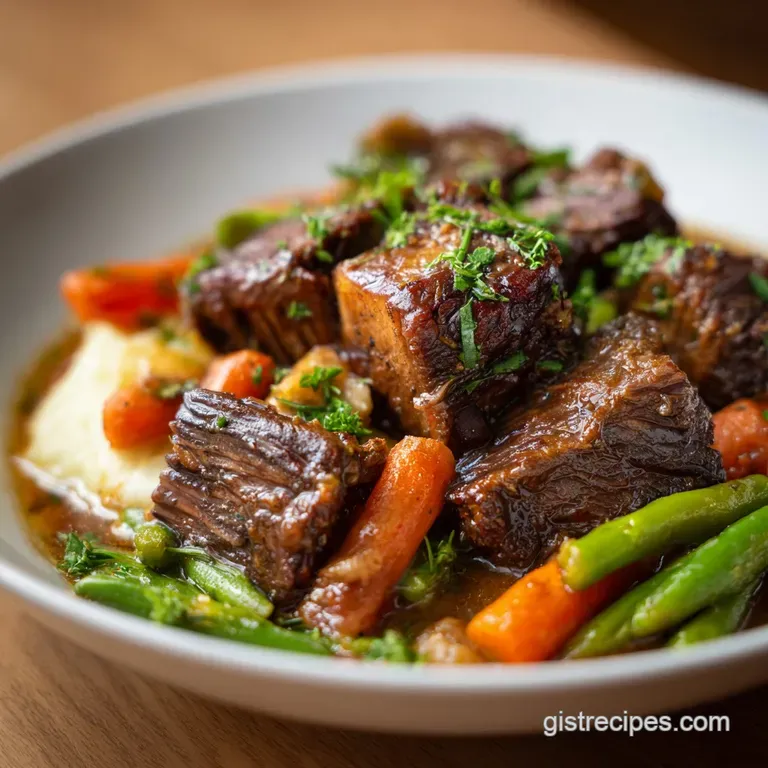
- Time: Active 20 minutes, Passive 3 hours 30 mins, Total 3 hours 50 mins
- Flavor/Texture Hook: Rich, wine infused sauce with meat that falls away from the bone at the touch of a spoon.
- Perfect for: A cozy Sunday family dinner or a cold winter evening when you need a house filling aroma.
- Mastering the Rich Flavors of Short Rib Stew
- Mastering the Alchemy of Collagen Transformation
- Component Deep Dive for Best Results
- Handpicking Your Components for This Stew Recipe
- The Best Tools for a Tender Braised Meal
- The Reliable Path to Falling Off-The Bone Tenderness
- Solving Common Pitfalls with This Stew Recipe
- Key Numbers for a Hearty Dinner Victory
- Simple Ways to Change Up Your Comfort Food
- Smart Storage and Reheating Tips for Success
- Comforting Side Dishes to Complete Your Meal
- Scaling the Recipe for Any Crowd
- Kitchen Myths Debunked
- High in Sodium
- Recipe FAQs
- 📝 Recipe Card
Mastering the Rich Flavors of Short Rib Stew
The first thing you’ll notice is that specific, heavy sizzle when the beef hits the hot oil. It’s not just noise, it is the sound of flavor being born as the surface of the meat turns a dark, crusted mahogany. I remember the first time I tried making a rib stew without browning the meat properly.
I was in a rush, thinking the boiling liquid would do the work. The result was grey, bland beef that looked more like it belonged in a hospital cafeteria than on a family table. I learned my lesson: the crust is everything.
When you finally pull that heavy pot out of the oven, the aroma of thyme and red wine will hit you like a warm hug. It’s a scent that reminds me of my grandma's kitchen on a rainy afternoon, where nothing was ever rushed and everything was made from scratch.
This isn't a "fast" meal, and that’s exactly why it works. We're letting time do the heavy lifting, turning those tough fibers into something so tender it practically melts. Trust me, the wait is the best part of the process.
We're going to use bone in English cut ribs because they hold their shape during the long simmer and the bones add a silkiness to the sauce that you just can't get with boneless cuts. If you've ever felt intimidated by braising, don't be. It's mostly just sitting around while the oven does the magic.
We'll walk through the specific checkpoints to make sure your beef is perfectly tender every single time.
Mastering the Alchemy of Collagen Transformation
Connective Tissue Melting: At 71°C, the tough collagen in the short ribs begins to break down into gelatin, which gives the sauce its velvety, mouth coating texture.
Maillard Reaction: Searing the meat at a high temperature creates hundreds of new flavor compounds that can't be achieved through simmering alone.
Acidic Brightness: The tannins and acidity in the red wine work to cut through the heavy fat of the beef, balancing the overall richness of the dish.
Starch Thickening: The small amount of flour coating the beef reacts with the rendered fat and broth to create a natural, glossy body for the stew.
| Method | Total Time | Texture | Best For |
|---|---|---|---|
| Dutch Oven | 3 hours 50 mins | Maximum crust, thick sauce | Traditional Sunday dinner |
| Slow Cooker | 8 hours 15 mins | Very soft, less liquid reduction | Set and forget weeknights |
| Pressure Cooker | 1 hour 15 mins | Tender but less flavor depth | When you're in a real pinch |
While this long braise is the ultimate way to spend a weekend afternoon, I know we don't always have four hours to spare. On those nights when I need flavor but I'm short on time, I usually pivot to something like my Chicken Fried Rice recipe which delivers that pan seared satisfaction in a fraction of the time. But when the weather turns cold, nothing beats the slow bubble of this stew.
Component Deep Dive for Best Results
| Ingredient | Science Role | Pro Secret |
|---|---|---|
| Short Ribs | Primary protein and fat source | Buy "English Cut" for the best meat to bone ratio in a stew. |
| Tomato Paste | Umami booster and thickener | Fry it in the center of the pan until it turns rust colored to remove the raw metallic taste. |
| Red Wine | Solvent for flavor and acid | Use a dry Cabernet; the alcohol evaporates, leaving behind concentrated fruit notes. |
| Yukon Gold Potatoes | Starch provider | These hold their shape better than Russets and won't turn into mush during the long cook. |
Handpicking Your Components for This Stew Recipe
- 4 lbs bone in beef short ribs, English cut: These are the star. Why this? The bone adds essential gelatin and deep flavor to the braising liquid.
- Substitute: Beef chuck roast cut into large 3 inch chunks works well if ribs are unavailable.
- 2 tsp kosher salt & 1 tsp coarse black pepper: For essential seasoning.
- Substitute: Sea salt is fine, but avoid fine table salt as it's too easy to over season.
- 3 tbsp neutral oil: For over high heat searing. Why this? Avocado or canola oil won't smoke as much as butter or olive oil.
- Substitute: Beef tallow provides an even richer flavor if you have it.
- 1/4 cup all purpose flour: To help with browning and thickening.
- Substitute: Cornstarch (use half the amount) mixed with water at the end for a gluten-free fix.
- 2 large yellow onions, chunky dice: Provides the aromatic base.
- Substitute: White onions or three large shallots for a slightly sweeter profile.
- 3 large carrots, cut into 1 inch rounds: Adds natural sweetness.
- 2 stalks celery, sliced 1/2 inch thick: Completes the mirepoix.
- 4 cloves garlic, smashed and peeled: Essential pungency.
- 2 tbsp tomato paste: For body and color.
- 2 cups dry red wine (Cabernet or Merlot): For acidity and depth. Why this? High tannins stand up to the heavy fat in short ribs.
- Substitute: 1.5 cups extra broth plus 2 tbsp balsamic vinegar for a non alcoholic version.
- 3 cups beef bone broth: The liquid foundation.
- Substitute: Chicken broth is surprisingly okay, but the color will be lighter.
- 2 bay leaves & 4 sprigs fresh thyme: Classic woody aromatics.
- Substitute: 1 tsp dried thyme if fresh isn't available, but use fresh if possible.
- 1 lb baby Yukon Gold potatoes, halved: The hearty filler.
The Best Tools for a Tender Braised Meal
You really need a heavy bottomed pot for this, like a cast iron Dutch oven. I usually use my Lodge 6 quart pot because it holds heat so consistently. If your pot is too thin, the bottom of the stew might scorch during those three hours in the oven.
A good set of locking tongs is also a lifesaver for flipping the heavy ribs without splashing hot oil everywhere.
Aside from the pot, make sure you have a sharp chef's knife for those chunky vegetables. Since we're cutting everything into large pieces, you don't need fancy knife skills, just a tool that can get through a thick carrot without slipping.
A wooden spoon is best for scraping the bottom of the pot we call those browned bits "fond," and they are the gold nuggets of the culinary world.
The Reliable Path to Falling Off-The Bone Tenderness
- Prep the meat. Pat the 4 lbs of short ribs completely dry with paper towels. Note: Moisture is the enemy of a good sear; wet meat will steam instead of crusting.
- Season and flour. Sprinkle the ribs with 2 tsp salt and 1 tsp pepper, then lightly dust with 1/4 cup flour, shaking off any excess.
- Sear the ribs. Heat 3 tbsp oil in your Dutch oven over medium high heat. Brown the ribs in batches for 3-4 minutes per side until a dark, crispy crust forms. Remove to a plate.
- Sauté the aromatics. Lower heat to medium and add the 2 diced onions, 3 sliced carrots, and 2 stalks of celery. Cook for 5-7 minutes until the onions are translucent and edges start to brown.
- Add flavor base. Stir in the 4 smashed garlic cloves and 2 tbsp tomato paste. Cook for 2 minutes until the paste smells sweet and looks dark red.
- Deglaze the pot. Pour in the 2 cups of red wine. Use your wooden spoon to scrape every single browned bit off the bottom. Note: This is where the sauce's color and deep flavor come from.
- Return the meat. Place the ribs and any juices back into the pot, then pour in 3 cups beef broth, 2 bay leaves, and 4 thyme sprigs. The liquid should almost cover the meat.
- The long braise. Cover tightly and move to a 160°C (325°F) oven. Bake for 2.5 hours. The aroma should be rich and savory throughout the house.
- Add the potatoes. Carefully stir in the 1 lb of halved Yukon Gold potatoes. Cover and return to the oven for another 45-60 minutes until the potatoes are tender and the meat pulls apart with a fork.
- Final rest. Remove from the oven and let it sit, covered, for 10 minutes before serving. Note: This allows the fibers to relax and soak up more of that velvety sauce.
Solving Common Pitfalls with This Stew Recipe
If the Meat is Still Tough
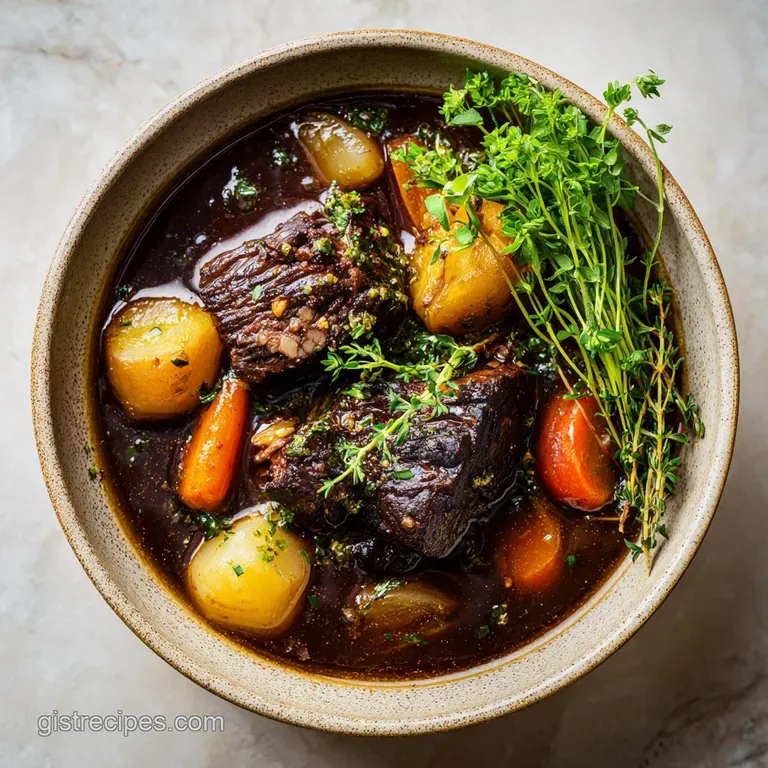
Short ribs are stubborn. If they aren't tender after the allotted time, it usually just means the collagen hasn't finished its transformation yet. Every cow is different, and some cuts just need an extra 30 minutes.
If the Sauce is Too Greasy
Short ribs are a fatty cut, and sometimes that oil pools on top. You can use a wide spoon to skim it off, or better yet, press a piece of bread or a paper towel lightly against the surface to soak up the excess fat.
| Problem | Root Cause | Solution |
|---|---|---|
| Meat is dry/stringy | Boiled too hard or cooked too long | Keep the temperature low (160°C) and check at the 3 hour mark. |
| Sauce is thin/watery | Not enough reduction or flour | Simmer uncovered on the stovetop for 10 mins at the very end. |
| Vegetables are mushy | Added too early in the process | Always add the potatoes in the final hour of cooking. |
- ✓ Skipping the sear
- You’ll lose 50% of the flavor potential without that crust.
- ✓ Using "cooking wine"
- Use a wine you’d actually drink; if it tastes bad in a glass, it will taste bad in the stew.
- ✓ Crowding the pan
- Sear the meat in batches so the temperature of the oil doesn't drop.
- ✓ Not scraping the "fond"
- Those brown bits on the bottom are the secret to a professional tasting sauce.
- ✓ Forgetting to pat the meat dry
- Wet meat won't brown, it will just turn grey.
Key Numbers for a Hearty Dinner Victory
Braising is all about the relationship between time and temperature. You want the liquid to be at a very gentle simmer, not a rolling boil. In the oven, this is much easier to control than on the stovetop.
- Sear Temperature: The oil should be shimmering and just starting to wisps of smoke before the meat goes in.
- Internal Temperature: The beef is "done" at 70°C, but it isn't "tender" until it hits about 95°C internally.
- The Rest: Never skip the 10 minute rest after taking it out of the oven. It's the difference between a dry bite and a juicy one.
Simple Ways to Change Up Your Comfort Food
If you want to take this in a different direction, try a Korean Short Rib Stew twist. Swap the red wine for a mixture of soy sauce, pear juice, and ginger. It's a completely different flavor profile sweet and salty but uses the same slow cooking technique.
For a more rustic feel, you can omit the potatoes and serve the thick, braised ribs over a bed of creamy polenta or wide egg noodles. If you're feeling adventurous, add a handful of dried porcini mushrooms to the broth at the start. They add an earthy, forest like depth that pairs beautifully with the beef.
Smart Storage and Reheating Tips for Success
This stew is a meal prep dream. It stays good in the fridge for up to 4 days, and honestly, the sauce is better on day two because the fats and spices have had time to fully socialize.
Storage: Keep it in an airtight container. Once it chills, a layer of fat will solidify on top. Keep it there! It acts as a seal to keep the meat moist. Just scrape it off before you reheat.
Freezing: This freezes beautifully for up to 3 months. Just make sure the meat is completely submerged in the sauce to prevent freezer burn. Thaw it in the fridge overnight before reheating.
Zero Waste: Don't throw away those herb stems or onion skins! I keep a bag in my freezer for veggie scraps to make my next batch of beef broth. If you have leftover sauce but no meat, it makes an incredible "gravy" for poutine or over mashed potatoes the next night.
Comforting Side Dishes to Complete Your Meal
I usually serve this with a big loaf of crusty sourdough bread to mop up every last drop of that red wine sauce. You want something that can handle the weight of the stew. A simple green salad with a sharp lemon vinaigrette is also great to cut through the richness of the beef.
If you're looking for something more substantial, it pairs wonderfully with Southern style sides like a Black Eyed Pea recipe. The earthy beans complement the savory beef perfectly. Whatever you choose, keep it simple the stew is the undisputed star of the show.
Scaling the Recipe for Any Crowd
Downsizing (1/2 batch): Use a smaller 3 quart Dutch oven. You can reduce the cooking time by about 20%, but keep a close eye on it. The meat still needs to hit that tender point regardless of the batch size.
Upsizing (2x batch): You'll need a massive 8 quart or 10 quart pot. Don't double the salt or spices exactly start with 1.5x and taste at the end. Make sure you still sear in small batches; if you pile all that meat in at once, the pot will cool down and you'll lose your sear.
Kitchen Myths Debunked
Many people believe that searing meat "seals in the juices." This is actually a myth. Searing is entirely about developing flavor through the Maillard reaction. In fact, seared meat actually loses slightly more moisture than unseared meat, but the trade off in flavor is 100% worth it.
Another common misconception is that you need expensive wine for a good braise. While you shouldn't use something that tastes like vinegar, a mid range bottle is perfect. The nuances of a very expensive vintage will be lost after three hours of simmering anyway. Stick to something solid and drinkable.
High in Sodium
815 mg mg of sodium per serving (35% of daily value)
The American Heart Association recommends limiting sodium intake to about 2,300mg per day for overall cardiovascular health.
Tips to Reduce Sodium in Your Short Ribs Recipe
-
Low-Sodium Broth-30%
Substitute the regular beef bone broth with a low-sodium or no-salt added version. This can significantly reduce the overall sodium content of the dish.
-
Reduce Added Salt-25%
Cut back on the amount of kosher salt initially added. Try using only 1 teaspoon instead of 2, and adjust to taste at the end if necessary.
-
Omit Salt When Browning-10%
Do not add any salt when browning the short ribs or vegetables. Salt intensifies flavors as the meat and vegetables cook, but can easily lead to over salting.
-
Fresh Herbs
Enhance the flavor with more fresh herbs like thyme and consider adding other herbs like rosemary or parsley. Fresh herbs offer flavor without adding any sodium.
Recipe FAQs
Are beef short ribs good for stew?
Yes, they are ideal for stewing. Short ribs contain high amounts of connective tissue (collagen) which breaks down during the long, slow cooking process, yielding exceptionally tender meat and a rich, velvety sauce.
What is the best method for cooking beef short ribs for a stew?
Braising in the oven inside a Dutch oven is the best traditional method. Sear the ribs deeply first, then cover them and cook low and slow at around 325°F (160°C) for three to four hours until they are fork tender.
Do short ribs get more tender the longer you cook them?
Yes, up to a point. Tenderness increases significantly as the collagen converts to gelatin, which happens best between 160°F and 205°F. If they are still tough, continue cooking; however, excessive drying out can occur if cooked far beyond the point of required breakdown.
Are short ribs good for soup?
They can be, but stew is better suited for the cut. While you can use them in a broth, short ribs release a great deal of fat and thick gelatin, which is better managed in a rich, reduced braise than in a thin soup base.
Is it true that searing the meat does not seal in the juices?
No, this is a common misconception. Searing creates the Maillard reaction for deep flavor; it does not trap moisture. You should always sear ribs deeply to build flavor before braising, regardless of this old wives' tale.
How do I make the sauce velvety if the final result is too thin?
Simmer the stew uncovered on the stovetop for 10 to 15 minutes after the meat is tender. This allows the sauce to naturally reduce and concentrate the body provided by the rendered gelatin and the cooked vegetables.
How do I ensure the vegetables don't turn to complete mush?
Add heartier vegetables, like potatoes, in the last hour of cooking. If you've mastered controlling the texture in a long cook like this, you’ll find the same patience is key for delicate ingredients in our Chicken Divan Bake recipe.
Hearty Short Rib Stew
Ingredients:
Instructions:
Nutrition Facts:
| Calories | 558 kcal |
|---|---|
| Protein | 44.8 g |
| Fat | 23.4 g |
| Carbs | 33.2 g |
| Fiber | 4.1 g |
| Sugar | 6.8 g |
| Sodium | 815 mg |
