Pistachio Crusted Salmon: Savory & Crunchy
- Time: Active 10 minutes, Passive 10 minutes, Total 20 minutes
- Flavor/Texture Hook: A shattering pistachio crust over velvety, flaky salmon
- Perfect for: An impressive weeknight dinner or a quick dinner for two
- Perfect Results with Pistachio Crusted Salmon
- Why This Texture Technique Works
- Essential Recipe Specifications and Times
- Best Ingredients for Savory Success
- Crucial Kitchen Gear for Roasting
- Step-by-Step Cooking and Crusting Guide
- Preventing Common Salmon Cooking Mistakes
- Easy Dietary and Method Adaptations
- Scaling Guidelines for Different Groups
- Storage Rules and Zero Waste
- Serving Ideas for This Salmon
- Recipe FAQs
- 📝 Recipe Card
Perfect Results with Pistachio Crusted Salmon
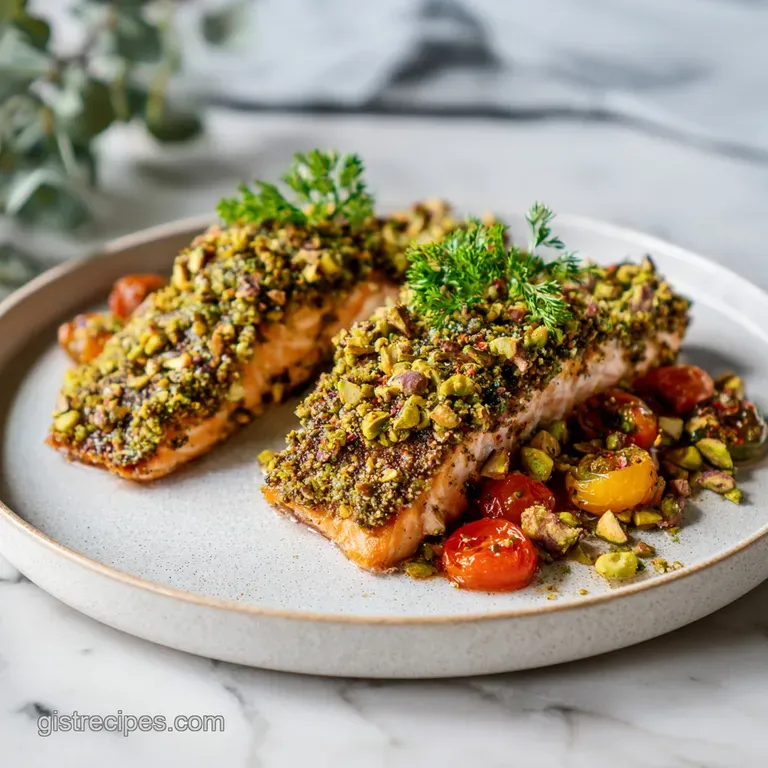
Imagine the sound of a fork hitting a golden brown shell, hearing that distinct shatter before it sinks into a piece of fish so tender it practically melts. That’s the experience I’m obsessed with lately.
I first tried a version of this at a coastal bistro years ago, but the crust was soggy, sliding off the fish like a loose sweater. I went home determined to fix that, and after about four attempts involving messy counters and one very burnt batch of nuts, I found the secret.
It's all about the "glue." Most people just brush on some oil, but we’re using a thick, savory sweet mixture of 1.5 tbsp Dijon mustard and 1 tbsp honey. This doesn't just add flavor; it acts as a moisture barrier that keeps the salmon velvety while ensuring the 1/2 cup of chopped pistachios stays locked in place.
Trust me on this: once you see that vibrant green crust come out of the oven, you won't want to cook salmon any other way.
Right then, let's get into the nitty gritty. This isn't just a recipe; it's a technique for balancing the rich fats of the fish with the earthy, salty snap of the nuts. We’ve all had overcooked, dry fish before honestly, don't even bother if you're going to cook it until it's grey.
We’re aiming for a medium rare to medium center that flakes at the slightest nudge of a finger.
Why This Texture Technique Works
- The Moisture Anchor: Using 1.5 tbsp Dijon mustard creates an emulsified layer that prevents the natural juices of the fish from evaporating too quickly during the 10 minutes of roasting.
- Starch Support: Mixing 1/4 cup Panko breadcrumbs with the 1/2 cup pistachios provides structural integrity, absorbing excess oil from the nuts to ensure the crust remains crisp rather than oily.
- Thermal Insulation: The dense layer of chopped nuts acts as a heat shield, allowing the exterior to brown while the interior of the 6 ounce fillets cooks gently via conduction.
The Binder Moisture Barrier
The honey and mustard mixture is a culinary double agent. The sugar in the 1 tbsp honey encourages a slight caramelization, while the vinegar in the mustard cuts through the fatty salmon. This creates a flavor profile that is high contrast and savory, keeping the palate excited without being overwhelming.
Strategic Nut Toasting Technique
By using roasted, salted pistachios from the start, we skip the raw, grassy flavor of untoasted nuts. The short 10 minutes in the oven provides just enough heat to release the oils in the 65g of pistachios, intensifying the aroma without crossing the line into bitterness.
Controlled Protein Denaturation Basics
When we roast at 400°F (200°C), the proteins in the salmon begin to uncoil and bond. By keeping the cooking time to exactly 10 minutes for a standard 1 inch thick fillet, we stop the process before the muscle fibers squeeze out all the moisture, which is what causes those white protein globs (albumin) to appear.
| Fillet Thickness | Internal Temp | Rest Time | Visual Cue |
|---|---|---|---|
| 1 inch (2.5 cm) | 135°F (57°C) | 3 minutes | Flakes easily with fork |
| 1.5 inches (4 cm) | 135°F (57°C) | 5 minutes | Center is opaque pink |
| 0.5 inch (1.3 cm) | 130°F (54°C) | 2 minutes | Edges are slightly curled |
Essential Recipe Specifications and Times
Getting the timing right is the difference between a meal you remember and one you just eat. We are working with a over high heat environment to ensure the crust gets that vital sizzle while the fish stays succulent. This recipe yields 4 servings and is designed for 6 ounce (170g) fillets.
For the best results, take your salmon out of the fridge 15 minutes before you start. This "tempering" step ensures the middle of the fish doesn't stay cold while the outside overcooks. If you’re looking for a side that matches the brightness of this dish, it pairs wonderfully with a light salad or even a side of Healthy Dinner Idea recipe for a complete nutritional balance.
| Component | Science Role | Pro Secret |
|---|---|---|
| Salmon Fillets | Protein Base | Pat completely dry for better binder adhesion |
| Roasted Pistachios | Fat & Texture | Pulse in a processor for uneven, rustic pieces |
| Dijon Mustard | Emulsifier | Use a coarse grain for extra "bite" and grip |
| Panko Breadcrumbs | Dehydrator | Provides the "air gaps" that lead to shattering crunch |
Best Ingredients for Savory Success
- 4 (6 ounce / 170g) Salmon fillets: Look for center cut pieces with uniform thickness for even cooking. Why this? Ensures all fillets finish roasting at the exact same moment. (Substitute: Steelhead trout for a milder flavor)
- 1/2 cup (65g) Roasted, salted pistachios: These provide the primary flavor and crunch. Why this? Pre roasted nuts have deeper umami and less moisture than raw ones. (Substitute: Chopped walnuts or pecans)
- 1/4 cup (15g) Panko breadcrumbs: Japanese style crumbs are lighter and crispier than traditional ones. Why this? They don't get soggy when mixed with the binder. (Substitute: Crushed pork rinds for keto)
- 1.5 tbsp (22ml) Dijon mustard: This is your "glue." Why this? The acidity balances the high fat content of the salmon. (Substitute: Whole grain mustard or honey mustard)
- 1 tbsp (15ml) Honey: Adds a touch of sweetness and helps with browning. Why this? The sugars create a sticky surface for the nuts to cling to. (Substitute: Maple syrup or agave)
- 1 clove Garlic: Grated into a paste for seamless flavor. Why this? Paste distributes flavor better than minced chunks. (Substitute: 1/4 tsp garlic powder)
- 1 tsp (2g) Lemon zest: Freshness in every bite. Why this? Essential for cutting through the richness of the nuts. (Substitute: Lime zest)
- 1 tbsp (3g) Fresh parsley: Adds a pop of color and herbal notes. Why this? Brightens the overall earthy tone of the pistachios. (Substitute: Fresh dill)
- 1 tbsp (15ml) Avocado oil: High smoke point oil for the pan. Why this? Won't burn or smoke at 400°F temperatures. (Substitute: Grapeseed oil)
- 1/2 tsp (3g) Fine sea salt: To season the fish directly. Why this? Fine salt dissolves faster into the protein fibers. (Substitute: Kosher salt)
- 1/4 tsp (1g) Freshly cracked black pepper: For a subtle heat. Why this? Freshly cracked has more volatile oils than pre ground. (Substitute: White pepper)
Crucial Kitchen Gear for Roasting
You don't need a professional kitchen, but a few specific tools make this much easier. A large rimmed baking sheet is standard, but if you want the absolute best sear on the bottom, a cast iron skillet (like a Lodge) is your best friend.
The heavy metal retains heat and ensures the skin side if you're using skin on gets crisp instead of rubbery.
I also highly recommend using a digital meat thermometer. Estimating doneness by looking at the clock is how salmon ends up dry. For 4 servings, a standard half sheet pan provides enough space so the fillets aren't crowded, allowing hot air to circulate and crisp the crust from all angles.
For the Salmon
- Paper Towels: Essential for drying the fish so the mustard actually sticks.
- Baking Sheet: A heavy duty rimmed sheet pan works best.
For the Pistachio Crust
- Chef's Knife: For hand chopping the pistachios to get those nice, varied textures.
- Mixing Bowl: A small bowl to combine the nuts, panko, and herbs.
For the Honey Mustard Glue
- Small Whisk: To thoroughly combine the 1.5 tbsp Dijon and 1 tbsp honey.
- Silicone Brush: Perfect for painting the mixture onto the salmon without tearing the flesh.
step-by-step Cooking and Crusting Guide
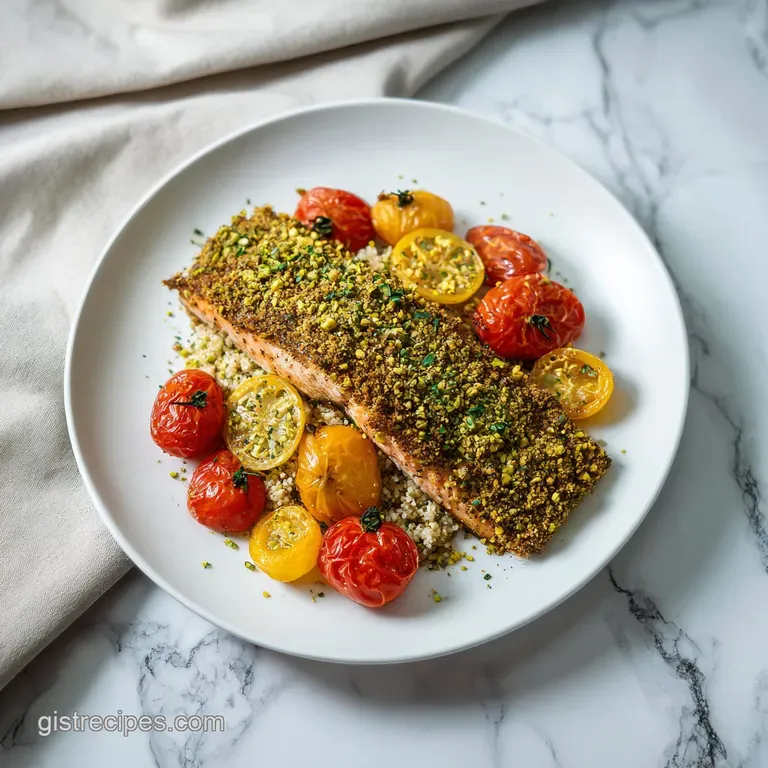
- Prep and Thermal Shock: Preheat your oven to 400°F (200°C) and line your baking sheet with parchment. Note: This prevents sticking and makes cleanup a breeze.
- Dry the Fish: Pat the 4 salmon fillets dry with paper towels until no moisture remains. Note: Wet fish will steam rather than roast, ruining the crust.
- Initial Seasoning: Sprinkle the 1/2 tsp sea salt and 1/4 tsp pepper evenly over both sides of the fillets.
- Whisk the Binder: In a small bowl, combine the 1.5 tbsp Dijon, 1 tbsp honey, and the grated garlic clove.
- Construct the Crust: In a separate bowl, toss together the 1/2 cup chopped pistachios, 1/4 cup panko, 1 tbsp parsley, and 1 tsp lemon zest.
- Apply the Glue: Use a brush to coat the top of each fillet with a thick layer of the mustard mixture. Note: Don't be shy; this is what holds the flavor.
- The Layering Technique: Press the pistachio mixture firmly onto the mustard coated tops. Note: Press down with your palms to ensure it adheres properly.
- The Precision Roast: Place the salmon on the prepared sheet and roast for 10 minutes until the crust is golden and the fish flakes easily.
- Rest and Carryover: Remove from the oven and let rest for 3 minutes. Note: The internal temp will rise about 5 degrees while resting.
- Final Garnish: Squeeze a little extra lemon juice over the top just before serving for a bright finish.
Chef's Tip: If your fillets are extra thick, you can sear the bottom in a pan for 2 minutes before adding the crust and moving to the oven. This ensures the bottom is cooked through without burning the nuts on top.
Preventing Common Salmon Cooking Mistakes
The most common issue I see is the "Soggy Bottom Syndrome." If you cook salmon on a cold pan, the moisture from the fish pools underneath, resulting in a mushy texture. Always make sure your oven is fully preheated.
If you find your crust is browning too fast but the fish is still raw, a loose tent of foil over the top will save it.
Prevent a Soggy Bottom
If you want that restaurant style finish, preheat your baking sheet in the oven for 5 minutes before placing the salmon on it. The immediate sizzle when the fish hits the hot metal creates a sear that locks in the base.
This works particularly well for skin on fillets, making the skin actually edible and delicious.
Fixing a Burnt Crust
If your oven runs hot and the pistachios are darkening too quickly, move the rack to the middle or lower third of the oven. Pistachios have a high oil content and can go from toasted to scorched in under sixty seconds.
If they look dark at the 7 minute mark, pull the salmon out; the residual heat will finish the interior.
| Problem | Root Cause | Solution |
|---|---|---|
| Crust falls off | Fish was too wet | Pat salmon very dry before applying mustard |
| Fish is dry | Overcooking | Pull from oven when internal temp hits 130°F |
| Nut topping is soft | No panko used | Always include panko to absorb moisture and add air |
- ✓ Pat salmon completely dry before seasoning (helps the binder stick)
- ✓ Pulse pistachios rather than grinding them to dust (texture is key)
- ✓ Use room temperature salmon to ensure even cooking through the center
- ✓ Check internal temperature at 8 minutes to avoid overshooting doneness
- ✓ Let the fish rest for 3 minutes to allow juices to redistribute
Easy Dietary and Method Adaptations
This recipe is surprisingly flexible. If you’re looking for a variation that feels more like a finger food, you can try a Bang Bang Salmon recipe approach by cutting the fish into cubes and crusting them individually. It’s a bit more work, but the surface area to crunch ratio is incredible.
For those watching their carbs, you can easily swap the panko for crushed pork rinds or even almond flour. The texture will be slightly denser, but the flavor remains top tier.
Air Fryer Salmon Method
If you want to use your air fryer, set it to 380°F (190°C). Cook the crusted fillets for 7-9 minutes. Because the air fryer circulates heat so efficiently, the crust will be even crispier than the oven version.
Just make sure not to overcrowd the basket, or the air won't be able to reach the sides of the fish.
Low Carb Keto Friendly Version
To make this fully keto, replace the 1 tbsp honey with a sugar-free maple syrup or simply omit it. Increase the Dijon mustard by 1/2 tbsp to maintain the volume of the binder. Replace the panko with additional finely chopped pistachios or almond meal for a rich, high fat crust that fits perfectly into a ketogenic lifestyle.
Scaling Guidelines for Different Groups
- Scaling DOWN (1-2 servings): Use a smaller toaster oven tray to prevent the small amount of oil from spreading too thin and burning. Use half an egg white if the 1.5 tbsp of Dijon feels too thin to hold the nuts on just two fillets.
- Scaling UP (8-12 servings): Don't double the salt immediately; use 1.5x the salt and spices to avoid over seasoning. Roast on two separate baking sheets and rotate them halfway through the 10 minutes to account for oven hot spots.
- Baking Large Batches: If you're doubling the recipe, reduce the honey by 10% to prevent the large volume of sugar from burning before the fish is done. Use a convection setting if available, but lower the temperature by 25°F.
Storage Rules and Zero Waste
- Storage: Keep leftover Pistachio Crusted Salmon in an airtight container in the fridge for up to 3 days. To reheat, use an oven or air fryer at 325°F for 5 minutes. Avoid the microwave, as it will make the crust chewy and the fish rubbery.
- Freezing: You can freeze the raw, crusted fillets for up to 2 months. Wrap them tightly in plastic wrap and then foil. To cook, thaw overnight in the fridge and roast as directed, adding 2 extra minutes to the cook time.
- Zero Waste Tip: If you have leftover pistachio crust mixture, don't toss it! It’s fantastic toasted in a dry pan and sprinkled over roasted asparagus or even a simple pasta with olive oil. You can also use it as a coating for chicken breasts the next night.
Serving Ideas for This Salmon
Presentation is everything with a dish this colorful. I like to serve this on a dark plate to make the green pistachios and pink salmon pop. A side of lemon infused quinoa or a simple arugula salad with a light vinaigrette provides the necessary acidity to balance the savory nuts.
Elegant Dinner Presentation Ideas
For a more formal vibe, serve each fillet over a bed of velvety cauliflower purée. The contrast between the smooth white purée and the rugged green crust is stunning. Garnish with a few whole roasted pistachios and a sprig of fresh parsley to give it that "chef prepared" look.
Refreshing Side Dish Pairings
Since this dish is quite rich, avoid heavy, creamy sides. Instead, opt for grilled asparagus with a squeeze of lemon or a shaved fennel salad. The crunch of the fennel mimics the texture of the pistachios while providing a cooling contrast to the warm, roasted fish.
Kitchen Myths Debunked: "Searing seals in the juices." This is a classic myth. Searing is actually for the Maillard reaction (flavor and texture). Moisture loss happens regardless of searing, which is why the mustard binder is so important for protection.
"You must remove the skin before cooking." Keeping the skin on acts as an additional insulator against the hot pan, preventing the bottom of the salmon from toughening up while the top crust roasts. You can easily slide the skin off after cooking if you prefer.
"Wild salmon always tastes better." While wild salmon is leaner and more intense, farmed Atlantic salmon often works better for this specific recipe because its higher fat content stays more succulent under the heavy pistachio crust.
Recipe FAQs
What is the best way to ensure the pistachio crust adheres firmly to the salmon?
Use the Dijon honey mixture as a primary adhesive. This binder acts as a moisture barrier and a sticky layer; press the crust mixture down firmly onto the coated fish before roasting to maximize contact.
How do I prevent the crust from becoming soggy during the 10-minute roast time?
Preheat your baking sheet in the oven before adding the salmon. The immediate high heat creates a base sear that prevents the fish's moisture from pooling underneath the crust.
Is it true that using raw, untoasted pistachios is acceptable for this recipe?
No, stick with roasted pistachios. Raw nuts introduce grassy flavor and excess moisture; roasting them first intensifies their earthy flavor and releases oils that improve the final texture.
How can I adapt this recipe for a Keto diet?
Substitute the panko breadcrumbs and omit the honey. Replace the panko with almond meal or additional finely chopped pistachios, and use a sugar-free maple syrup or omit the honey entirely.
What internal temperature should the salmon reach for perfect flakiness?
Pull the salmon when it hits 135°F (57°C). This ensures a medium cooked center that remains succulent; remember to account for 3-5 degrees of carryover cooking during the resting period.
What is a good starchy side dish to serve with the rich flavor of this salmon?
Serve it alongside a mild, creamy starch. This pairs wonderfully with a simple Parmesan Garlic Rice recipe to complement the nutty crust without overpowering the delicate fish.
What should I do if I need to make a larger batch for a party?
Use two separate baking sheets and rotate them halfway through cooking. Avoid overloading a single pan, as this traps steam and prevents the hot air from crisping the pistachio topping effectively.
Pistachio Crusted Salmon Recipe
Ingredients:
Instructions:
Nutrition Facts:
| Calories | 511 kcal |
|---|---|
| Protein | 37.7 g |
| Fat | 32.8 g |
| Carbs | 11.7 g |
| Fiber | 1.8 g |
| Sugar | 4.8 g |
| Sodium | 485 mg |
