Puerto Rican White Rice Recipe
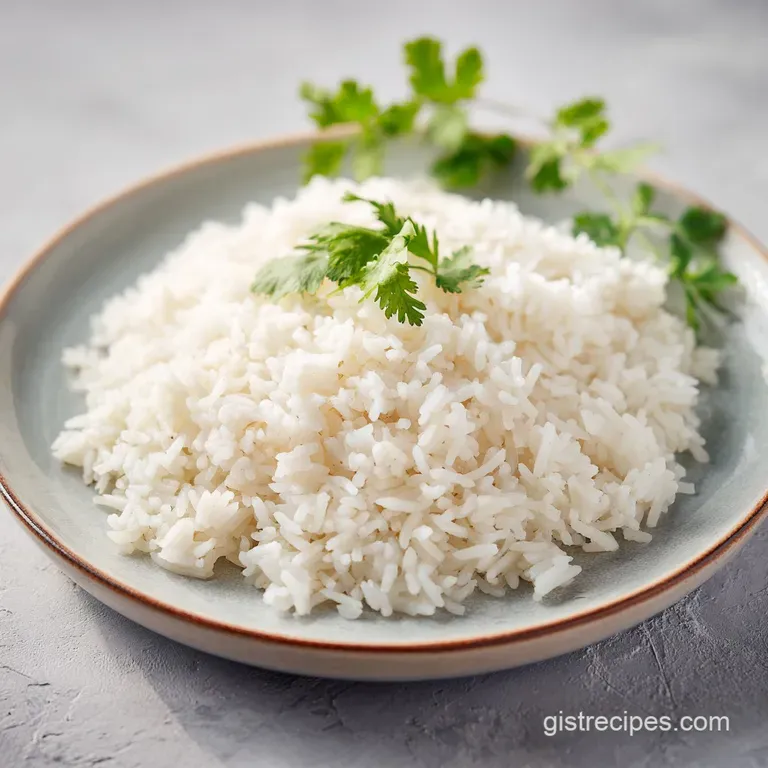
- Time: Active 5 minutes, Passive 25 minutes, Total 30 minutes
- Flavor/Texture Hook: Tender, airy grains with a salty, crackling crust
- Perfect for: Weeknight family dinners and festive gatherings
- Mastering the Humble Art of Authentic Puerto Rican White Rice
- The Scientific Reasons Why This Specific Method Succeeds
- Understanding the Core Dimensions of This Classic Recipe
- Curating the Four Essential Elements for Culinary Success
- Choosing the Best Traditional Tools for Even Heat
- Executing the Layered Cooking Process With Total Precision
- Expert Wisdom for Avoiding Common Mistakes
- Adapting the Foundation for Various Nutritional Lifestyles
- Maximizing Freshness and Transforming Every Single Leftover Grain
- Selecting the Most Comforting Complements for This Dish
- Recipe FAQs
- 📝 Recipe Card
Mastering the Humble Art of Authentic Puerto Rican White Rice
The first time I tried to make Puerto Rican White Rice without my grandmother hovering over my shoulder, I produced something that looked more like wallpaper paste than a meal. I remember standing over the stove, staring at a pot of clumped, soggy mush, wondering where I went wrong.
I had the right ingredients, but I lacked the respect for the process. That day, I learned that this dish isn't just about boiling water; it's about the dance between the oil, the rice, and the steam trapped under the lid.
In a Puerto Rican kitchen, rice is the heartbeat of the home. It’s the canvas for savory beans, stewed chicken, or just a fried egg on a Tuesday night. When you get it right, the kitchen fills with a mild, nutty aroma, and the sound of the oil hitting the hot grains creates a gentle sizzle that promises a meal filled with love.
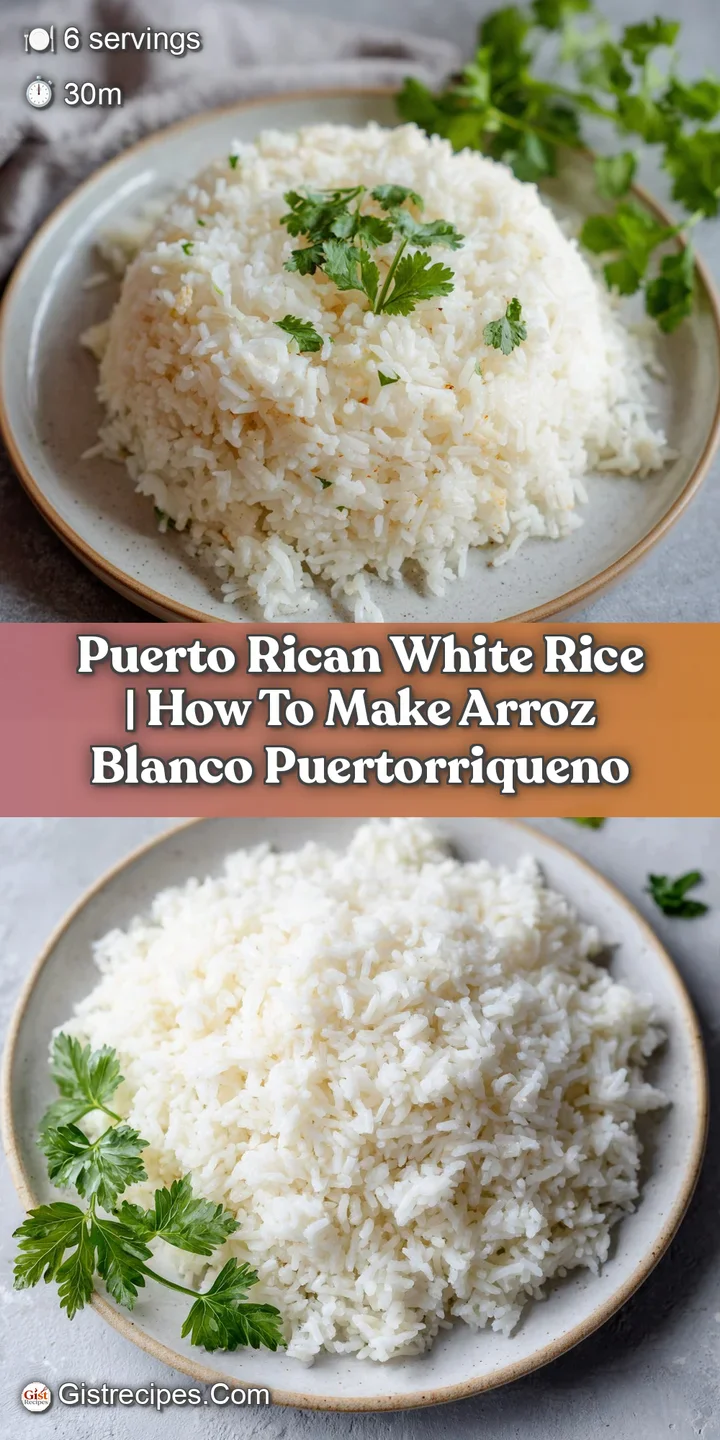
We’re going for individual grains that tumble off the spoon, never clumping, with a golden, crunchy layer at the bottom known as pegao.
We are going to walk through this together so you never have to face a pot of mushy rice again. I’ve made all the mistakes using too much water, stirring at the wrong time, and peeking under the lid so you don't have to.
Let's get into the specifics of how to make Arroz Blanco Puerto Rican that would make any abuela proud.
The Scientific Reasons Why This Specific Method Succeeds
Success with this Puerto Rican White Rice Recipe isn't magic; it's chemistry. Understanding why we follow these specific steps will help you adjust on the fly if your stove runs a little too hot or your rice brand changes.
- Starch Management: Washing the rice removes excess surface amylose, which is the primary culprit behind sticky, gummy textures.
- Fat Barrier: Coating the grains in olive oil before the water fully absorbs creates a microscopic fat barrier that keeps individual grains separate and distinct.
- Thermal Retention: Using a heavy bottomed pot allows for even heat distribution, which is essential for creating the pegao (crispy bottom) without burning the center.
- Steam Saturation: The "tight seal" method ensures that the rice cooks through residual heat and trapped moisture, preventing the grains from exploding or becoming waterlogged.
If you are wondering how this compares to other cooking styles, the technique for this Arroz Blanco Puertorriqueno is specifically designed for medium grain rice. Unlike the fluffy, long grain rice often found in our 30 minute Chicken Fried Rice recipe, this version leans into the heartier texture of the medium grain while maintaining separation.
| Method | Time | Texture | Best For |
|---|---|---|---|
| Stovetop | 25 minutes | Fluffy grains with a crispy bottom | Authentic flavor and texture |
| Oven Baked | 35 minutes | Uniformly tender, no crispy bottom | Large crowds and hands off prep |
| Rice Cooker | 20 minutes | Soft and consistent, no crust | Ultimate convenience |
Choosing the stovetop method allows you to control the heat precisely to develop that signature "pegao" that everyone fights over at the dinner table.
Understanding the Core Dimensions of This Classic Recipe
To achieve the results we want, we have to look at the components of Authentic Puerto Rican White Rice with a bit of technical focus. It isn't just about the "what," but the "how" each ingredient behaves when the heat rises.
| Component | Science Role | Pro Secret |
|---|---|---|
| Medium Grain Rice | Starch Balance | Use a brand like Goya or Mahatma for consistent absorption ratios. |
| Filtered Water | Hydration Agent | Start with cold water to allow the rice to heat up gradually with the liquid. |
| Olive Oil | Emollient & Heat Conductor | The oil fries the bottom layer while the steam cooks the top layer. |
Chef's Tip: If you want a deeper, more traditional flavor, you can swap half of the olive oil for pork fat or bacon drippings. It adds a smoky depth that is absolutely soul warming.
Curating the Four Essential Elements for Culinary Success
The beauty of Arroz Blanco Puertorriqueno lies in its simplicity. You only need four ingredients, but their quality and proportions are non negotiable. Stick to the schema measurements for that exact "grandma's kitchen" result.
- 2 cups Medium Grain White Rice: Why this? Medium grain provides the ideal balance of tenderness and structural integrity for this dish.
- Substitute: Long grain rice works, but you may need 1/4 cup less water to prevent mushiness.
- 2 ½ cups Filtered Water: Why this? Pure water ensures no "off" flavors interfere with the clean taste of the rice.
- Substitute: Chicken or vegetable broth for a more savory, pilaf style finish.
- 1 ½ tbsp Extra Virgin Olive Oil: Why this? Adds a silky mouthfeel and is the key to creating the crispy bottom layer.
- Substitute: Canola or vegetable oil if you prefer a more neutral flavor profile.
- 1 ½ tsp Kosher Salt: Why this? Large grains (like Diamond Crystal) dissolve evenly and season the rice from within.
- Substitute: Sea salt, but reduce the amount by 1/4 tsp as it is often finer and saltier.
Choosing the Best Traditional Tools for Even Heat
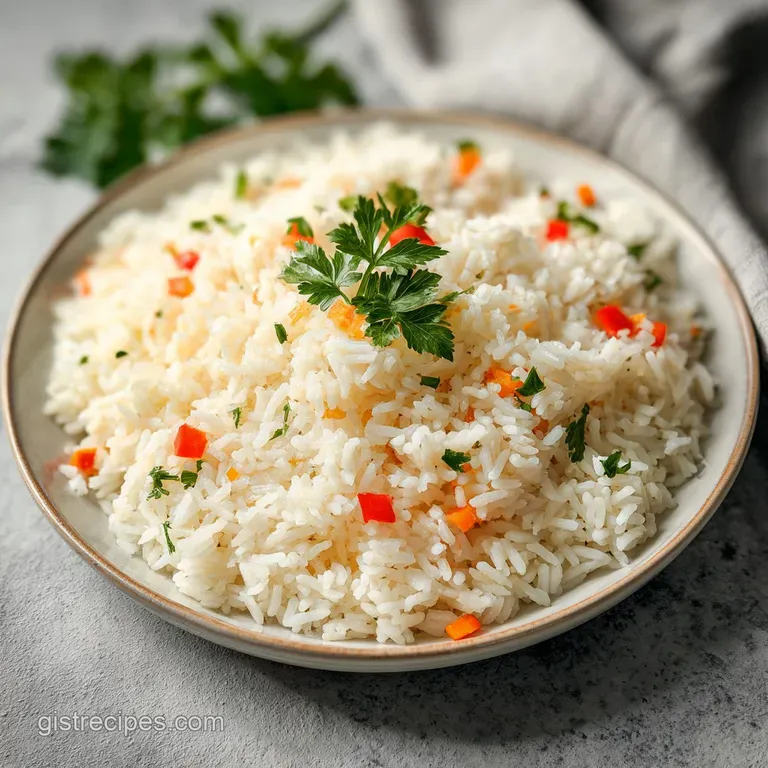
If you want to do this the "real" way, you need a caldero. This is a cast aluminum pot with rounded sides and a tight fitting lid. It’s a workhorse in Caribbean kitchens because it conducts heat beautifully and develops a non stick surface over time.
If you don't have one, a heavy bottomed Dutch oven or a thick stainless steel saucepan will do the trick.
Avoid thin, cheap pots. They create hot spots that will scorch your rice in some places while leaving it raw in others. You also need a fork never a spoon for the final fluffing. A fork separates the grains, whereas a spoon tends to smash them together into a paste.
Executing the Layered Cooking Process With Total Precision
Let's get cooking. Follow these steps exactly, and don't be tempted to rush the process.
- Rinse the rice. Place 2 cups Medium Grain White Rice in a fine mesh strainer and run cold water over it until the water runs clear. Note: This removes the starch that causes sticking.
- Combine ingredients. In your caldero or pot, add the rinsed rice, 2 ½ cups Filtered Water, 1 ½ tbsp Extra Virgin Olive Oil, and 1 ½ tsp Kosher Salt.
- Boil uncovered. Turn the heat to medium high and bring the mixture to a rolling boil.
- Reduce liquid. Continue boiling uncovered until the water level drops below the rice surface and small "craters" or steam holes appear.
- The first stir. Use a large spoon to gently move the rice from the bottom to the top just once.
- Seal the pot. Reduce the heat to the lowest possible setting and cover with a tight lid.
- The steam phase. Cook undisturbed for 20 minutes. Do not lift the lid.Note: Lifting the lid lets the essential steam escape, leading to hard grains.
- Final fluff. Remove from heat, lift the lid, and use a fork to fluff the grains until they are airy and light.
- Scrape the pegao. Use a spatula to gently scrape the crispy, golden layer from the bottom of the pot.
- Serve immediately. Transfer to a warm bowl and enjoy the contrast of textures.
Chef's Tip: For an extra tight seal, place a piece of aluminum foil or a clean paper towel over the pot before putting the lid on. This traps every bit of steam inside.
Expert Wisdom for Avoiding Common Mistakes
Getting Easy Puerto Rican White Rice right every time requires avoiding a few common traps. Most issues happen in the first ten minutes of cooking.
Why Your Rice Is Hard or Crunchy
If the grains are still firm after 20 minutes of steaming, you likely lost too much moisture during the initial boil or the lid wasn't tight enough. This happens often on gas stoves where the "low" setting is still a bit too aggressive.
Why Your Rice Is Gummy
Gummy rice is almost always the result of skipping the rinsing step or stirring the rice too much while it's boiling. Agitating the rice releases more starch into the water, creating a thick, sticky liquid that glues the grains together.
| Problem | Root Cause | Solution |
|---|---|---|
| Scorched Bottom | Heat was too high during the steam phase | Use a heat diffuser or lower the flame to the absolute minimum. |
| Soggy Grains | Too much water added | Measure rice and water precisely; do not eyeball the "finger joint" method. |
| Uneven Cooking | Pot was too wide for the amount of rice | Use a pot that allows the rice to sit at least 2 inches deep. |
Common Mistakes Checklist ✓ Never skip the rinse - that cloudy water is the enemy of fluffy rice. ✓ Don't stir once the lid is on; you'll break the grains and ruin the texture. ✓ Ensure the salt is fully dissolved before the water starts to disappear.
✓ Let the rice rest for 5 minutes after turning off the heat for the best "pegao" release. ✓ Use a fork, not a spoon, to fluff the final product to keep it light.
Adapting the Foundation for Various Nutritional Lifestyles
This Puerto Rican Rice Recipe is naturally vegan and gluten-free, making it a safe bet for almost any dinner guest. However, if you have specific goals, you can tweak the formula without losing the soul of the dish.
To scale this recipe down for two people, simply halve everything. Use a smaller pot (about 1.5 quarts) to maintain the proper depth of the rice. If you are doubling the recipe for a party, increase the salt and oil to 1.5x rather than a full double to avoid it becoming overly greasy or salty.
Low Sodium Alternative
If you are watching your salt intake, you can replace the kosher salt with a squeeze of fresh lime juice and a teaspoon of garlic powder. The acidity provides a "brightness" that tricks the palate into not missing the sodium.
Whole Grain Swap (Brown Rice)
If you decide to use brown rice, you’ll need to increase the water to 3 cups and the steaming time to 45 minutes. Note that the texture will be significantly different much chewier and you likely won't get the same type of pegao crust.
Maximizing Freshness and Transforming Every Single Leftover Grain
Storing Puerto Rican White Rice is easy. Keep it in an airtight container in the fridge for up to 4 days. When you're ready to eat it again, don't just microwave it into a brick. Add a teaspoon of water per cup of rice, cover it, and heat it gently.
This creates a mini steam chamber that revives the grains.
For long term storage, you can freeze this rice for up to 3 months. I like to freeze it in flat freezer bags. To reheat, you can actually drop the frozen block directly into a pan with a little butter it makes for a fantastic quick lunch.
Don't you dare throw away the pegao! If you have leftover crispy bits, they are the best part of the meal the next day. I love to crumble the crispy rice over a salad or into a bowl of soup for a textural "crouton" effect. It’s the ultimate zero waste kitchen hack.
Selecting the Most Comforting Complements for This Dish
This rice is designed to be a "team player." It absorbs sauces and stands up to heavy meats without falling apart. For a truly authentic experience, serve it alongside our Popeyes Red Beans recipe. The creamy texture of the beans against the distinct rice grains is the definition of comfort food.
If you’re looking for a faster protein option, this rice is also the perfect bed for an Asian Garlic Shrimp Recipe. The garlic butter from the shrimp seeps into the rice, creating a fusion flavor that is absolutely addictive.
Many people believe that you must use a 1:2 ratio for all rice. In reality, the "perfect" ratio depends on the grain length and the pot you use. For our medium grain Arroz Blanco Puertorriqueno, a 1:1.25 ratio (2 cups rice to 2.5 cups water) is the sweet spot that ensures doneness without sogginess.
Another common myth is that you can't open the lid once. While you should avoid it, if you smell burning, check it! A quick peek is better than a ruined pot. Trust your nose more than the timer.
Recipe FAQs
What type of rice is traditionally used in Puerto Rican White Rice?
Medium grain white rice. This grain provides the ideal balance of tenderness and structural integrity, allowing it to stay separate while still absorbing the necessary liquid.
What is the best way to make authentic Puerto Rican White Rice?
Use a heavy bottomed pot like a caldero, rinse the rice until the water runs clear, and cook covered on the lowest heat for 20 minutes. This process manages starch and creates the signature crispy bottom layer, the pegao.
What is the difference between Mexican rice and Puerto Rican white rice?
Mexican rice typically includes tomato, onion, and broth, resulting in an orange/red color and savory flavor. Puerto Rican white rice skips the tomato and seasoning, focusing only on salt, oil, and water to achieve fluffy white grains, like the base in our Crockpot Salsa Verde recipe.
Why is Puerto Rican white rice considered so good?
The combination of perfectly separated, fluffy grains and the salty, slightly crunchy bottom layer (pegao). The technique ensures the rice cooks via steam after being lightly fried in oil, creating two distinct, wonderful textures in one pot.
Should I stir the rice while it is steaming on low heat?
No, never stir the rice once the lid is placed on the pot. Stirring releases starch into the steam, which leads to a gummy texture instead of distinct grains.
Is it true that I must use a specific brand of rice for this recipe to work?
No, this is a common misconception, but stick to medium grain for best results. While brands like Goya are traditional, any high-quality medium grain rice will work if you adhere strictly to the rinsing and water ratios.
How do I ensure I get the crispy bottom layer (pegao) without burning the rest of the rice?
Increase the oil slightly and maintain a low, steady heat during the final 20-minute steam phase. If you master controlling the fat and heat barrier here, you'll succeed at creating a crust, a technique similar to achieving the perfect sear on meat, as seen in our Potsticker Stir Fry recipe.
Puerto Rican White Rice Recipe
Ingredients:
Instructions:
Nutrition Facts:
| Calories | 252 kcal |
|---|---|
| Protein | 4.1 g |
| Fat | 3.7 g |
| Carbs | 48.8 g |
| Fiber | 1.7 g |
| Sugar | 0.1 g |
| Sodium | 400 mg |
