Scallops and Risotto: Velvety Comfort
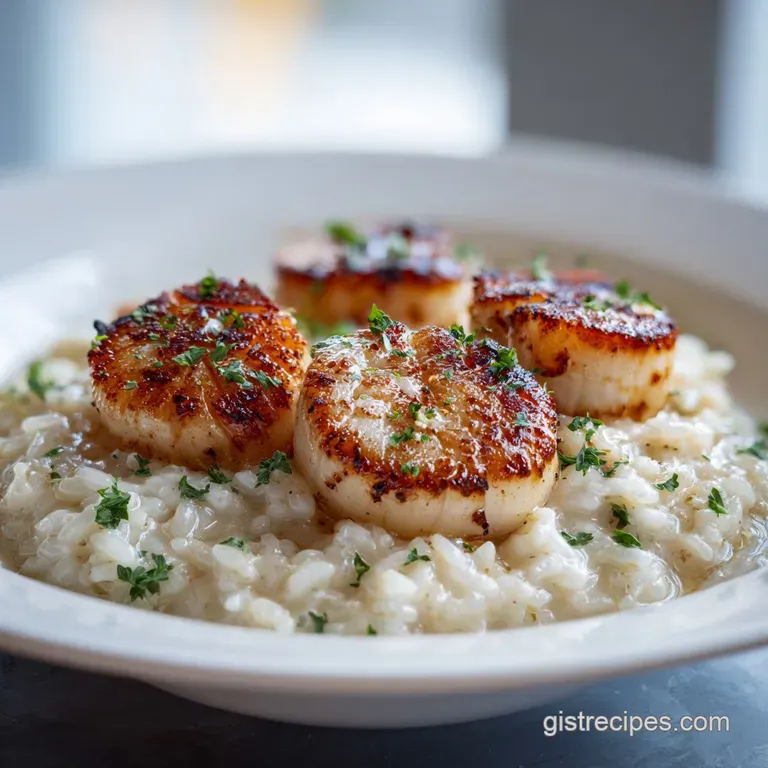
- Time: Active 15 minutes, Passive 30 minutes, Total 45 minutes
- Flavor/Texture Hook: Velvety rice with a golden crust shatter
- Perfect for: Sunday family dinner or special anniversaries
- Making the Best Scallops and Risotto
- Why This Works
- Essential Ingredient Component Analysis
- Essential Ingredients for Flavor
- Steps for the Best Results
- Fixing Common Recipe Mistakes
- Scaling the Recipe
- Debunking Kitchen Myths
- Storing Your Meal Safely
- Ideas for Serving
- High in Sodium
- Recipe FAQs
- 📝 Recipe Card
Making the Best Scallops and Risotto
The first time I attempted this dish, I was a nervous wreck. I had seen chefs on TV make it look so effortless, but in my own kitchen, I felt like I was juggling fire. I remember the sharp, sweet aroma of shallots hitting the warm butter and the way the kitchen suddenly smelled like an expensive bistro.
It was a cold November evening, and I wanted to prove to my family that I could master something elegant. I made the classic mistake of using "wet" scallops that leaked white liquid everywhere, resulting in a rubbery mess.
I didn't give up, though. I spent the next few months learning about starch releases and the importance of a screaming hot pan. Now, when I pull the heavy bottomed pot onto the stove, I feel a sense of calm.
There is something incredibly therapeutic about the rhythmic stirring of the rice and the way it slowly absorbs the stock, turning into something rich and soul warming. We’ve shared this meal over many glasses of wine and much laughter, and it remains one of those family classics that everyone asks for.
This recipe isn't about fancy gadgets; it’s about patience and listening to the food. You'll hear the rice "toast" in the oil, sounding like tiny glass beads, and you'll see the scallops transform from translucent to a beautiful, opaque white. It’s a process that rewards your attention with every bite.
If you follow these steps, you won't just be making dinner; you’ll be creating a memory.
Why This Works
- Amylopectin Release: Constant stirring rubs the starch off the rice grains, creating a natural creaminess without needing heavy cream.
- Thermal Conductivity: Using ghee for the sear allows for a higher smoke point, ensuring the scallops get a dark crust before the center overcooks.
- Acid Balance: The white wine and lemon juice cut through the rich butter, preventing the dish from feeling too heavy on the palate.
- Sequential Building: Starting with shallots and garlic builds a foundation of aromatics that permeates every grain of rice.
The Physics of the Sear
To get that mahogany crust that shatters under your fork, you must remove every trace of surface moisture. When water hits a hot pan, it turns to steam, which prevents the Maillard reaction from occurring.
By patting the scallops dry and using a over high heat fat like ghee, you ensure the energy goes directly into browning the proteins rather than evaporating water.
| Thickness | Internal Temp | Rest Time | Visual Cue |
|---|---|---|---|
| 1 inch | 125°F - 130°F | 2 minutes | Golden brown edges, opaque center |
| 1.5 inches | 130°F - 135°F | 3 minutes | Deep brown crust, firm to touch |
Cooking seafood can feel intimidating, but it is much like the technique used in my Creamy Lemon Garlic recipe. Once you understand how heat interacts with the protein, you'll never settle for a soggy scallop again.
Essential Ingredient Component Analysis
| Ingredient | Science Role | Pro Secret |
|---|---|---|
| Arborio Rice | Starch Provider | Don't wash it; the surface starch is vital for the sauce's body. |
| Seafood Stock | Flavor Conduit | Keep it simmering; cold stock shocks the rice and slows down starch release. |
| Ghee | over High heat Fat | Its lack of milk solids prevents burning while providing a deep, nutty flavor. |
| Parmigiano Reggiano | Emulsifier | Use a microplane for fine wisps that melt instantly into the rice. |
Essential Ingredients for Flavor
- 1.5 lb sea scallops: Look for "dry packed" to ensure they sear rather than steam.
- 1.5 cups Arborio rice: A short grain rice with high starch content is non negotiable here.
- 5.5 cups seafood stock: Quality matters; use a low sodium version to control the seasoning.
- 0.5 cup dry white wine: A Pinot Grigio or Sauvignon Blanc works best to add brightness.
- 2 large shallots: Mince them finely so they melt into the background of the rice.
- 3 cloves garlic: Grate these directly into the pan for maximum flavor distribution.
- 2 tbsp ghee: This is my secret for the highest quality sear.
- 5 tbsp unsalted butter: Divided between the initial sauté and the final "mantecatura."
- 0.5 cup Parmigiano Reggiano: Only use the real stuff from the block for a silky finish.
- 1 tbsp lemon juice & 1 tsp zest: This adds a necessary citrus lift to the finish.
- 2 tbsp fresh chives: Snipped small for a mild, oniony bite.
- Sea salt & white pepper: For seasoning that doesn't leave black specks in your pale rice.
| Original Ingredient | Substitute | Why It Works |
|---|---|---|
| Seafood Stock | Chicken Stock | Lighter flavor but still savory. Note: Lacks the ocean fresh depth. |
| Arborio Rice | Carnaroli Rice | Higher starch and harder to overcook. Note: Harder to find in standard shops. |
| Ghee | Clarified Butter | Identical high smoke point and rich flavor profile. |
| Dry White Wine | Verjus | Provides acidity without the alcohol content. |
Steps for the Best Results
- Prep the scallops. Remove the tough side muscle from the scallops and pat them extremely dry with paper towels. Note: Dryness is the only way to get a real sear.
- Heat the stock. Bring the 5.5 cups of seafood stock to a simmer in a medium saucepan and keep it warm.
- Sauté aromatics. Melt 2 tbsp butter in a heavy pot over medium heat and add shallots until translucent and fragrant.
- Toast the rice. Add 1.5 cups Arborio rice to the pot and stir until the edges are translucent. You should smell a nutty, popcorn like aroma.
- Deglaze the pan. Pour in 0.5 cup white wine and stir constantly until the liquid is fully absorbed.
- Add stock slowly. Add the warm stock one ladle at a time, stirring frequently. Wait until most liquid is gone before adding the next ladle.
- Sear the scallops. Heat 2 tbsp ghee in a cast iron skillet over high heat. Sear scallops 2 mins per side until a deep golden crust forms.
- Finish the rice. Once the rice is tender but firm (al dente), stir in 3 tbsp cold butter and 0.5 cup cheese.
- Season and emulsify. Add the lemon juice, zest, salt, and white pepper. The rice should look glossy and flow like lava.
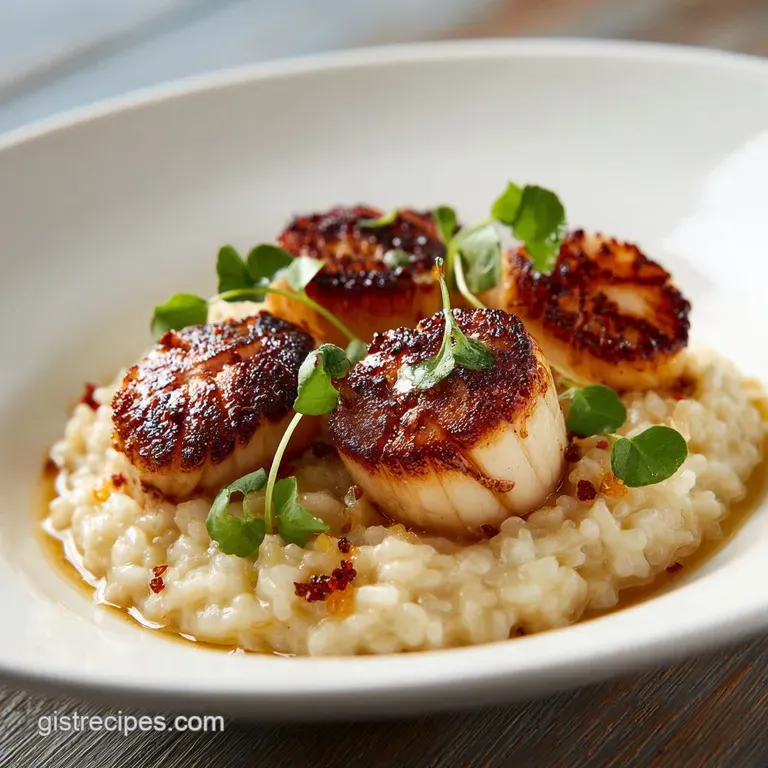
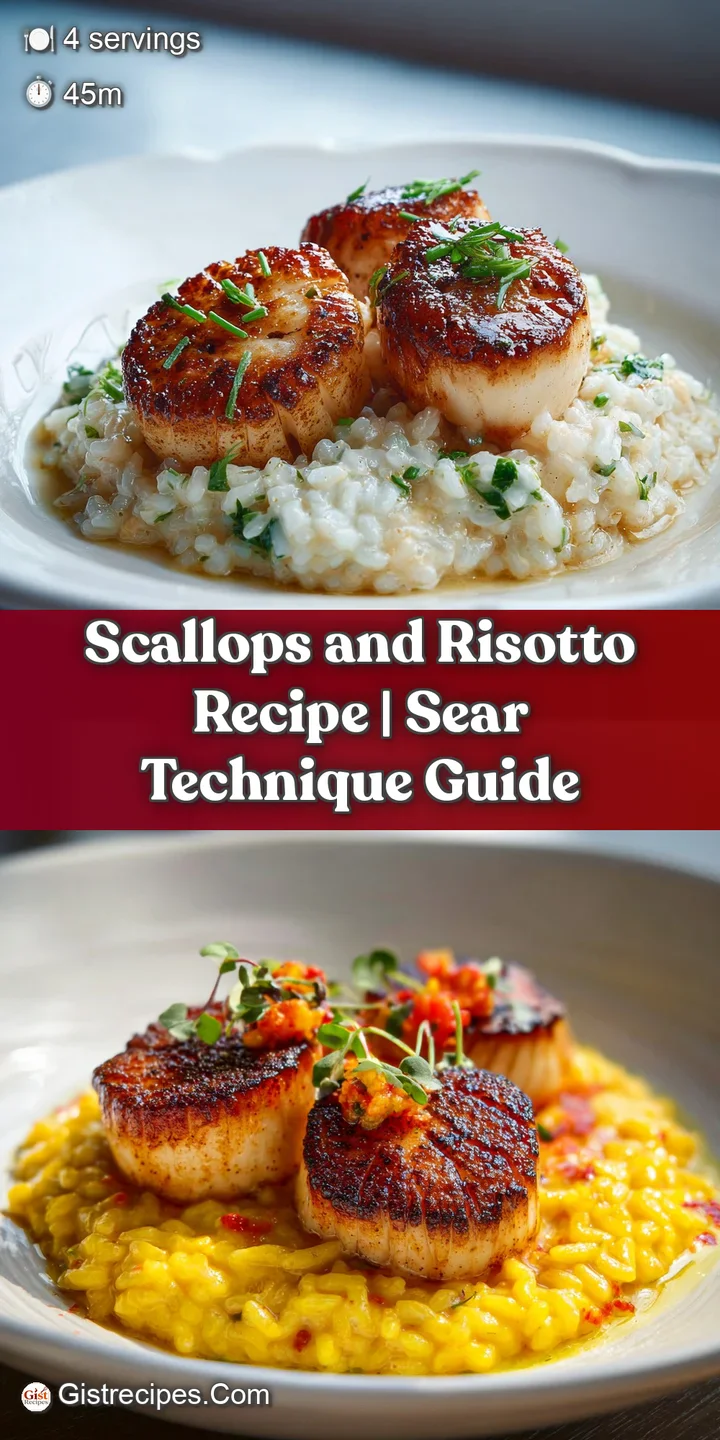
- Plating. Spoon the risotto into warm bowls and top with the seared scallops and fresh chives.
Fixing Common Recipe Mistakes
Rice Stays Too Crunchy
Sometimes the rice absorbs the liquid but remains hard in the center. This usually happens if the heat is too high, causing the liquid to evaporate rather than penetrate the grain. It can also happen if you don't use enough stock.
Scallops Won't Form Crust
If your scallops are gray and watery, they were likely "wet packed" (treated with phosphates) or the pan wasn't hot enough. Always look for dry packed scallops and wait for the ghee to shimmer and barely smoke before adding the seafood.
| Problem | Root Cause | Solution |
|---|---|---|
| Gummy Risotto | Rinsing the rice | Never wash Arborio; you need that surface starch for the sauce. |
| Rubbery Scallops | Overcooking | Take them off the heat just as they turn opaque; carryover heat finishes them. |
| Bland Flavor | Lack of acidity | Add an extra squeeze of lemon or a splash of wine at the end. |
Common Mistakes Checklist
- ✓ Ensure stock is simmering before adding it to the rice (cold stock stops the cooking process).
- ✓ Stir the rice frequently but not violently; you want to release starch, not break the grains.
- ✓ Don't overcrowd the scallop pan; leave at least an inch between them to prevent steaming.
- ✓ Use cold butter for the final step to create a stable emulsion and a velvety texture.
- ✓ Taste for salt at the very end, as the seafood stock and parmesan are already salty.
Scaling the Recipe
Reducing for two: This is easy to halve. Use a smaller pot for the risotto to ensure the rice is submerged enough in the liquid. Since you're using half an egg (if a recipe called for it), you'd beat it and measure. Here, just use half the butter and half the scallops.
Reduce the cooking time for the rice by about 5 minutes as smaller volumes cook faster.
Feeding a crowd: If doubling the recipe, do not double the salt immediately. Spices and salt should be increased to 1.5x first, then tasted. You will need a very wide, shallow pan for the risotto to ensure even heat distribution.
Sear the scallops in two separate batches; if you put 3 lbs of scallops in one pan, the temperature will drop instantly and they will boil in their own juices.
For a different take on seafood and comfort, my Shrimp Creamy Cheddar recipe offers a southern twist that scales beautifully for large breakfasts or brunches.
| Method | Time | Texture | Best For |
|---|---|---|---|
| Traditional Stir | 30 mins | Ultimate creaminess | Maximum flavor development |
| Pressure Cooker | 15 mins | More uniform grains | A quick weeknight fix |
| Baked Risotto | 40 mins | Slightly drier | Hands off entertaining |
Debunking Kitchen Myths
- Constant stirring is mandatory: You don't actually have to stir every second. Stirring frequently is important to release starch, but giving it a 30 second break won't ruin the dish. Just don't walk away for five minutes.
- The alcohol doesn't cook out: While much of the harshness evaporates, a small percentage of alcohol remains. The wine is there for the tartaric acid, which balances the fats, not just for the "booze" factor.
- Scallop "milk" is a sign of freshness: That white liquid in the pan is actually a sign the scallops were treated with STP (sodium tripolyphosphate). It's a preservative that makes them soak up water, which you then pay for by the pound.
Storing Your Meal Safely
Fridge Storage: Risotto is best eaten immediately because the starches continue to set as they cool. However, you can store leftovers in an airtight container for up to 3 days. When reheating, add a splash of stock or water to loosen the "brick" of rice back into a creamy consistency.
Freezer Guidelines: I don't recommend freezing the finished dish. The rice grains lose their structural integrity and become grainy upon thawing. If you must, it can stay frozen for 1 month, but the texture will be significantly altered.
Zero Waste Tip: If you have leftover risotto that has turned solid in the fridge, don't just microwave it. Roll the cold rice into balls, stuff a piece of mozzarella in the middle, coat them in breadcrumbs, and fry them. You've just made Arancini!
Also, save those scallop "feet" (the side muscles) and any shrimp shells in the freezer to make your own seafood stock next time.
Ideas for Serving
This dish is quite rich, so I always suggest serving it with something bright and crisp. A simple arugula salad with a sharp balsamic vinaigrette or some roasted asparagus with a hint of lemon zest works wonders.
Because the risotto has such a velvety texture, having a crunchy side dish provides a lovely contrast for the palate.
If you are looking for a pasta alternative that carries similar earthy notes, my Spinach Mushroom Spaghetti recipe is a fantastic companion for a multi course Italian night. For the wine, a crisp Chablis or a dry sparkling wine like Prosecco cuts through the butter and cleanses the tongue between bites. Always serve on warmed plates so the risotto doesn't seize up before it hits the table.
High in Sodium
980 mg mg of sodium per serving (43% % of daily value)
The American Heart Association recommends limiting sodium intake to about 2,300mg per day for overall cardiovascular health.
Sodium Reduction Strategies for Scallop Risotto
-
Low-Sodium Broth-30%
Replace the regular seafood stock with unsalted or low-sodium seafood broth. This single swap can significantly reduce sodium content.
-
Parmesan Reduction-15%
Parmigiano Reggiano is a significant source of sodium. Reduce the amount used by half and compensate with nutritional yeast for a cheesy flavor.
-
Omit Added Salt-25%
Eliminate the added sea salt (0.5 tsp) completely. The other ingredients contribute enough salt for the dish, and you can always add salt to taste after.
-
Lemon Power-5%
Enhance the existing lemon flavor by increasing the lemon juice and zest slightly. This will brighten the dish and help mask the need for salt.
-
Herb Infusion
Increase the amount of fresh herbs like chives, parsley, or tarragon. Herbs add flavor complexity and reduce reliance on salt.
Recipe FAQs
Can you serve scallops with risotto?
Yes, they are a classic pairing. The richness of the creamy rice complements the sweet, delicate sear of the scallops perfectly.
What pairs well with scallops?
Bright, acidic elements pair best with scallops. Think lemon, white wine reduction, fresh herbs like chives, or a crisp, lightly dressed green salad.
What does Gordon Ramsay serve with scallops?
Ramsay often pairs seared scallops with creamy purees or vibrant vegetables. Common accompaniments include cauliflower puree, pea puree, or sometimes a brown butter sauce.
What kind of seafood is best in risotto?
Shrimp, lobster, or scallops offer the best texture contrast. These firmer seafood items sear beautifully and hold up well against the creamy rice without turning mushy.
How do I ensure my scallops sear instead of steam in the pan?
Pat the scallops completely dry before cooking. Use a fat with a high smoke point, like ghee, and ensure the pan is screaming hot before the seafood touches the surface.
Is it true I must only use Arborio rice for a good risotto?
No, this is a common misconception. While Arborio is standard, Carnaroli rice is often preferred by chefs as it absorbs liquid better and is much harder to overcook.
How do I stop my risotto from becoming sticky when reheating?
Add liquid when reheating to reintroduce moisture. Stir in a splash of warm seafood stock or water over low heat until the creamy texture flows like lava again.
Scallops And Risotto Tonight
Ingredients:
Instructions:
Nutrition Facts:
| Calories | 765 calories |
|---|---|
| Protein | 36g |
| Fat | 38g |
| Carbs | 66g |
| Fiber | 2g |
| Sugar | 3g |
| Sodium | 980mg |
