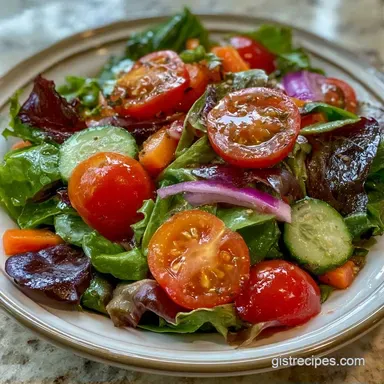
House Salad: Crisp and Refreshing
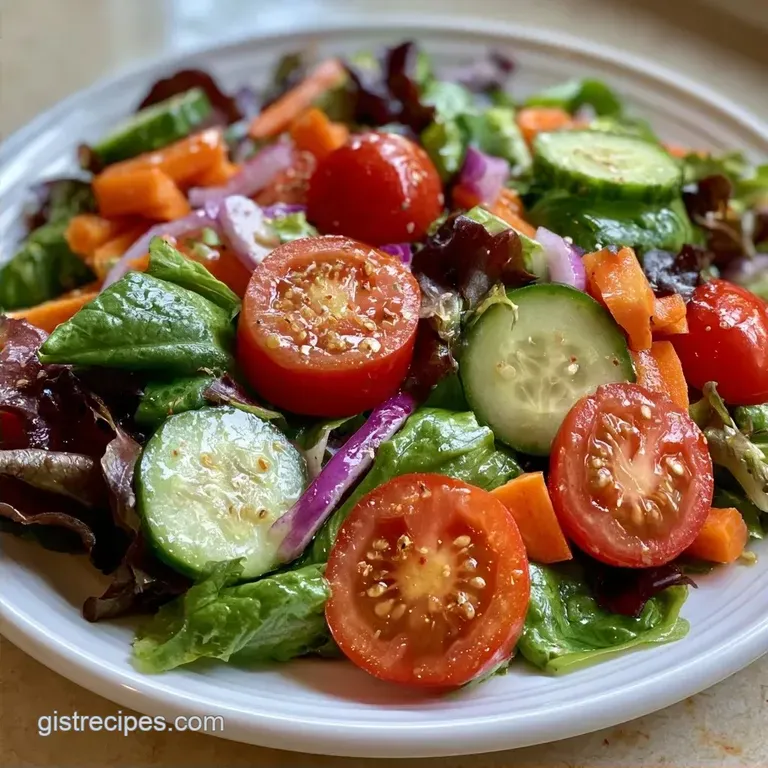
- Time:10 minutes active
- Flavor/Texture Hook: Tangy, crisp, and refreshing
- Perfect for: Weeknight side dish or family dinner
The Classic House Salad Recipe
The sharp, vinegary tang of the dressing hits you first, followed by the loud snap of cold Romaine. I remember my grandma used to toss the greens in a huge wooden bowl, and the sound of the lettuce hitting the wood was the signal that dinner was almost ready.
It wasn't fancy, just fresh vegetables and a dressing that tasted like home.
You don't need a lot of gear to get this right. The goal is a House Salad that tastes like it came from a steakhouse but feels like it was made in a cozy kitchen. We're focusing on a balance of colors and textures that keep every bite interesting.
This House Salad works because it doesn't try too hard. It provides a bright, acidic counterpoint to heavier main courses. You can expect a bowl that stays crunchy and refreshing, provided you follow a few simple rules about moisture.
Nailing the Texture
Instead of complex techniques, this House Salad relies on a few basic physics rules to stay fresh.
Dry Leaves: Water is the enemy of flavor. When leaves are wet, the dressing slides off and pools at the bottom, leaving you with bland greens and a soggy mess.
Tossing Order: Adding the heavy toppings last keeps the croutons from soaking up the dressing too early. This ensures every bite of your House Salad has that essential crunch.
| Feature | Fresh Garden Prep | Pre Cut Shortcut | Impact |
|---|---|---|---|
| Texture | Maximum snap | Slightly softer | Fresh is crispier |
| Flavor | Brighter notes | Muted taste | Fresh tastes cleaner |
| Cost | Cheaper per lb | Higher price | Budget friendly |
| Time | 10 mins prep | 2 mins prep | Fresh takes longer |
The Essential Ingredients
The ingredients in a House Salad are simple, but the quality of the oil and vinegar makes the difference.
| Ingredient | What It Does | Best Swap |
|---|---|---|
| Romaine Lettuce | Provides the crunch | Spring mix (softer) |
| Red Wine Vinegar | Adds sharp acidity | Apple cider vinegar |
| Extra Virgin Olive Oil | Carries the flavor | Avocado oil |
| Dijon Mustard | Binds the dressing | Whole grain mustard |
You'll need these specific items for your House Salad:
- 6 cups (140g) chopped Romaine lettuce or mixed spring greens Why this? Romaine holds dressing better than spinach.
- 1 cup (120g) halved cherry tomatoes Why this? They add bursts of sweetness.
- 1 cup (130g) sliced English cucumber Why this? Higher water content for freshness.
- ½ cup (60g) shredded carrots Why this? Earthy sweetness and color.
- ¼ cup (30g) thinly sliced red onion Why this? Pungent bite to cut the fat.
- ⅓ cup (80ml) extra virgin olive oil Why this? Traditional flavor base.
- 3 tbsp (45ml) red wine vinegar Why this? Classic tangy profile.
- 1 tsp (5g) Dijon mustard Why this? Acts as a natural emulsifier.
- 1 tsp (5g) maple syrup or honey Why this? Balances the sharp vinegar.
- ½ tsp (3g) dried oregano Why this? Adds a herbal, Mediterranean note.
- ¼ tsp (1.5g) kosher salt Why this? Enhances all other flavors.
- ¼ tsp (1.5g) freshly cracked black pepper Why this? Subtle heat.
- ¼ cup (30g) shaved Parmesan or Feta cheese Why this? Salty, creamy finish.
- ½ cup (40g) seasoned croutons Why this? Essential textural contrast.
Tools for the Job
You don't need a professional kitchen for a House Salad. A few basic tools will do the trick.
A large mixing bowl is the most important part. You need enough room to toss the ingredients without them flying over the edge. If the bowl is too small, you'll crush the Romaine, and your House Salad will lose its volume.
A salad spinner is a lifesaver. I once tried to dry lettuce with paper towels, and it took forever. The spinner gets the leaves bone dry in seconds. For the dressing, a small mason jar is better than a bowl because you can shake it vigorously.
Finally, get some tongs. Using your hands works, but tongs allow you to lift and fold the greens. This prevents the House Salad from wilting under the weight of the vegetables.
Putting the Bowl Together
Making a House Salad is about the sequence of events. Follow these steps to keep things crisp.
Preparing the Crisp Base
- Wash the greens and vegetables thoroughly. Use a salad spinner to ensure the lettuce is bone dry. Note: Wet lettuce makes the dressing watery.
- Chop the Romaine into bite sized pieces.
- Place the greens in a large bowl with the tomatoes, cucumbers, carrots, and onions. Wait until you smell the fresh, grassy aroma of the cut Romaine before moving to the next step.
Emulsifying the Dressing
- Pour the olive oil, red wine vinegar, Dijon mustard, maple syrup, oregano, salt, and pepper into a mason jar.
- Shake vigorously for 30 seconds. The mixture should look smooth and glossy, not separated. Note: The mustard keeps the oil and vinegar from splitting.
- Taste a small leaf dipped in the dressing to ensure the salt level is right.
The Final Toss
- Drizzle the dressing over the vegetables.
- Using tongs, gently lift and fold the ingredients from the bottom up. Continue for about 1 minute until every leaf is lightly coated but not swimming in liquid.
- Top with shaved cheese and seasoned croutons immediately before serving. This keeps the House Salad from getting soggy.
Chef's Note: If you're serving this for a crowd, toss the vegetables in the dressing in batches. It prevents the bottom layer of the House Salad from being crushed.
Fixing Common Issues
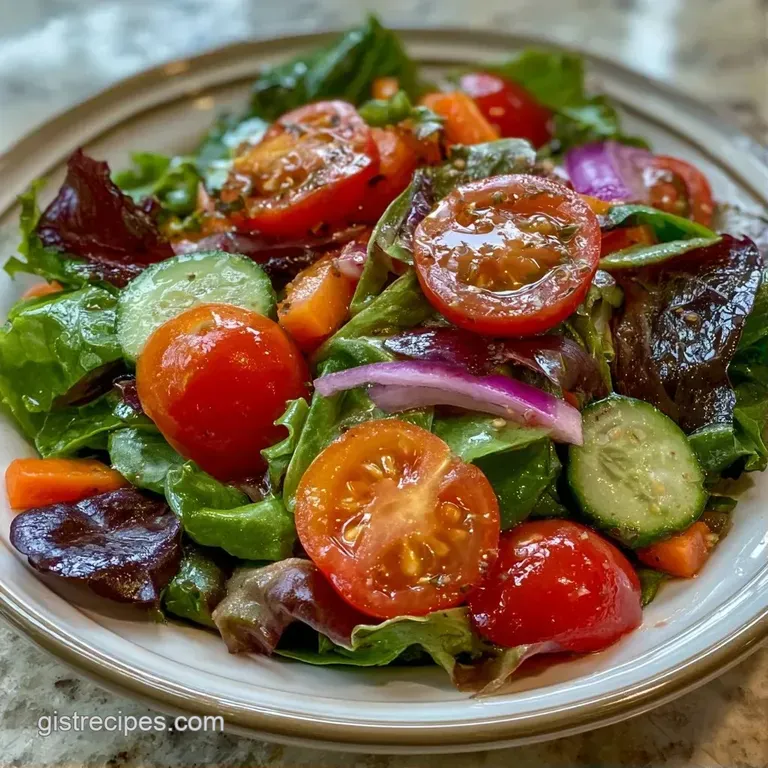
Even a simple House Salad can go wrong if the ratios are off. Most issues stem from moisture or timing.
Troubleshooting Common Issues
| Issue | Solution |
|---|---|
| Why Your Greens Get Soggy | This usually happens when you dress the salad too early. The acid in the vinegar breaks down the cell walls of the lettuce, causing it to release water. |
| Why Your Dressing Separates | If you see a layer of oil floating on top, the emulsion failed. This happens if the dressing sits too long or if the mustard was skipped. Just give the jar another hard shake for 20 seconds. |
| Why the Flavor Feels Flat | A bland House Salad is usually lacking salt or acid. Taste your dressing separately. If it's too oily, add a teaspoon more of red wine vinegar. |
Variations and Swaps
A House Salad is a blank canvas. You can change the vibe based on what's in your fridge.
The Olive Garden Style
For that restaurant feel, increase the oregano and use a heavier hand with the Parmesan cheese. You can also add sliced black olives for a salty punch. This makes the House Salad feel more like a meal.
The Old Fashioned Steakhouse
Swap the Romaine for a mix of Iceberg and Red Leaf lettuce. Use a slightly more pungent vinegar, like a red wine vinegar aged longer. This version of the House Salad is all about that cold, refreshing crunch.
Vegan & Plant Based Swap
Remove the cheese and use a sprinkle of nutritional yeast for a nutty, cheesy flavor. For the sweetener, maple syrup is already vegan, so that works great. If you're looking for more protein, this pairs well with my Easy Turkey Salad for a bigger lunch.
Low Carb/Keto Version
Ditch the croutons and the maple syrup. Use a tiny bit of stevia or just skip the sweetener entirely. Replace the carrots with sliced radishes to keep the crunch without the extra sugar in your House Salad.
Adjusting the Portion Size
Scaling a House Salad is easier than baking, but there are a few rules to keep the flavor balanced.
Scaling Down (1-2 people): If you're making a small portion, reduce everything by half. However, be careful with the salt and oregano. Start with a quarter teaspoon of salt and add more only after tasting. It's easier to add more than to fix a salt bomb.
Scaling Up (8-12 people): When doubling or tripling the House Salad, don't just triple the salt. Use 1.5x the salt and pepper first, then adjust. Liquids like olive oil and vinegar can be scaled linearly, but too much dressing in a massive bowl can lead to a soggy bottom.
Work in two separate bowls if you don't have a professional catering tub.
| Scale | Lettuce | Dressing Vol | Salt/Spice Adj |
|---|---|---|---|
| 1/2x | 3 cups | 1/2 recipe | Reduce slightly |
| 2x | 12 cups | 2x recipe | 1.5x salt |
| 4x | 24 cups | 4x recipe | 2x salt, toss in batches |
Salad Myths
There are a few things people believe about salads that just aren't true.
Some people think you should soak lettuce in ice water for an hour to make it crispier. While cold water helps, the real trick is getting the water off the leaves. A salad spinner is more effective than a soak.
Another myth is that adding dressing early "marinate" the vegetables. In a House Salad, this is a mistake. Unlike a kale salad or a slaw, Romaine cannot handle long exposure to acid. It will wilt and lose its structural integrity.
Storage and Waste
You can't store a fully dressed House Salad, but you can prep the components.
Storage Guidelines: Store your chopped, dry vegetables in an airtight container with a paper towel at the bottom to absorb excess moisture. They'll stay fresh for 3-4 days in the fridge. Keep the dressing in its mason jar for up to two weeks. Just shake it before each use.
Zero Waste Tips: Don't throw away the ends of your carrots or the onion skins. Keep them in a freezer bag to make a vegetable stock later. If you have leftover Romaine that's starting to wilt, don't toss it.
Sauté it with some garlic and olive oil for a quick side dish, or blend it into a green smoothie.
Best Side Pairings
The beauty of a House Salad is that it cleanses the palate. It works best when paired with something rich or savory.
Since this is a light, acidic dish, it balances out heavier proteins. I love serving this alongside my Caprese Chicken because the creamy mozzarella and balsamic glaze contrast the crispness of the House Salad.
If you're doing a family brunch, this is a great addition to a hearty egg bake. The freshness of the cucumbers and tomatoes cuts through the richness of the eggs and cheese. Just remember to keep the House Salad separate until the moment you serve to keep those croutons loud and crunchy.
Whether you're making this for a quick lunch or a big dinner, the House Salad remains a staple for a reason. It's honest, fresh, and takes almost no effort to get right. Just keep your greens dry, shake your dressing hard, and serve it immediately. Your House Salad will be the highlight of the table.
Recipe FAQs
What ingredients are typically in a house salad?
Fresh greens, tomatoes, cucumber, carrots, and red onion. This combination provides a balance of crunch and acidity, topped with a simple vinaigrette and cheese.
How to prevent the greens from getting soggy?
Dress the salad immediately before serving. The acid in the red wine vinegar breaks down cell walls, so adding it too early causes the lettuce to release water.
Is it true that house salads are always low-calorie?
No, this is a common misconception. While the vegetables are light, the calorie count increases quickly depending on the amount of olive oil, cheese, and croutons used.
How to make the house salad dressing?
Shake olive oil, red wine vinegar, Dijon mustard, maple syrup, oregano, salt, and pepper in a mason jar. Shake vigorously for 30 seconds until creamy. If you enjoyed mastering the emulsion here, see how the same principle works in our healthy 30 minute meal.
Why does my dressing separate after sitting?
The oil and vinegar naturally split over time. Just give the mason jar another hard shake for 20 seconds to bring the emulsion back together.
How to store the salad ingredients for later?
Place chopped, dry vegetables in an airtight container with a paper towel at the bottom. This absorbs excess moisture and keeps the components fresh for 3-4 days in the fridge.
How to assemble the salad for the best texture?
Fold the dressing gently from the bottom up using tongs. Top with shaved cheese and croutons at the very last second to ensure the toppings stay crunchy.
Fresh House Salad