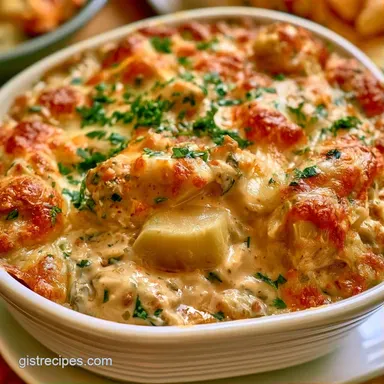
Hot Artichoke Dip with Cream Cheese

- Preparation: 10 min active + 20 min baking
- Taste Profile: Tangy, cheesy, and bubbling
- Best for: Family gatherings and casual potlucks
- Why the Texture Works
- What Each Ingredient Does
- Ingredients and Substitutes
- Quick Recipe Specs
- Tools You Will Need
- Step-by-Step Cooking Guide
- Handling Common Dip Issues
- Storage and Waste Tips
- Serving and Platter Ideas
- Fun Flavor Variations
- Busting Common Dip Myths
- Adjusting the Serving Size
- Recipe FAQs
- 📝 Recipe Card
The scent of toasted garlic and melted Parmesan still lingers in my mind from the last time I served this to my cousins. There is something about a bubbling tray of cheese that draws everyone into the kitchen, chips in hand, huddled around the counter.
It evokes memories of those classic family reunions where the food is uncomplicated but the conversation lasts for hours.
Canned artichoke hearts are the secret to success here. While some insist on fresh, canned versions provide a specific tenderness and a reliable tang that's hard to beat in a dip. They integrate seamlessly with the cheese without being overly fibrous, ensuring every bite is smooth.
You'll end up with a decadent, comforting starter that doesn't require an entire afternoon to prepare. This Hot Artichoke Dip is a timeless favorite for a reason; it’s usually gone long before the main course even hits the table.
Why the Texture Works
The Creamy Base: Combining cream cheese with mayonnaise prevents the dip from splitting. The mayo keeps the texture velvety and prevents it from becoming a greasy puddle.
High Oven Temp: Baking at 400°F (200°C) browns the top quickly. This ensures you get those golden brown bits without overcooking the center into a liquid.
| Goal | What to change |
|---|---|
| More Tang | Add 1 tsp extra lemon juice |
| Thicker Dip | Use 100g more cream cheese |
| Extra Sharp | Swap Parmesan for Pecorino |
What Each Ingredient Does
| Ingredient | What It Does | Best Swap |
|---|---|---|
| Cream Cheese | Adds body and thickness | Mascarpone (richer) |
| Mayonnaise | Ensures a smooth blend | Greek Yogurt (tangier) |
| Parmesan | Provides a salty, nutty crust | Grana Padano |
| Artichoke Hearts | Gives the earthy, main flavor | Canned hearts in water |
Ingredients and Substitutes
- 225g cream cheese, softened to room temperature Why this? Provides the structural base so the dip isn't runny.
- 120ml mayonnaise Why this? Acts as an emulsifier for a smooth mouthfeel.
- 60ml sour cream or Greek yogurt Why this? Adds a slight acidic lift to cut the fat.
- 400g canned artichoke hearts, drained and chopped Why this? The most reliable texture for warm dips.
- 100g grated Parmesan cheese Why this? Creates the salty, browned top.
- 6g garlic, minced Why this? Adds depth and a savory punch.
- 5ml lemon juice Why this? Brightens the earthy artichokes.
- 3g salt Why this? Enhances all other flavors.
- 1g black pepper Why this? Adds a subtle warmth.
- 1g smoked paprika Why this? Gives a hint of wood fire flavor and color.
| Original Ingredient | Substitute | Why It Works |
|---|---|---|
| Sour Cream | Greek Yogurt | Similar acidity. Note: Slightly thicker consistency |
| Smoked Paprika | Regular Paprika | Same color. Note: Loses the smoky depth |
| Parmesan | Asiago | Similar salty profile. Note: Slightly meltier |
Quick Recipe Specs
This Hot Artichoke Dip is designed for a crowd, yielding about 24 servings. It's a hearty appetizer, so people usually take small scoops. The total time is just 30 minutes, making it a great last minute addition to any party.
Tools You Will Need
You don't need anything fancy here. A medium mixing bowl and a sturdy spatula are the main requirements. For the baking, an 8x8 inch baking dish works well, but a cast iron skillet is even better if you want to serve it straight from the stove.
Step-by-step Cooking Guide

Stage 1: Preparation
Carefully drain the canned artichoke hearts using a colander. Pat them dry on paper towels, pressing firmly to eliminate any leftover brine. Chop them into small, bite sized pieces. Note: Drying them prevents the dip from becoming watery.
Stage 2: Mixing the Base
In a mixing bowl, combine the softened cream cheese, mayonnaise, and sour cream. Stir until the mixture is smooth and creamy. Mix in the minced garlic, lemon juice, salt, and pepper.
Stage 3: Incorporating Ingredients
Gently fold in the grated Parmesan and the chopped artichokes. Use a spatula to stir until the artichokes are thoroughly coated in the cream base.
Stage 4: Pan Setup
Transfer the mixture into an 8x8 inch baking dish or a cast iron skillet. Level the top with a spatula and dust the surface with smoked paprika.
Stage 5: Baking
Cook at 200°C (400°F) for 20 minutes until the edges are bubbling and the center is set.
Handling Common Dip Issues
Fixing Runny Dip
If your dip looks too liquid, it's usually because the artichokes held onto too much brine. Next time, spend an extra minute pressing them between paper towels. If it's already in the oven and looks runny, bake it for another 5 minutes to let more moisture evaporate.
Solving Cheese Lumps
Lumps happen when the cream cheese is too cold to blend. I've made this mistake before and tried to stir it in, but it just creates white chunks. If this happens, you can gently warm the cream cheese in the microwave for 15 seconds before mixing. For other creamy options, my buffalo chicken dip uses a similar base and follows the same temperature rules.
Improving Top Browning
Sometimes the center is done but the top is pale. Switch your oven to the broiler setting for 1 to 2 minutes. Watch it closely, as Parmesan can go from golden to burnt in seconds.
Storage and Waste Tips
Keep any extra in an airtight glass jar in the refrigerator for a maximum of 3 days. For the best results, skip the microwave when reheating. Rather, pop it in the oven at 175°C (350°F) for 10 minutes to restore its crispiness.
This dip can be frozen for as long as 2 months. Use a foil pan for freezing, then let it defrost in the refrigerator overnight before you bake it.
To minimize waste, save the artichoke brine. Its salty and acidic profile makes it an ideal foundation for a simple vinaigrette. Simply blend it with olive oil, a touch of Dijon mustard, and a pinch of sugar to create a zesty dressing.
Serving and Platter Ideas
The best way to serve Hot Artichoke Dip is with a variety of textures. Toasted baguette slices provide a sturdy crunch that holds up to the heavy cheese. Sliced carrots, bell peppers, and cucumber rounds add a fresh, cool contrast to the rich dip.
If you want to make the platter look a bit more polished, place the hot skillet in the center of a large wooden board. Surround it with the dippers in small piles. A few sprigs of fresh parsley scattered over the top add a pop of color that makes the golden cheese stand out.
Fun Flavor Variations
Adding Spinach
You can easily turn this into a spinach artichoke dip by folding in 100g of thawed, squeezed dry frozen spinach during Phase 3. It adds a nice earthiness and a bit of color.
Adding Heat
For those who like a kick, stir in some diced pickled jalapeños or a pinch of cayenne pepper. The heat cuts through the richness of the cream cheese and keeps the flavors bright.
Using Different Cheeses
While Parmesan is the standard, you can swap half of it for shredded mozzarella or gruyère. Mozzarella adds a bit more "pull" and stretch to the dip, while gruyère makes it feel a bit more like a fondue.
Busting Common Dip Myths
Some people think using fresh artichokes makes a better dip. In reality, fresh artichokes can be too stringy and have a stronger, more bitter taste that overpowers the cheese. Canned hearts are a better choice here because they are pre tenderized.
Another myth is that you need to cook the garlic separately. Stirring raw minced garlic into the cream base is actually better. The garlic cooks gently inside the cheese during the 20 minutes in the oven, which prevents it from tasting burnt or acrid.
Adjusting the Serving Size
If you're making this for a small group, you can halve the recipe. Use a 4x4 inch ramekin or a small oven safe bowl. Reduce the baking time by about 20%, but still look for those bubbling edges.
For a huge party, you can double or triple the batch. I recommend working in two separate dishes rather than one giant one. If the dip is too deep, the center won't heat through before the edges burn. When scaling up, only increase the salt and paprika to 1.5x the original amount to keep the seasoning balanced.
Recipe FAQs
Should artichoke dip be served hot or cold?
This recipe is designed to be served hot.
Tip: Let the dip rest for five minutes after baking so the center sets.
What crackers or bread go best with this dip?
Toasted baguette slices or sturdy tortilla chips provide the best crunch.
Tip: If you enjoy rich appetizers, see how we use similar cream bases in our creamy taco dip.
How do I stop the dip from becoming watery?
Press the drained artichokes firmly between paper towels to remove all excess brine.
Tip: Fold in the cheese and artichokes gently to avoid breaking the pieces.
Is it true that artichoke dip must be served cold?
False. Baking the mixture at 400°F for 20 minutes creates a superior bubbly texture.
Tip: Use a cast iron skillet to keep the dip warm throughout the party.
Hot Artichoke Dip