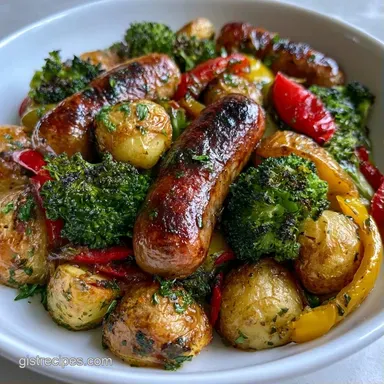
Sheet Pan Sausage with Roasted Vegetables and Potatoes

- Total47 Mins
- Calories421 kcal
- CuisineAmerican
- Time: 10 min active + 35 min roasting + 2 min resting
- Make it when: Weeknight chaos hits and you need big flavors fast
- Pairs with: Quinoa, a crusty baguette, or a simple arugula salad
Sheet Pan Sausage with Roasted Vegetables
The aroma of roasting garlic and smoked paprika is the first clue that this meal will be delicious. One-pan recipes often get a bad rap for producing mushy vegetables and meat without a proper crust, but that's usually just the result of overcrowding the pan or using too low a temperature.
This approach avoids those pitfalls by roasting at a high heat. You get those bold, charred flavors and a savory finish with minimal cleanup. It’s a dish that tastes authentically roasted, not just steamed.
The textures are a highlight, pairing the snap of chicken sausage with bursting cherry tomatoes. It's a satisfying dinner that feels sophisticated but requires very little work.
Why the Roast Works
- High-Heat Browning: 400°F (200°C) triggers browning quickly. This ensures you get charred edges on the onions and chestnut brown sausage without drying out the centers.
- The Air Gap: Keeping the ingredients in a single layer allows hot air to circulate. This lets moisture escape instead of trapping it around the vegetables, so they roast rather than steam.
Gathering Your Essentials
- 1 lb chicken sausage, sliced into 1-inch rounds
- 1 lb Yukon Gold potatoes, cut into ¾-inch cubes
- 2 cups broccoli florets, bite-sized
- 1 large red bell pepper, diced into 1-inch pieces
- 1 medium red onion, cut into wedges
- 1 cup cherry tomatoes, whole
- 3 tbsp extra virgin olive oil
- 3 cloves garlic, minced
- 1 tsp dried oregano
- 1 tsp smoked paprika
- ½ tsp kosher salt
- ½ tsp black pepper
The savory foundation and much of the flavor come from the chicken sausage; I suggest a spicy variety for an extra kick. Yukon Gold potatoes are the ideal choice as they keep their shape and develop a wonderful crust.
Broccoli and red peppers provide vibrant color and a hint of sweetness, while the red onion wedges caramelize until they are nearly jammy. The cherry tomatoes are tossed in late to prevent them from breaking down, offering a bright, acidic contrast to the hearty sausage.
The Big Numbers
For this to work, you need these specific markers. If the oven is too cool, you're just making steamed vegetables.
- Oven Temp: 400°F (200°C)
- First Roast: 20 minutes
- Final Temp: 165°F (74°C) internal for the sausage
Tools You'll Need
Minimal equipment is required, but a large rimmed baking sheet is essential. If your pans are small, use two. Overcrowding the ingredients is the quickest way to ruin the texture. You will also need parchment paper to prevent the garlic and sausage from sticking to the pan.
The Cooking Process
1. Prep and Season
Preheat the oven to 400°F (200°C). Line a large rimmed baking sheet with parchment paper. In a large mixing bowl, combine the 1 lb sliced chicken sausage, 1 lb cubed potatoes, 2 cups broccoli florets, 1 diced red bell pepper, and 1 wedged red onion with 3 tbsp olive oil, 3 minced garlic cloves, 1 tsp oregano, 1 tsp smoked paprika, ½ tsp salt, and ½ tsp black pepper, tossing until everything is well-coated.

2. The First Roast
Spread the mixture onto the baking sheet in a single, level layer. Note: Use two pans if necessary to avoid piling the ingredients. Roast for 20 minutes, rotating the pan 180 degrees and stirring the vegetables with a spatula after 10 minutes to ensure even browning.
You should notice the aroma of roasted garlic and paprika around the 15-minute mark.

3. The Final Blast
Briefly remove the pan from the oven to scatter 1 cup of whole cherry tomatoes over the top. Return it to the oven for an additional 15 minutes until the tomatoes blister and burst, the potatoes are fork-tender, and the sausage is chestnut brown.

4. Finishing Touches
Take the pan out of the oven once the onion edges are charred and a meat thermometer confirms the sausage has hit an internal temperature of 165°F (74°C), as recommended by USDA food safety guidelines. Let the meal rest on the pan for 2 minutes to allow juices to redistribute before serving.
Quick Fixes
If your vegetables come out soft or the garlic burns, it usually comes down to the pan layout or the cut of the ingredients. Garlic is the most fragile part of this roast. If you mince it too finely, it can burn before the potatoes are done. Keep the mince medium-coarse.
Another common issue is "the steam effect." If you see water pooling on the parchment paper, your pan was too crowded. Give your ingredients more breathing room next time to ensure they roast rather than boil.
Veggies Are Mushy
This happens when the food is piled up. The moisture can't escape, so the vegetables steam. Use a second pan to keep everything in a single layer.
Garlic Is Burnt
Burnt garlic tastes bitter. This happens if the garlic is too fine or the oven is too hot. Cut the garlic into larger bits or toss it with the oil more thoroughly.
Sausage Is Pale
If the sausage didn't brown, you might be lacking oil or the oven temperature dropped too much when you opened the door. Ensure every piece is glistening with oil before roasting.
| Problem | Root Cause | Solution |
|---|---|---|
| Soggy Vegetables | Pan too crowded | Use two baking sheets |
| Bitter Taste | Burnt minced garlic | Use larger garlic pieces |
| Pale Meat | Lack of oil or heat | Toss more thoroughly with oil |
Storage and Freshness
Keep leftovers in an airtight container in the fridge for 3 to 4 days, following USDA guidelines.
The sausage and potatoes freeze well for up to 2 months, but the broccoli and tomatoes lose their texture and get mushy. I don't recommend freezing the whole dish.
To reheat, avoid the microwave if you want those crispy edges back. Use an air fryer at 350°F (175°C) for about 5 minutes, until a thermometer inserted into the sausage reads 165°F (74°C). This brings back the snap of the sausage and the crunch of the potatoes.
What to Serve

This is a full meal on its own, but if you want more, serve it over a bed of quinoa or brown rice to soak up the juices from the burst tomatoes. A drizzle of balsamic glaze or a squeeze of fresh lemon right before eating adds a bright hit that balances the smoky paprika.
Dietary Adaptations
| Original Ingredient | Substitute | Why It Works |
|---|---|---|
| Yukon Gold Potatoes | Sweet Potato | Roasts in the same amount of time. Note: Adds a sweeter, softer profile |
| Broccoli | Cauliflower | Has a similar consistency. Note: Milder flavor, browns well |
| Red Bell Pepper | Yellow or Orange Pepper | Serves the same purpose. Note: Purely a color and slight sweetness change |
For a fruitier alternative, try this Hawaiian Chicken sheet pan for a different twist. To add a spicy kick, replace the smoked paprika with Cajun seasoning. If you prefer a low-carb option, substitute the potatoes with extra broccoli or chopped turnips.
High in Sodium
855 mg of sodium per portion (37% of the recommended daily amount)
American Heart Association recommendation: a maximum of 2,300 mg of sodium per day
Tips to Reduce Sodium
-
Swap the Sausage
Try low-sodium varieties of chicken sausage or use fresh, unseasoned chicken breast to lower the primary source of salt.
-
Reduce Added Salt
Cut back or significantly reduce the kosher salt, as the processed sausage is already high in sodium.
-
Use Fresh Acid
Drizzle fresh lemon juice over the finished meal for a bright, zesty flavor that mimics the taste of salt.
-
Enhance Herbs and Spices
Increase the dried oregano and smoked paprika or stir in fresh parsley to add aromatic depth without adding sodium.
Your Questions, Answered
Can I swap in different sausages or vegetables that I already have?
Yes, as long as the new vegetables have similar roasting times.
Tip: For a spicy kick, serve this with a sweet chili sauce.
How do I double or scale the recipe for a bigger crowd?
Use two separate baking sheets to ensure ingredients remain in a single layer.
Tip: Avoid overcrowding a single pan to prevent the vegetables from steaming.
What keeps the vegetables roasting instead of steaming on the pan?
Leaving enough space between ingredients allows moisture to evaporate quickly.
Tip: Tossing the vegetables at the 10-minute mark helps distribute heat evenly.
Why do some vegetables come out crunchy while others turn mushy?
Different vegetables have varying water contents and densities, causing them to cook at different rates.
Tip: Cut harder vegetables like potatoes into smaller cubes to ensure they finish at the same time as the broccoli.
Sheet Pan Sausage with Roasted Vegetables and Potatoes