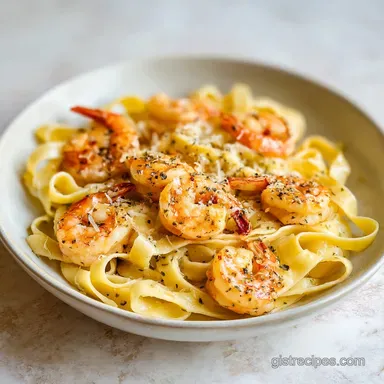
Shrimp Fettuccine Alfredo: One Pan and Creamy
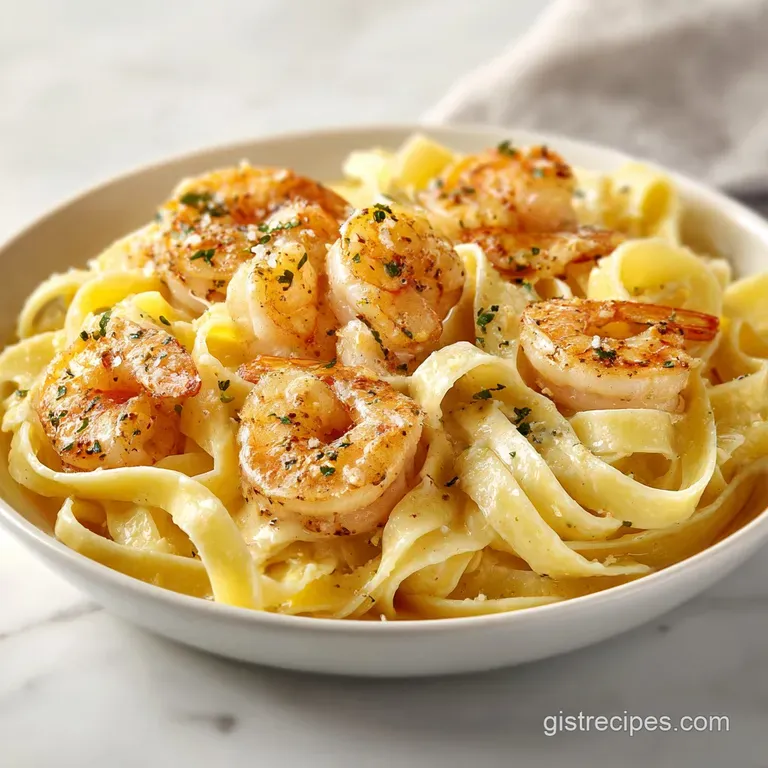
- Time: 5 min active + 15 min cook = Total 20 mins
- Flavor/Texture Hook: Velvety, garlic forward sauce with snappy, seared shrimp
- Perfect for: A high impact weeknight dinner that feels like a restaurant meal
- Quick One Pan Shrimp Fettuccine Alfredo
- The Secret to Velvety Sauce
- The Element Breakdown
- The Essential Pantry List
- Gear for the Best Sear
- Step-by-Step Cooking Process
- Fixing Common Sauce Issues
- Adjusting the Portion Size
- Debunking Kitchen Myths
- Storage and Zero Waste
- Best Side Dish Pairings
- Recipe FAQs
- 📝 Recipe Card
Quick One Pan Shrimp Fettuccine Alfredo
Listen to that sizzle. That's the sound of shrimp hitting a hot pan, turning a bright, opaque pink in seconds. There's nothing quite like the smell of garlic and butter foaming up in a skillet, filling the kitchen with an aroma that practically screams "dinner is served." It's the kind of scent that makes everyone in the house wander into the kitchen asking what's happening.
I remember the first time I tried to make this. I did it the "correct" way, boiling a massive pot of water for the pasta and making the sauce in a separate pan. By the time I combined them, the sauce had tightened up into a thick paste, and the shrimp were rubbery because I'd overcooked them while messing with the noodles.
It was a total mess. I spent more time scrubbing pots than I did actually eating.
That's why I shifted to this one pan method. We're cooking the noodles right in the cream and broth. It's a complete win because the pasta releases its starch directly into the liquid, creating a silky, cohesive sauce that clings to every strand of fettuccine.
You get the big flavors of a classic alfredo but with a fraction of the effort. Trust me on this, once you go one pan, you'll never go back to the double pot struggle.
The Secret to Velvety Sauce
Let's talk about what's actually happening in the pan. Most people think you need a flour based thickener to get that restaurant style cling, but we're using a different trick here.
Starch Integration: As the fettuccine simmers in the broth and cream, it sheds amylose. This natural starch acts as a stabilizer, thickening the sauce from the inside out.
Fat Suspension: The butter and heavy cream provide a high fat content that carries the flavor of the garlic and nutmeg. When we stir in the Parmesan at the end, the cheese melts into this fat, creating a smooth emulsion.
Acid Balance: Adding lemon juice at the very end isn't just for taste. The citric acid cuts through the heavy fat of the cream and cheese, brightening the whole dish and preventing it from feeling too heavy on the palate.
Protein Searing: By searing the shrimp first and removing them, we create "fond" - those brown bits stuck to the pan. When we pour in the liquids, we deglaze the pan, pulling all that concentrated shrimp flavor back into the sauce.
| Method | Time | Texture | Best For |
|---|---|---|---|
| One Pan | 20 min | Velvety & Cohesive | Weeknight Speed |
| Separate | 35 min | Lighter & Cleaner | Precise Pasta Texture |
| Oven Baked | 45 min | Cheesy & Crusty | Crowd Feeding |
The Element Breakdown
Before we crack on with the cooking, let's look at what's doing the heavy lifting in this recipe. Not every ingredient is just for flavor; some are there to do a specific job.
| Ingredient | Science Role | Pro Secret |
|---|---|---|
| Fettuccine | Starch Source | Use bronze cut pasta for a rougher surface that holds more sauce |
| Heavy Cream | Emulsion Base | Don't use low-fat; it will break and look curdled |
| Parmesan | Binding Agent | Grate it yourself. Pre shredded cheese has cornstarch that prevents a smooth melt |
| Chicken Broth | Hydration/Salt | Low sodium is key so you can control the salt level yourself |
The Essential Pantry List
Gather everything before you turn on the heat. There's nothing worse than realizing you're out of garlic while the butter is already bubbling.
For the Protein & Pasta
- 1 lb large shrimp, peeled and deveinedWhy this? Large shrimp hold their shape and don't overcook as quickly
- 12 oz fettuccine pastaWhy this? The wide surface area is a sponge for the alfredo sauce
- 1 tbsp olive oilWhy this? Raises the smoke point so the butter doesn't burn
For the Creamy Garlic Sauce
- 2 tbsp unsalted butterWhy this? Adds a rich, nutty baseline to the sauce
- 3 cloves garlic, mincedWhy this? Fresh garlic provides a sharp, aromatic punch
- 2 cups heavy creamWhy this? Essential for that velvety, luxurious mouthfeel
- 2 cups chicken broth (low sodium)Why this? Adds depth and prevents the sauce from being too cloying
- 1 cup freshly grated Parmesan cheeseWhy this? Provides the salty, umami backbone
For the Finishing Touches
- 1/2 tsp saltWhy this? Basic flavor enhancement
- 1/4 tsp black pepperWhy this? Adds a subtle earthy heat
- 1/4 tsp nutmegWhy this? The "secret" ingredient that makes alfredo taste professional
- 2 tbsp fresh parsley, choppedWhy this? Adds a pop of color and fresh herbal notes
- 1 tbsp lemon juiceWhy this? Brightens the heavy cream and balances the fat
Ingredient Swaps
| Original Ingredient | Substitute | Why It Works |
|---|---|---|
| Heavy Cream (2 cups) | Full fat Coconut Milk (2 cups) | Similar fat content. Note: Adds a tropical flavor, best with a pinch of red pepper flakes |
| Chicken Broth (2 cups) | Vegetable Broth (2 cups) | Similar salt and liquid profile. Note: Makes the dish vegetarian friendly (if using veggie shrimp) |
| Fettuccine (12 oz) | Linguine (12 oz) | Almost identical shape. Note: Slightly thinner, may cook 1 minute faster |
| Parmesan (1 cup) | Pecorino Romano (1 cup) | Similar hard cheese profile. Note: Much saltier and tangier than Parmesan |
Right then, if you're looking for something a bit different, maybe something with a bit more of a zing, you might love my garlic shrimp approach. It's a different vibe entirely but hits those same cravings for garlic and seafood.
Gear for the Best Sear
You don't need a professional kitchen, but a few specific tools make this much easier. The most critical piece is the pan. I use a 12 inch deep skillet. If your pan is too shallow, the pasta will crowd the sauce and you'll end up with a boil over.
A stainless steel or cast iron skillet is a win because it develops that fond we talked about.
For the cheese, ditch the pre shredded bags. Get a box grater or a microplane. The stuff in the bags is coated in cellulose to stop it from clumping, but that same coating stops it from melting into a velvety sauce. You'll end up with tiny grains of cheese instead of a smooth cream.
Step-by-step Cooking Process
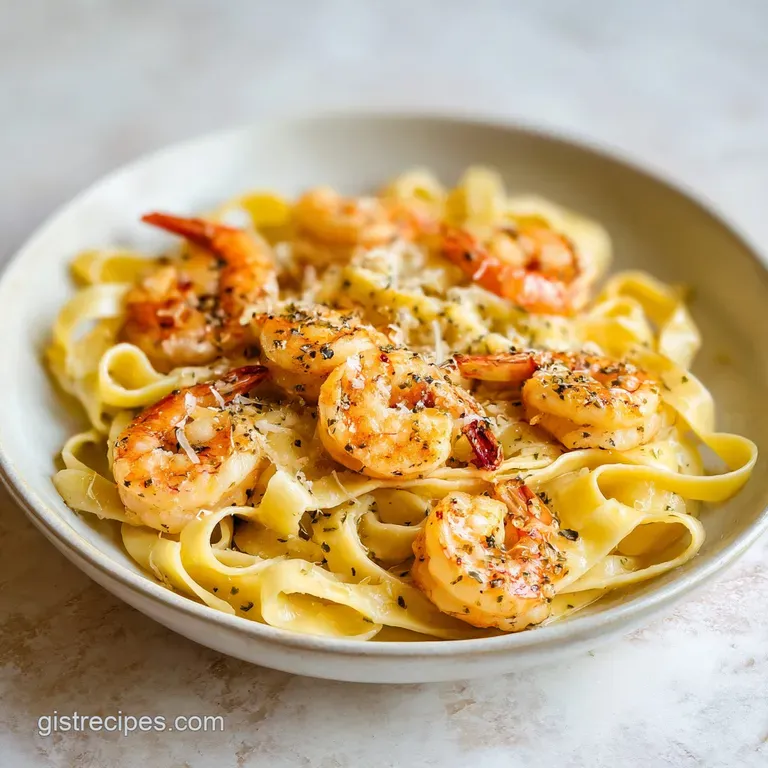
Let's get into it. Follow these steps closely, and pay attention to the smells and sights - that's how you know you're on track.
Heat olive oil and 1 tbsp of butter over medium high heat in your 12 inch deep skillet. Wait until the butter stops foaming and just starts to sizzle. Add the shrimp in a single layer and season with a pinch of salt.
Sear for 1–2 minutes per side until they turn an opaque pink and have a light golden crust. Remove the shrimp and set them aside on a plate. Note: Don't let them overcook here; they'll go back in later.
Melt the remaining 1 tbsp of butter in the same pan. Toss in the minced garlic and sauté for about 30 seconds. The moment you smell that pungent, toasted garlic aroma, move to the next step. Note: Garlic burns quickly, so stay alert.
Pour in the heavy cream and chicken broth. Use a wooden spoon to scrape the bottom of the pan. You'll see those brown shrimp bits dissolve into the liquid, turning the sauce a light golden color. Bring the mixture to a gentle boil.
Add the fettuccine noodles to the pan. Push them down so they're submerged. Reduce the heat to medium low, put a lid on it, and simmer for 10–12 minutes. Stir every few minutes to make sure the noodles don't stick together.
You're looking for the pasta to be al dente and the liquid to have reduced by about half.
Remove the pan from the heat entirely. This is crucial to prevent the cheese from separating. Stir in the grated Parmesan, nutmeg, salt, and pepper. Stir vigorously for 1 minute until the sauce transforms into a smooth, glossy coating.
Return the seared shrimp and any juices on the plate back into the pan. Stir in the fresh parsley and lemon juice. The lemon juice will slightly thin the sauce, making it a velvety glaze. Serve immediately while it's steaming.
Fixing Common Sauce Issues
Even for pros, cream sauces can be finicky. The most common issue is "breaking," where the fat separates from the liquid and you get oil slicks on top of your pasta.
Why Your Sauce Is Too Thin
If your sauce looks more like a soup than a glaze, it usually means the pasta didn't release enough starch or the liquid didn't reduce enough during the simmer. This often happens if the heat was too low or the lid wasn't tight enough.
| Problem | Root Cause | Solution |
|---|---|---|
| Runny Sauce | Under reduction | Simmer uncovered for 2-3 more mins before adding cheese |
| Clumpy Cheese | Too much heat | Remove pan from burner before stirring in Parmesan |
| Rubber Shrimp | Overcooking | Sear for exactly 2 mins per side and remove immediately |
Why Your Sauce Curdled
Curdling happens when the proteins in the cream react to high heat or high acidity too quickly. If you add the lemon juice while the sauce is boiling, you're asking for trouble. Always add the acid and the cheese after the heat is off.
Common Mistakes Checklist
- ✓ Pat shrimp completely dry with paper towels before searing (prevents steaming)
- ✓ Use a deep skillet to avoid sauce boil over during the pasta simmer
- ✓ Grate Parmesan fresh to ensure a velvety melt
- ✓ Remove the pan from the heat before adding cheese to prevent breaking
- ✓ Stir the pasta frequently to prevent the noodles from clumping
Adjusting the Portion Size
If you're cooking for a crowd or just yourself, you can't always just double everything. Some ingredients don't scale linearly.
Scaling Down (For 2 people) Use 6 oz of pasta and 1/2 lb of shrimp. Reduce the broth and cream to 1 cup each. Since there's less liquid, the simmer time might drop by 1-2 minutes, so start tasting the pasta at the 8 minute mark.
Use a smaller skillet (10 inch) to keep the liquid depth consistent.
Scaling Up (For 8 people) I don't recommend doing 8 servings in one pan unless you have a massive commercial stockpot. Work in two batches. If you do use a huge pot, only increase the salt and nutmeg by 1.5x, not 2x, as these flavors can become overpowering.
Reduce total liquids by about 10% because a larger volume of pasta releases a massive amount of starch, which can make the sauce too thick.
| Servings | Shrimp | Pasta | Liquid (Cream/Broth) | Pan Size |
|---|---|---|---|---|
| 2 People | 0.5 lb | 6 oz | 1 cup each | 10 inch |
| 4 People | 1 lb | 12 oz | 2 cups each | 12 inch |
| 6 People | 1.5 lb | 18 oz | 2.75 cups each | 14 inch |
| 8 People | 2 lb | 24 oz | 3.5 cups each | Two 12 inch |
For a more comfort food vibe, check out this creamy pasta bake. It uses similar flavors but gives you that baked cheese crust that's just irresistible.
Debunking Kitchen Myths
Let's clear up some of the nonsense you see in old cookbooks.
The "Salted Water" Myth: You'll hear that you must boil pasta in "water as salty as the sea." In this recipe, we aren't using plain water; we're using chicken broth and cream. The broth already provides a significant salt base.
Adding heaps of extra salt to the pan can make the final result taste like a salt lick. Trust the broth and the Parmesan.
The "Roux" Requirement: Many believe a flour and butter roux is the only way to thicken a sauce. While a roux works, it can mask the fresh taste of the garlic and shrimp. The starch based thickening we use here is cleaner and lets the primary flavors shine.
The "Searing Seals Juices" Myth: Searing shrimp doesn't "seal in" the moisture. It actually removes moisture from the surface to create a crust. However, we do it for the flavor. The browning creates complex taste molecules that a poached shrimp just doesn't have.
Storage and Zero Waste
Alfredo is a bit tricky to store because the pasta continues to absorb liquid as it sits. By the time you reheat it, you often have a block of pasta rather than a creamy dish.
Fridge and Freezer Store leftovers in an airtight container in the fridge for up to 3 days. I don't recommend freezing this dish; the cream often separates upon thawing, leaving you with a grainy texture.
If you must freeze it, undercook the pasta by 2-3 minutes so it doesn't turn to mush when reheated.
Reheating the Right Way Never microwave alfredo on high heat for a long time. Instead, put the pasta in a small pan over low heat and add a splash of milk or chicken broth. Stir gently until the sauce loosens up and becomes velvety again.
Zero Waste Tips Don't throw away the shrimp shells if you bought them head on! Toss them in a freezer bag. Once you have enough, simmer them with a bit of water and onion to make a quick shrimp stock.
You can use this stock in place of the chicken broth next time you make this recipe for a double hit of seafood flavor. Also, any leftover Parmesan rinds can be tossed into a simmering soup or stew for an instant umami boost.
Best Side Dish Pairings
Since this dish is so rich and creamy, you need something with a bit of a bite or a fresh crunch to balance it out.
A crisp arugula salad with a sharp lemon vinaigrette is the ultimate partner. The bitterness of the greens and the acidity of the dressing cut straight through the heavy cream. If you want some veggies, roasted asparagus or steamed broccoli are great choices.
The florets of the broccoli act like little sponges, soaking up any extra sauce left on the plate.
If you're feeling fancy, serve this with a piece of toasted sourdough rubbed with a raw garlic clove. It adds a rustic texture that complements the silky pasta. Just be careful not to overdo the bread, or you'll be too full to finish the shrimp!
Recipe FAQs
How to prevent the shrimp from becoming rubbery?
Sear for 1–2 minutes per side over medium-high heat until opaque pink. Remove them from the pan immediately to avoid overcooking.
Why is my Alfredo sauce grainy?
Stir the Parmesan cheese in after removing the pan from heat. Vigorous stirring for one minute ensures the cheese emulsifies into a smooth, glossy sauce.
Can I make this dish spicier?
Yes, add red pepper flakes during the garlic sauté. For another creamy pasta with a bold flavor profile, try our Rasta Pasta.
Is it true I must boil the pasta in a separate pot first?
No, this is a common misconception. The fettuccine simmers directly in the cream and broth for 10–12 minutes to build deeper flavor.
Can I freeze leftovers for later?
No, avoid freezing this dish. The cream often separates during thawing, which results in a grainy texture.
Can I use a lower-fat substitute for the heavy cream?
No, stick with heavy cream. The high fat content is essential for the sauce to thicken and stay stable during the simmering process.
How to ensure the sauce doesn't separate?
Reduce heat to medium-low once the pasta is added to the pan. A gentle simmer prevents the cream from breaking.
Shrimp Fettuccine Alfredo in 20 Minutes: Creamy and Garlic